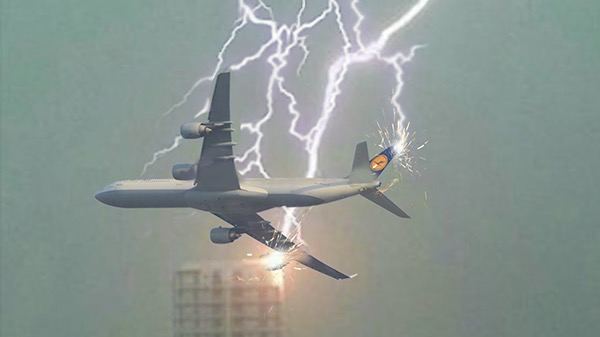
PLANE VERSUS LIGHTNING

Lightning is a natural phenomenon that has fascinated mankind since way back in history. Different cultures and religions held different beliefs about it over many generations; attributes that generally linked it to a supernatural event, a weapon or manifestation of God or gods. However, man’s insatiable curiosity to unravel natural mysteries eventually led to the discovery that lightning was a form of electricity. Ever since then, this knowledge has enhanced the development of lightning safety inventions both for ground infrastructure and aerial vehicles. Airplanes transport people and goods throughout the year, and quite often their flight paths pass through weather conditions that have high potential for lightning strikes. It is generally estimated that on average an airplane can be struck by lightning at least once each year; and based on the number of flights that happen every day it is an event that is highly likely to occur daily. In this article we will explain effects of lightning on airplanes and features that make it possible for them to make successful flights everyday despite the existence of lightning strike threats.

Lightning formation

Lightning is a product of flow of high electrical current through the air. It can occur within a cloud, between two clouds or between a cloud and the ground. Its formation begins with the sun heating the ground causing warm air to rise and form clouds. A cloud comprises of two forms of precipitation; ice crystals and supercooled water droplets. Movements of air currents (updrafts and downdrafts) and the forms of precipitation within the cloud results in collisions of the molecules with each other; consequently knocking off electrons from some of them. Up going molecules tend to loose electrons causing them to gain an overall positive charge while those going down gain electrons and hence accumulate an overall negative charge. As the cloud grows in height, it extends down near the ground which tends to be positively charged relative to the lower part of the cloud.

Air does not conduct electricity, and therefore, the air spaces between charged regions within the same cloud, or between two charged clouds, or between a cloud and the ground; forms an insulation or barrier which prevents opposite charges in close proximity from flowing freely to neutralize each other. However, a time comes when charges between two oppositely charged points, or two separate clouds, or a cloud and the ground; become so high that the potential difference between the two points rises to a value high enough to overcome the insulation strength of the air.

At this point, the charges will have risen to tens of thousands of volts per inch, resulting in a high electrical tension between this charged region and the air around it. A point is reached when the high electric tension causes a separation in the immediate air molecules; splitting them into positive ions and free electrons; an occurrence called Ionization. Air in this state, or Ionized air, is called Plasma and is electrically conductive. The process emits energy in form of heat. This usually is the beginning of a lightning strike. The process continues more like a chain reaction, through air molecules between the highly charged regions until a complete path is formed for the charges to neutralise each other.

The accumulated electrons on the negatively charged region thus flow rapidly towards the positively charged point; resulting in a high instantaneous electrical current flow through the conductive path created. The heat generated causes two noticeable effects: First it raises the temperature of air molecules along the ionized path, causing them to glow. this is what we usually see and refer to as a lightning streak; and second the heated air molecules undergo rapid expansion followed consequently by a contraction after the flow abates. This rapid expansion of air and the consequent contraction creates a sound wave, which we normally hear and refer to as thunder.

Lightning can attach onto an airplane in two ways. The first case occurs when planes fly too close to a lightning flash and the lightning path is diverted to the airplane, such that its airframe also becomes part of the path. In the second scenario, the lightning flash is usually triggered by airplanes flying into regions with high charges that the leader of the lightning bolt originates from the aircraft itself. Rain clouds which contain suitable conditions for lightning formation usually hang at heights of about 1 to 2 kms above the ground surface and can grow upwards to a height more than 12 Kms (39,000 feet), reaching cruising altitudes of jet airliners. This means that airplanes can encounter lightning throughout a large range of their flying altitudes. High altitude strikes, however, are rare. Most of the cases occur at lower altitudes, mostly below 6 kms (20,000 feet) during climbs or descent.

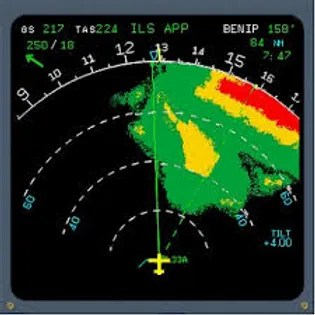
At present, airplanes are not equipped with lightning detection instruments. There is only one available equipment that can help pilots to avoid flying into possible lightning conditions. That is the weather radar. The equipment is capable of detecting the amounts of precipitation within the airspace ahead; but it does not have the capability to detect lightning. It operates by emitting radio frequency waves and receiving reflected waves (echoes) from precipitation particles or water droplets in the air. It then analyses the received signals and processes them to give weather conditions display. A display unit for the weather radar is installed in the flight deck. Clouds are usually displayed with varying colours, corresponding to the amount of precipitation or solid particles that are contained within the various regions of the cloud. A region with heavy precipitation is displayed in a darker shade of red, moderate shows yellow, and that with light amounts will be in green. This information serves an important role as it helps pilots to avoid flying into regions that might contain ideal conditions for lightning formation, heavy rainfall, hail or icing conditions.
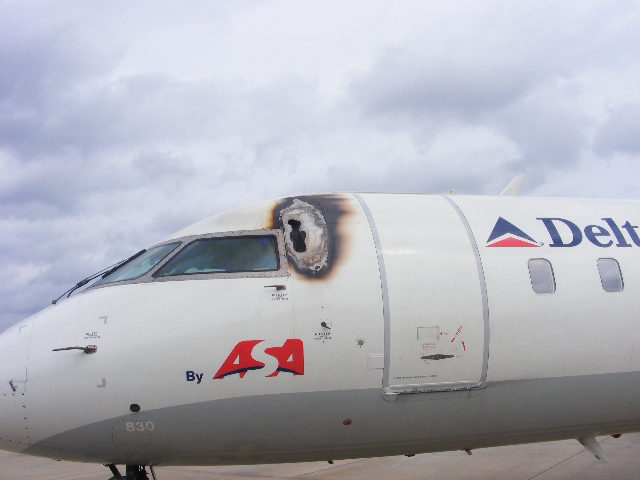
Lightning has the potential to cause several destructive effects to airplanes. When lightning current attaches on the airframe of an airplane it is likely to cause; physical damage to parts or components, fire ignition, interference with transmission of communication and navigation signals, damage to onboard electronic equipment, damage to engine components including gears and electronic engine components, jamming of flight controls when high lightning currents arc across movable hinge joints, and magnetisation of ferrous metal parts like landing gears and flap tracks which usually contain stainless steel parts. Lightning that does not attach to airplanes also has effects, several of which have been known to be fatal. Some of these include interference with communication and navigation signals, fire ignition and possible engine surges or flame-out. The later happens when lightning occurs near the inlet of an engine. Both the heated air by lightning plasma, and the pressure wave due to sudden expansion of air, when ingested by the engine cause compressor surges which can eventually lead to a flameout of the combustion chamber.

Fatal cases involving lightning have also occurred in the past, the most severe one being that of PAN AM Flight 214. The aircraft, a Boeing 707 was in a holding pattern at an altitude of 5,000 feet (1.5 Kms) near its destination airfield. The crew were waiting for a storm to pass so that they could execute a safe landing. According to the official investigation report into the accident by the NTSB, it was discovered that lightning caused ignition of fuel vapours in the left main fuel tank of the aircraft, resulting in a mid-air explosion of its left wing. The plane plummeted towards the ground while engulfed in flames; eventually culminating in its total destruction and loss of all lives on board.

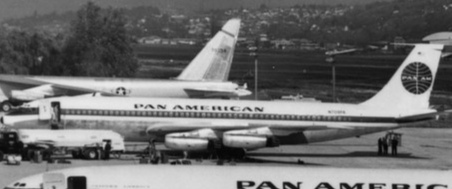
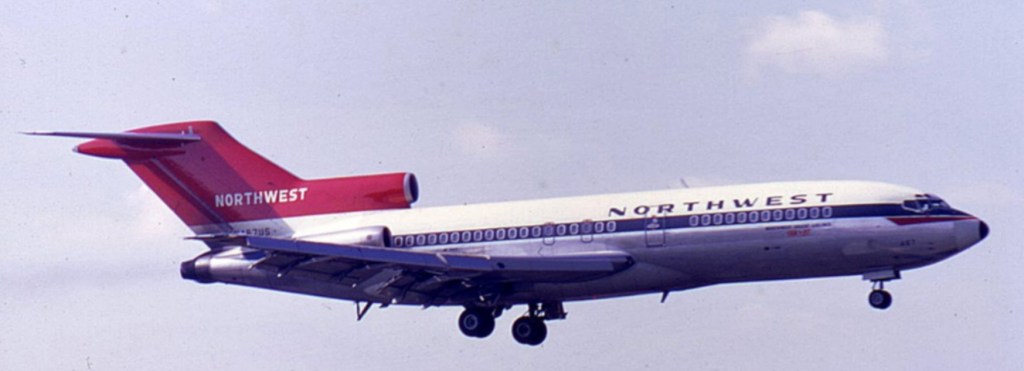
A memorial stone to remember victims of flight 214 crash (left) and an Image of a Boeing 707 (right)

Another effect of lightning on airplanes is disturbances or disruptions to the operation of electronic equipment. This effect is based on the fact that flow of electric current through a conductive medium induces an electromagnetic field around it. High electrical current discharge associated with lightning generates strong electromagnetic fields, which cause interference to electromagnetic waves that usually relay both communication and navigation signals to airplanes. This kind of interference which is propagated through the air is known as Radiated Electromagnetic interference (EMI). It causes distortion to transmitted radio signals and also has the potential to inflict damage to on board electronic equipment. A second type of EMI associated with lightning is known as Conducted EMI. This results from the flow of electrical current through the structure of an airplane. The flow generates electromagnetic fields along the path of conductors which is also capable of causing operational disturbances or damage to electronic equipment.

It is therefore mandatory that Lightning strike protection features be incorporated into designs of airplanes, to guarantee continued normal operation and safety of flights. This is called Lightning Strike Protection (LSP). It is achieved by incorporating conductive features into aircraft structures so that external electrical currents that attach onto them will find a conductive path and thus pass through and exit safely without causing damage. Besides this, the protection also aims to block radiated EMI originating from externally and not only from lightning events alone, but many other sources as well.
Aluminium alloys were formerly the main materials used almost entirely in the construction of airplane outer skins and other structural members. These had excellent electrical conductivity properties, such that even high electrical currents associated with lightning would safely enter an aircraft structure and be conducted away quickly and easily with no effect. However later use of composite materials in the construction of some parts; and nowadays having replaced aluminium alloys almost entirely, elevates the risks of lightning effects to a large extent. Composites are preferred due to their outstanding high strength to weight ratio. Their application as structural members reduces the overall empty weight of the aircraft and as a result increasing the payload and fuel efficiencies; but they are poor electrical conductors, and hence vulnerable to lighting strike damage. A means to provide protection for them must therefore be incorporated to make them safe while in use as structural members on airplanes.

Some parts of airplanes are more vulnerable to lighting strikes than others; and for this reason, different locations are categorised based on the likelihood of lightning to attach onto them. Pointed or protruding or extreme ends of airplanes are usually the most likely parts to attract lightning . This is due to the tendency of electrical charges to accumulate at these locations and therefore acting as a point of attraction to opposite charges. Most prone locations include the nose, wingtips, engine inlets (nacelles) and the rear empennage. These are categorised as zone 1A regions. Low risk areas like the fuselage are classified as zone 2A. Both these regions have to meet certain lightning safety requirements. High risk zones must be able to withstand multiple lightning strikes as well as a maximum current of 20,000 Amperes. The rest of the fuselage must be wholly conductive to be able to facilitate entry and consequently exit of lightning currents. This is important because based on average flight speeds for commercial airliners, an aircraft would have flown a distance more than its own length within the period that it takes a lightning strike to begin and end. This means that should an aircraft get caught between a lightning path, then the points of attachment (entry and exit) of lightning current would not remain constant but will shift rapidly across its length.

By making the outer structure of the aircraft conductive, it also acts like a Faraday’s cage; blocking external electric charges and electromagnetic fields from entering inside the airplane structure and hence, shielding internal electronic equipment from external interference. This, however, also blocks radio frequency signals used both for communication and navigation from penetrating into the airplane structure; and therefore making it a necessity that antennas and transceivers be located outside this ‘cage’. This is usually not a big problem with most communication and navigation antennas, as they are small in size compared to the whole aircraft, and some are normally constructed with an almost flat profile. The antennas are then positioned and electrically grounded either to the under-belly or some to the top of the aircraft fuselage.
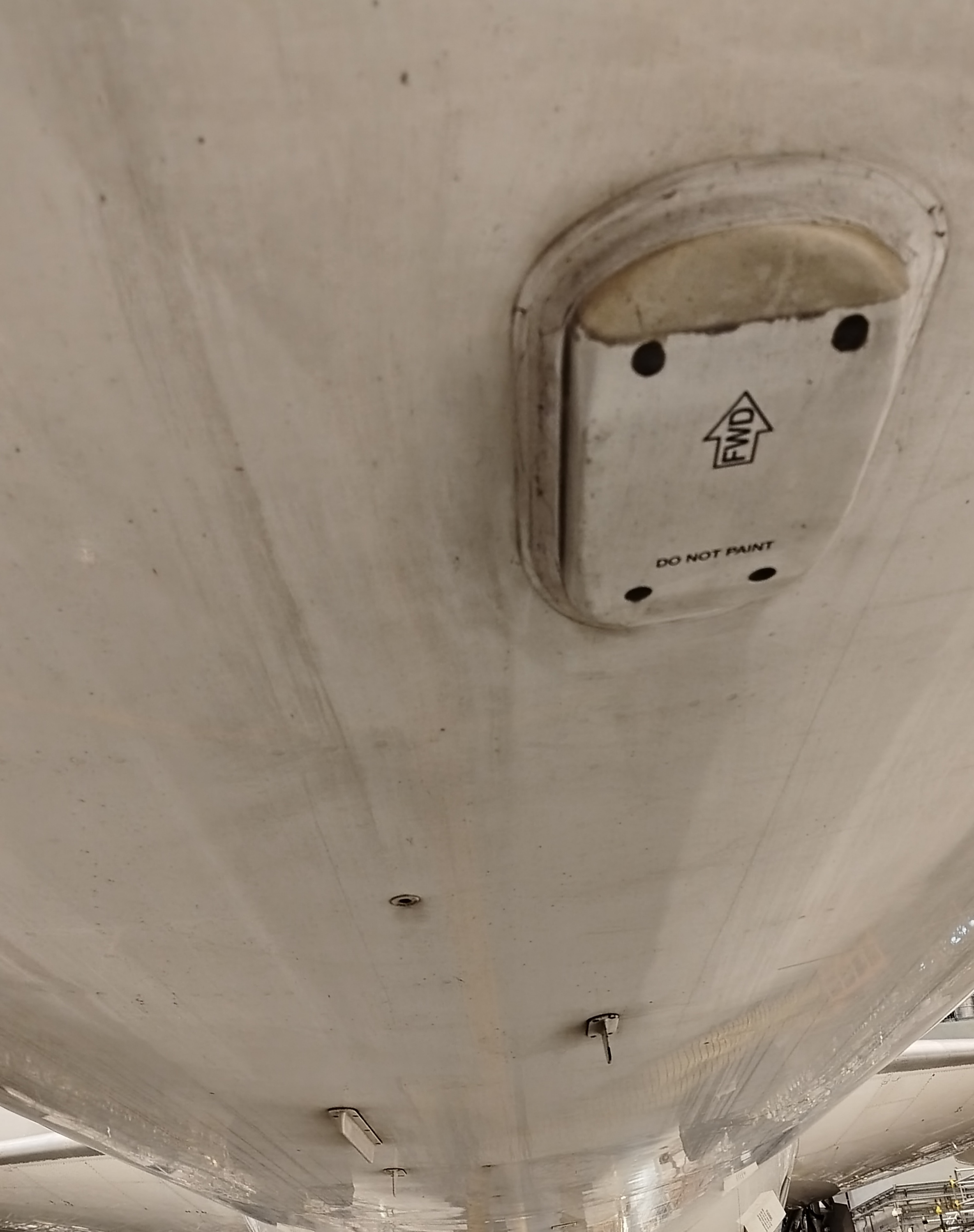
Images of various communication and navigation antennas on under-bellies of commercial transport airplanes.

A significant a problem is usually presented with larger transceivers like the weather radar and the satcom transceiver assemblies, which must be positioned outside the main aircraft structure as well. Besides their large sizes these components usually have to be enclosed by materials which do not block electromagnetic signals so as to allow them unrestricted transmission and reception of signals. The shape of the enclosure must also match the aerodynamic profile of their respective locations. The weather radar, scans the area forward of the aircraft and is therefore positioned at the nose of the aircraft. The satcom transceiver on the other hand, transmits and receives signals from satellites in the upper atmosphere or space and it’s most appropriate location is usually on the top surface of the aircraft. Non-conductive composite are the most commonly used materials for constructing the enclosure or fairing, which is also known as the Radome. The Non-conductive or insulating property of the radomes, however, presents a risk of being vulnerable to damage from lightning; and therefore calling for alternate means to provide LSP for them. The most popular method used to accomplish this is by installing lightning diverter strips onto their outer surfaces. The strips are then electorally grounded onto the main structure of the aircraft by a fastener (screw). Diverter strips offer protection by intercepting, or attracting lightning onto themselves, which is then conducted away to the airplane structure via the grounded points. This way, lightning current is diverted away from the non-conductive composite material onto the highly conductive strips, preventing damage that would have resulted from attempted forceful flow of high lightning currents through the non-conductive material. We will leave it at that about diverter strips.
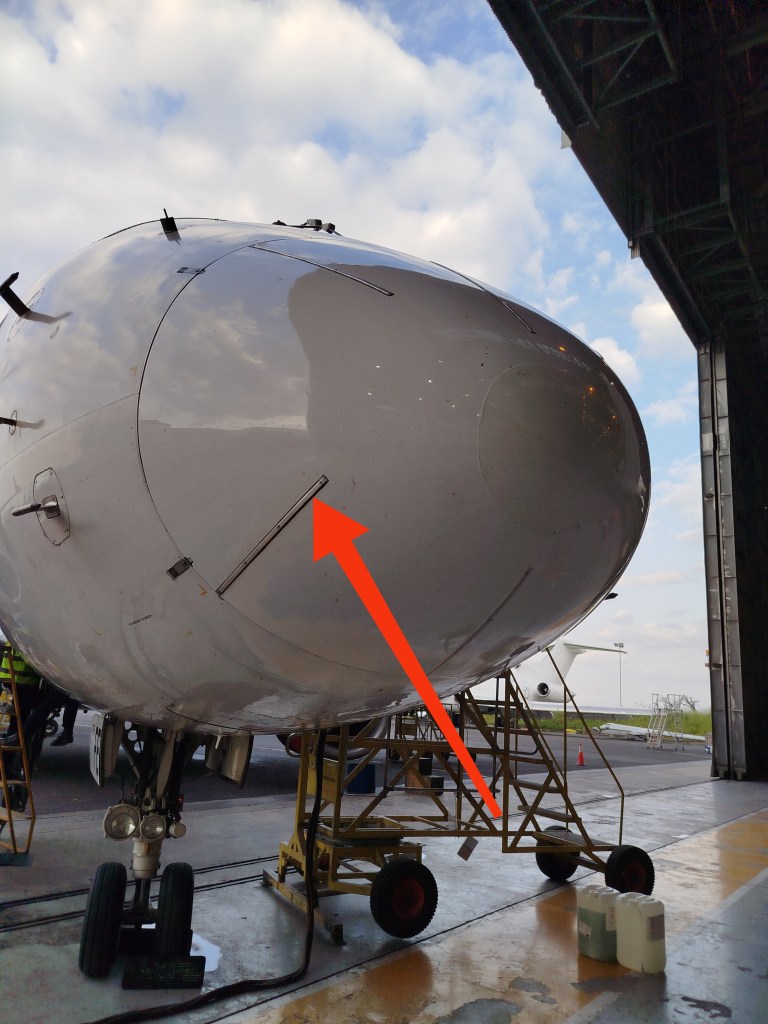
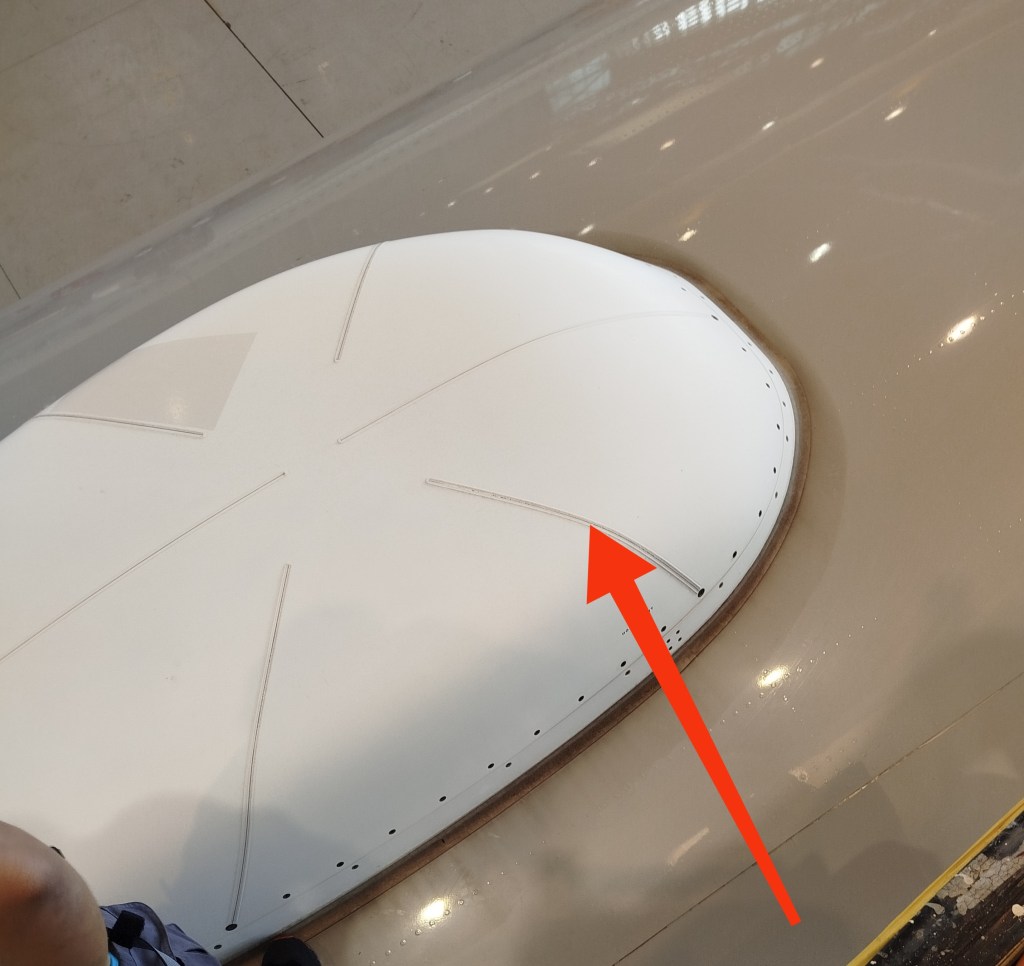
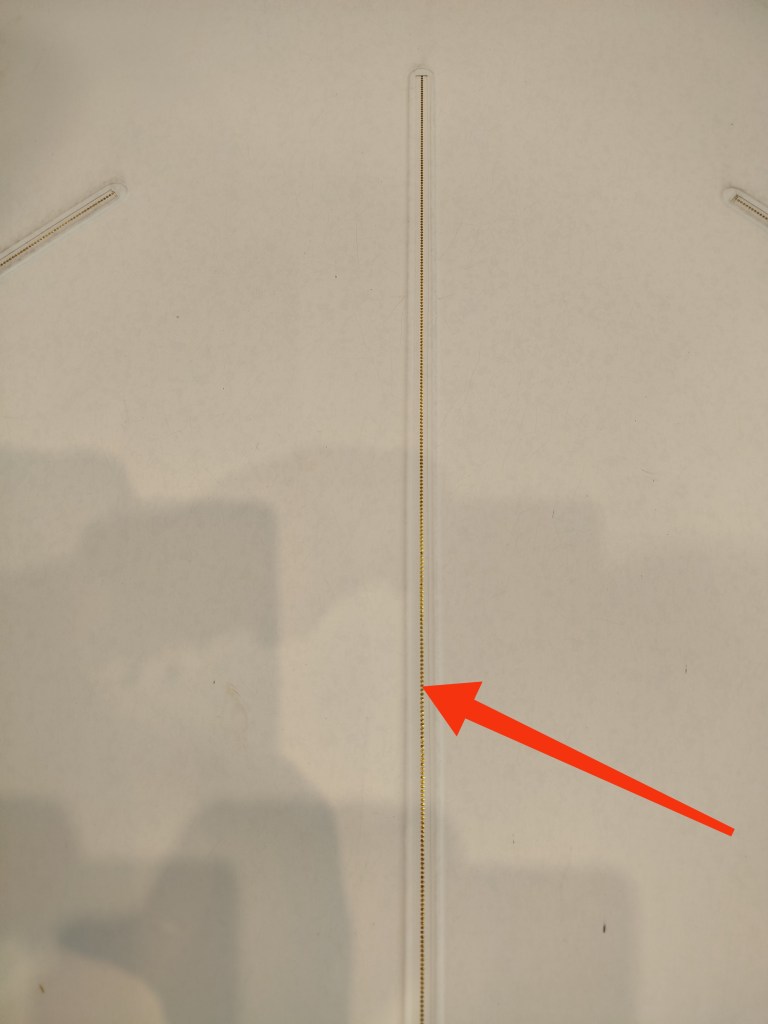
A nose fairing of an Embraer ERJ 190 (left) fitted with solid type diverter strips, a SATCOM antenna on top of a Boeing 777 ( center) fitted with segmented type diverter strips, and a close view of a segmented strip showing the little rounded conductors evenly spaced along it’s length.

Different other methods have been developed that offer satisfactory protection for composites, and every manufacturer has the liberty to use one that is best suited to them. For this reason, different aircraft makes have different LSP features.

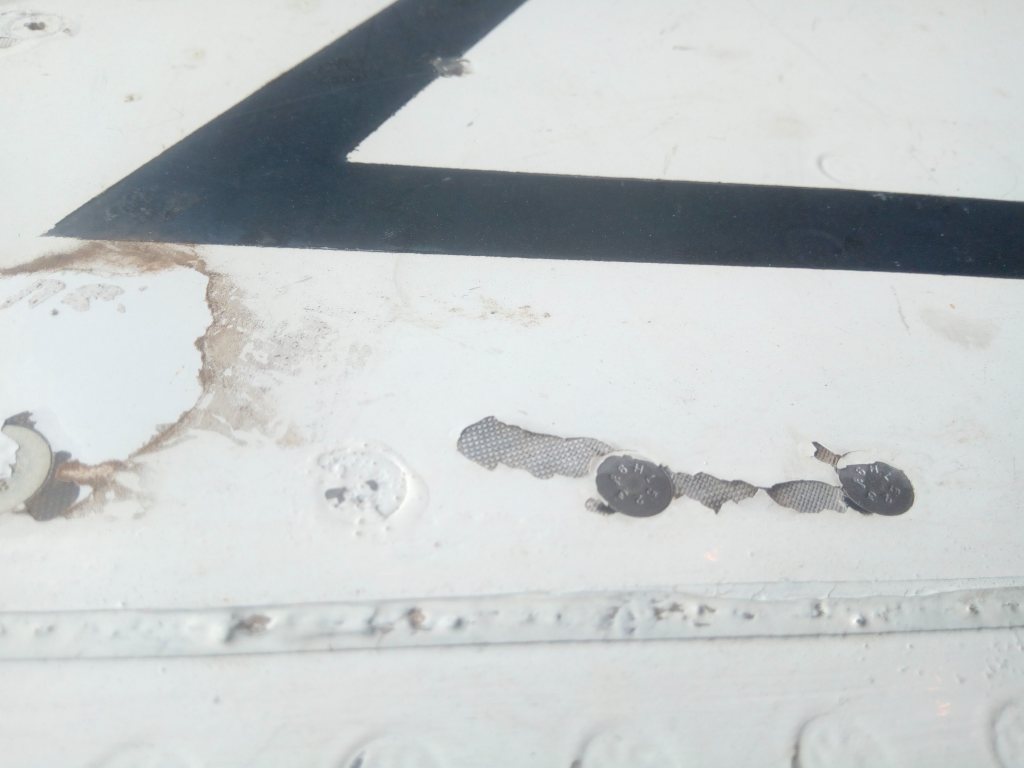
The most popular methods include installation of a lightweight conductive mesh on the surface layer of the composite materials; or installation of inter-woven wires within the composite’s laminate plies. An electrical contact is then established between these and a metallic bonding strip or a grounding structure by use of grounding fasteners (screws) at specific locations on each external panel. The grounding fasteners are usually made of a material which has excellent electrical conductivity properties. This way, current is able to be conducted away or channeled across safely until it finally exits the airplane structure.
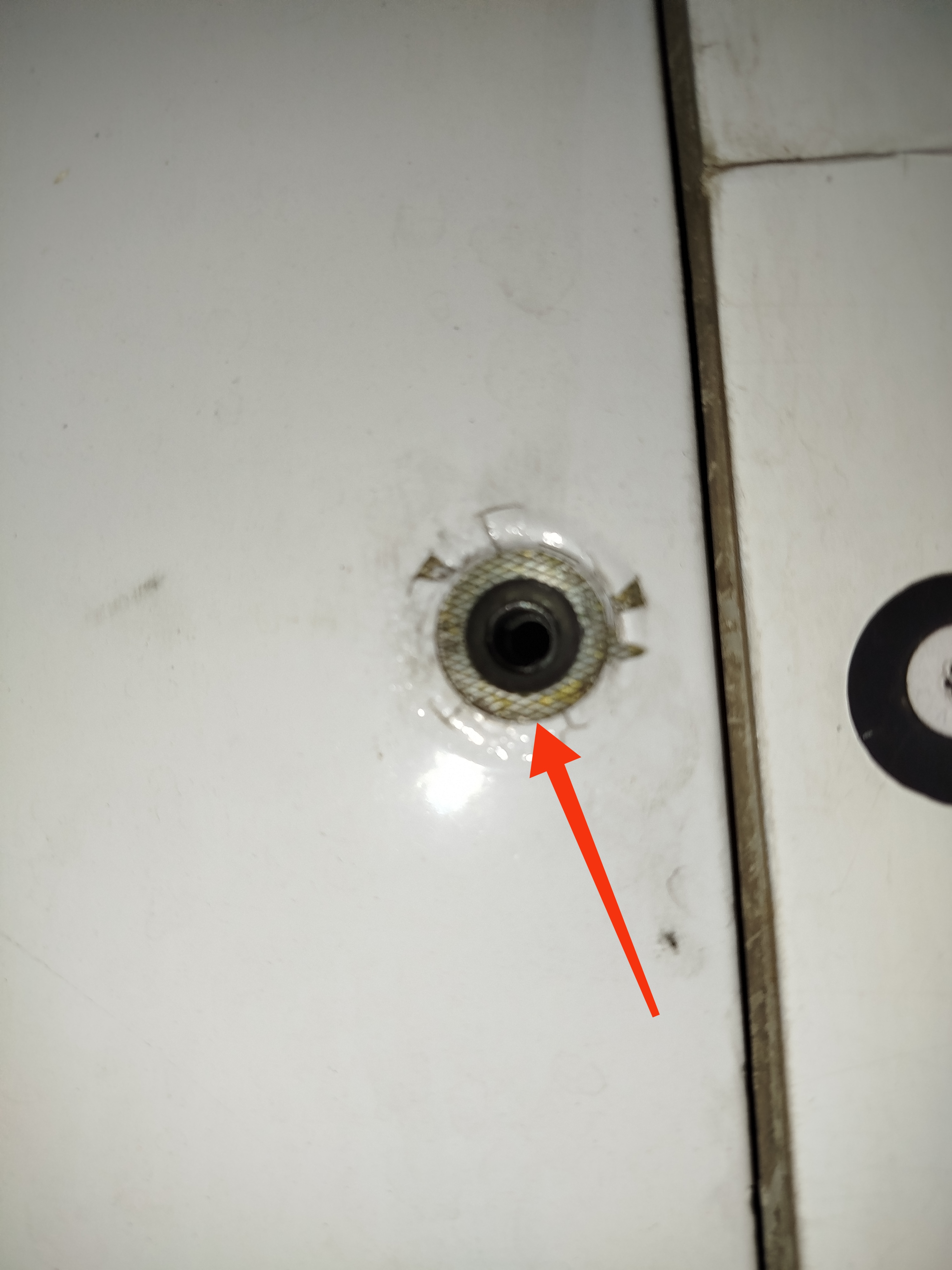
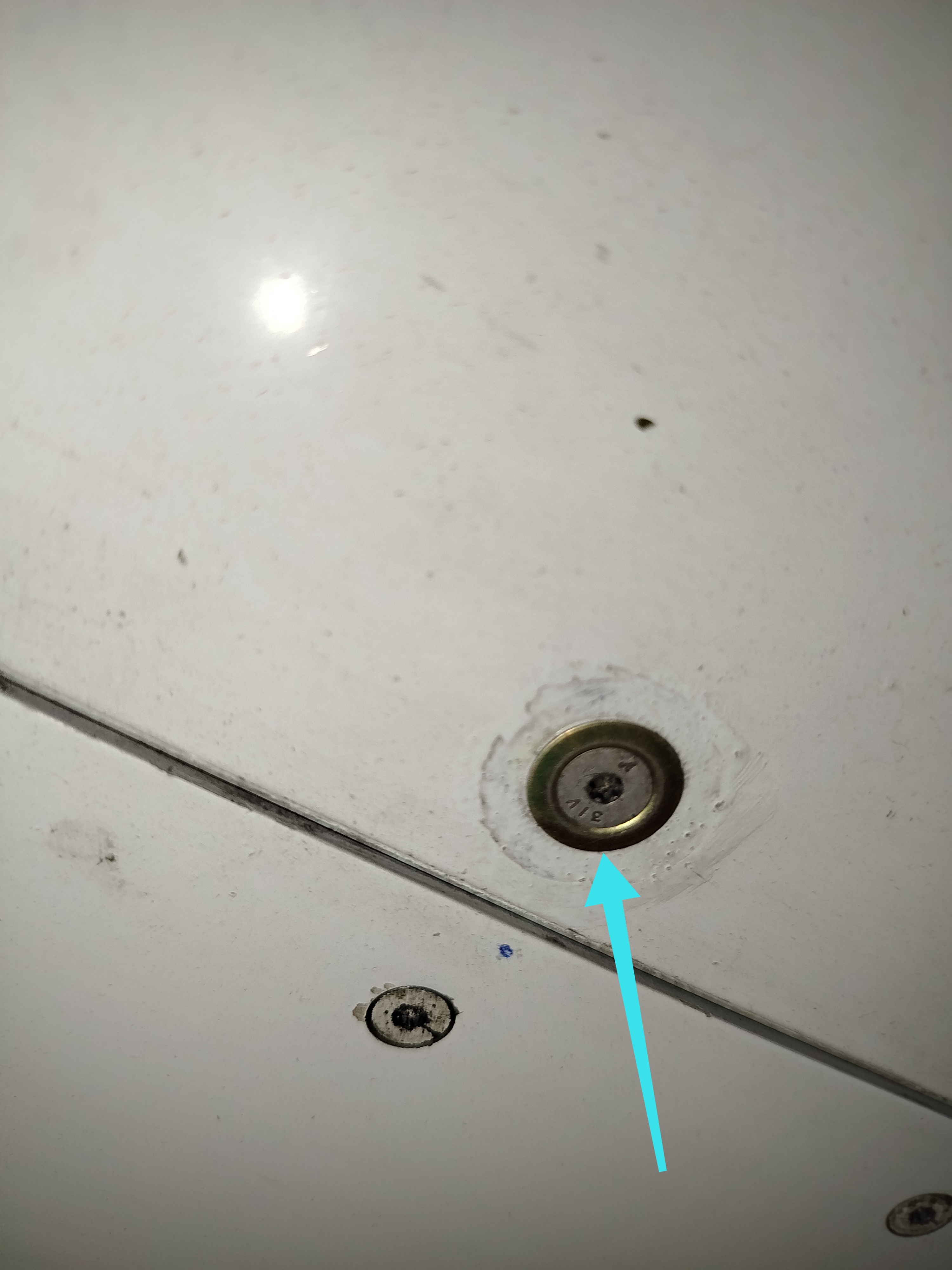
An exposed section of a conductive mesh on a composite aircraft panel (left) and a grounding screw installed with an also conductive cup washer.

Other practical methods to achieve conductivity on composites for LSP include the use of a thin conductive foil installed on surface ply of composites, use of conductive paints and pastes, use of conductive caulks and sealants between structural joints, use of conductive wire gaskets between aircraft structure and access panels. A typical example of one of these is on Boeing 787, where conductivity is required for static dissipation, which builds up as a result of friction in flight, a special antistatic paste is applied between the outer surface of the panel and the top finish. Once the paste has cured, specific grounding fasteners are then used to establish contact between an exposed section of the paste and a grounding strip or structure. This way, a continuous conductive path is created, and the charges would then travel via a series of strips and bonding jumpers and eventually be dumped overboard through static dischargers or static wicks.
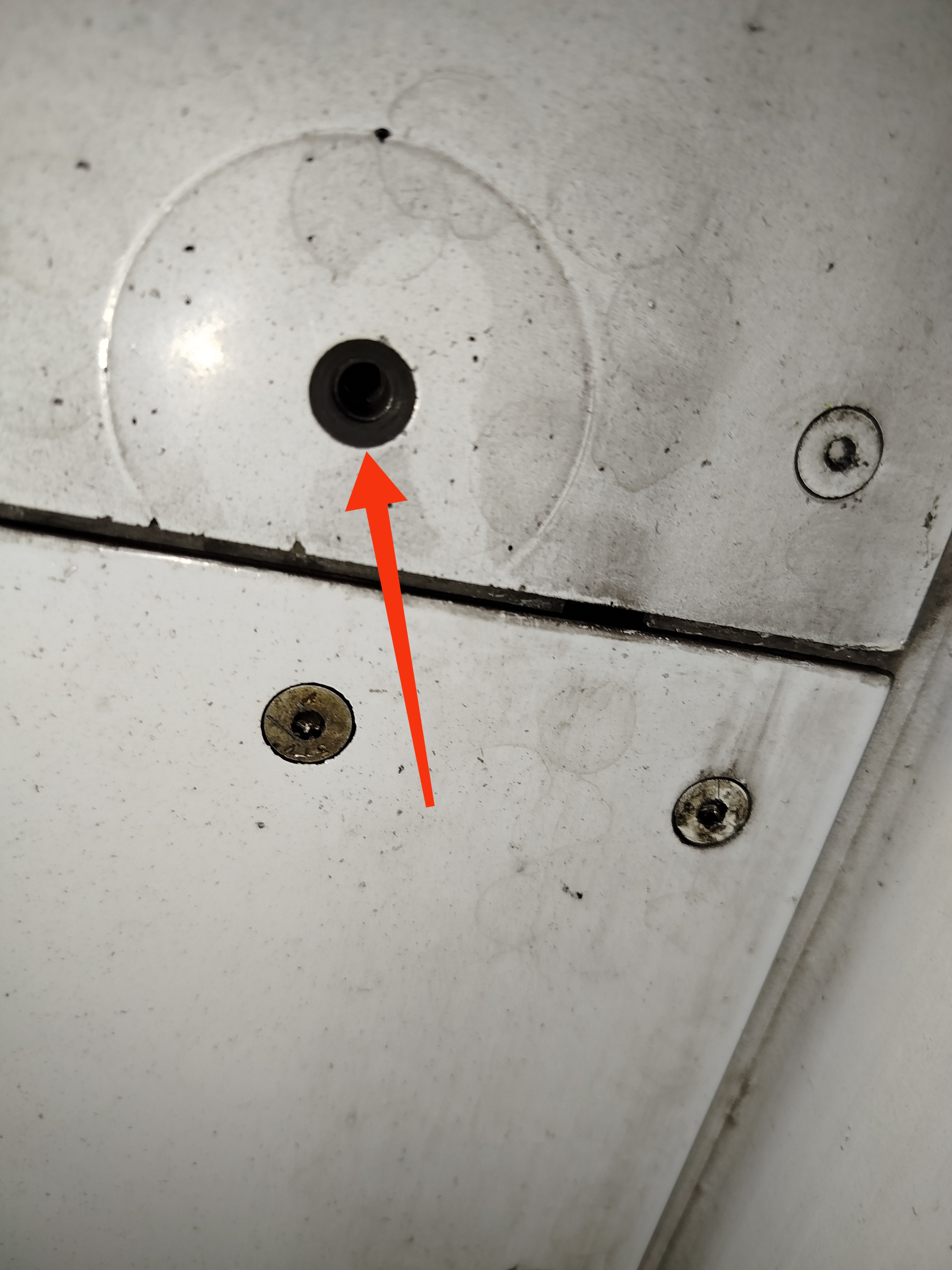
A counter-sunk screw hole section on an airplane panel showing an exposed section with an applied anti-static paste

Static dischargers, or static wicks are not lightning exit provisions, and neither are they lightning arrestors. In fact, these devices usually have high electrical resistance of such values between 6 to 200 megohms, and attempted entry or exit of lightning current through them would cause damage. The purpose of static wicks is to discharge or dump gradually, charges that build up on the airplane surfaces due to friction with the air or any forms of precipitation within the air in flight. These charges would otherwise accumulate and exit through other pointed surfaces and antennas. This would cause distortions to radio frequencies and consequently disrupt communication and navigation signals. To ensure their effectiveness, a conductive path must be established and maintained from all parts of the aircraft to the dischargers.
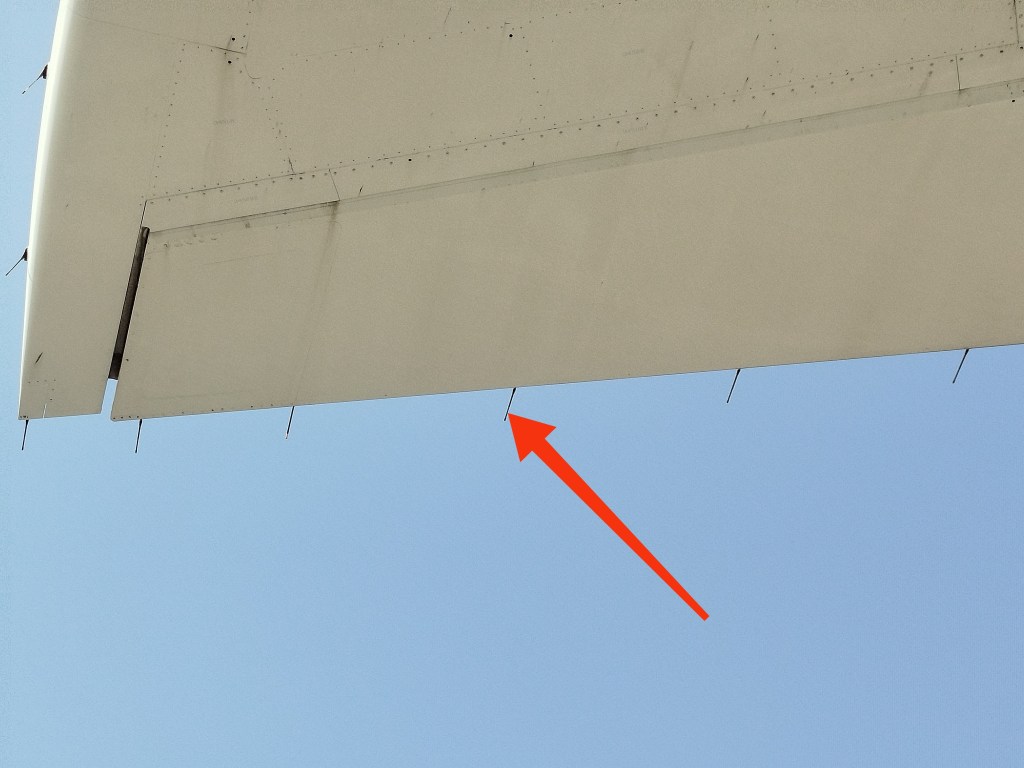
Static wicks at the trailing edge of an elevator and the tip of a horizontal stabiliser of a Boeing 777

Following a suspected lightning strike, airplanes usually undergo a thorough detailed inspection procedure. intended to detect any damage, malfunction or abnormal conditions that might have resulted from the event. Following this, any findings usually call for corrective actions which might include repairs or replacement of damaged parts or components, tests or restoration of any resultant abnormal conditions. An example of an abnormal condition is magnetized ferrous metal parts like we mentioned earlier. This would affect the correct function of the standby compass and therefore have to be demagnetized.
IMPACT OF 5G NETWORKS ON AIRPLANES

Connectivity has evolved tremendously from an era when it was merely used to power the internet, to its numerous present day applications where it is vital to driving nearly every aspect of our livelihood. From our homes, medical equipment, transport, complex infrastructure projects to communication and many other fields that we cannot mention them all here.

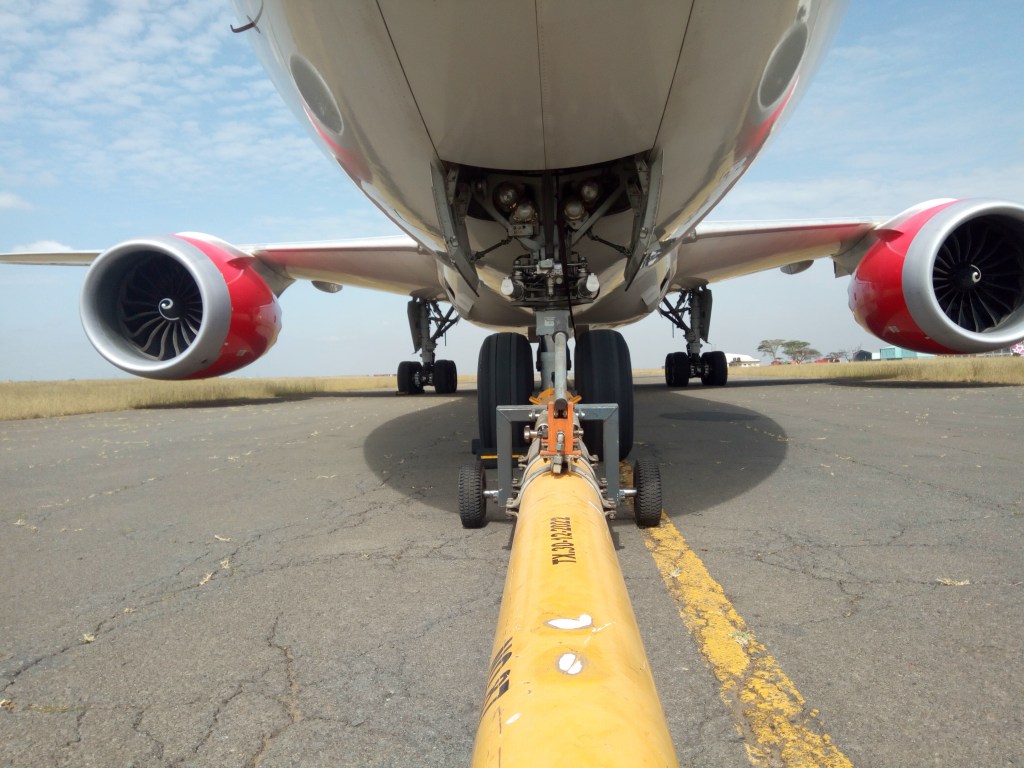
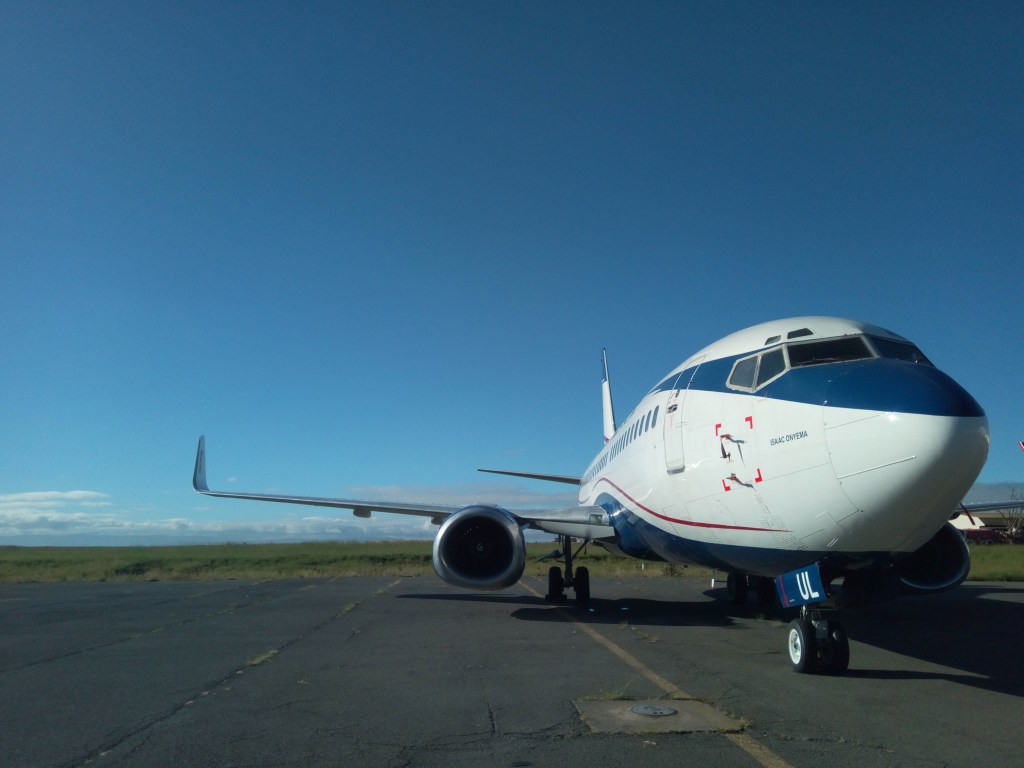
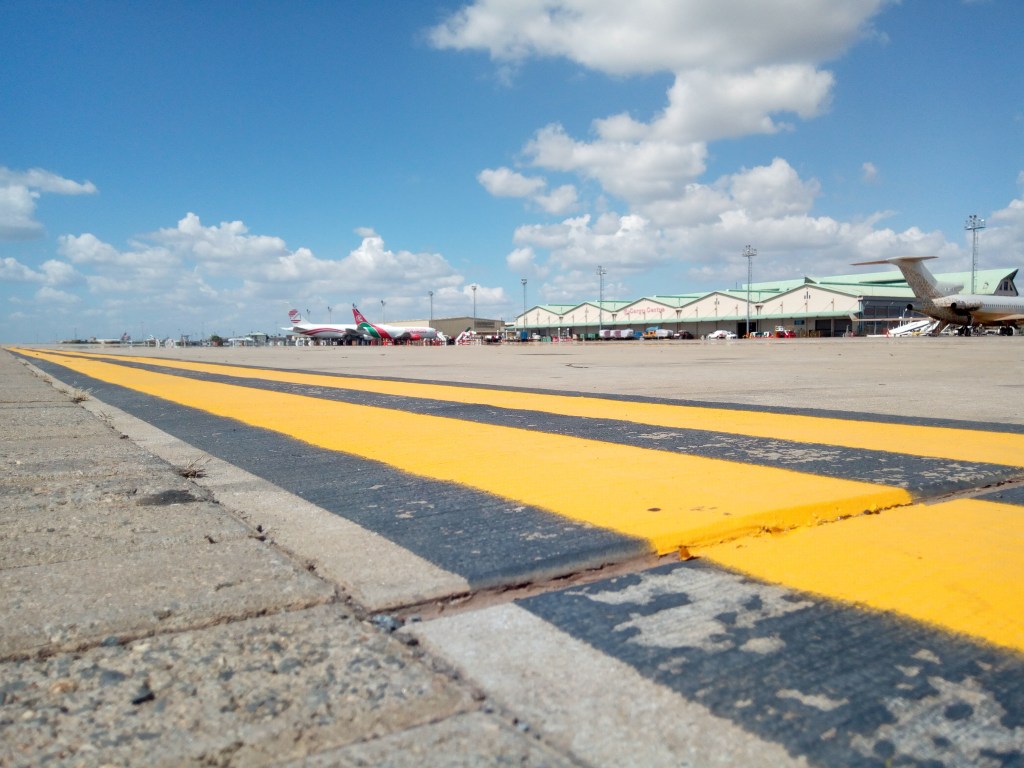
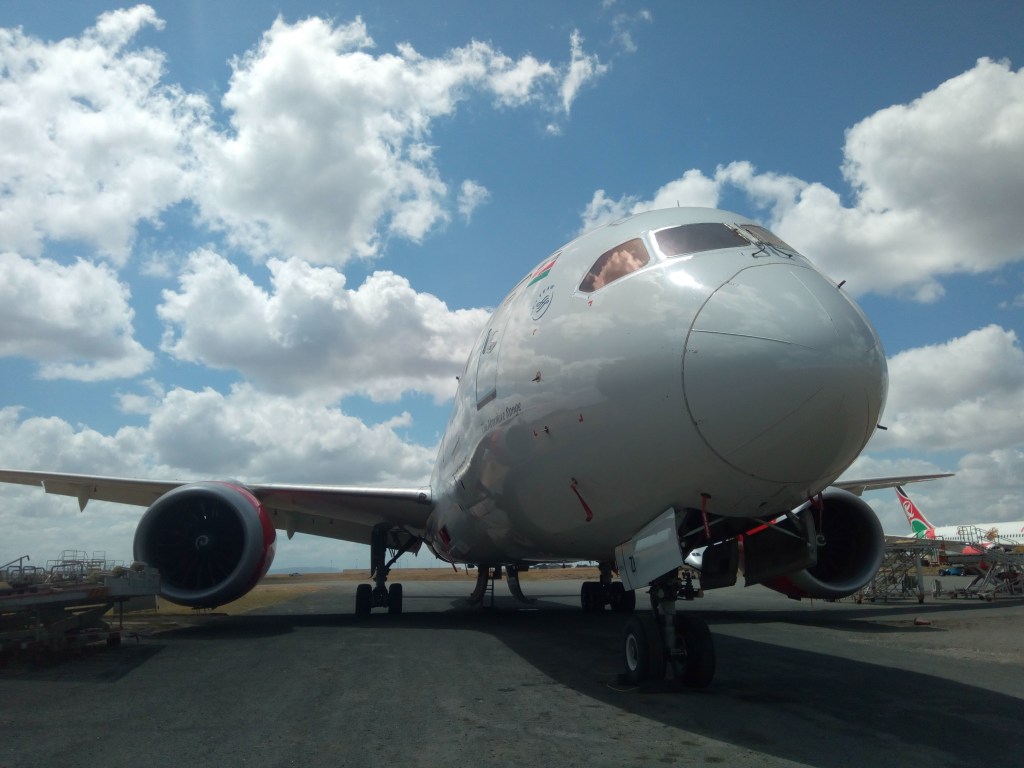
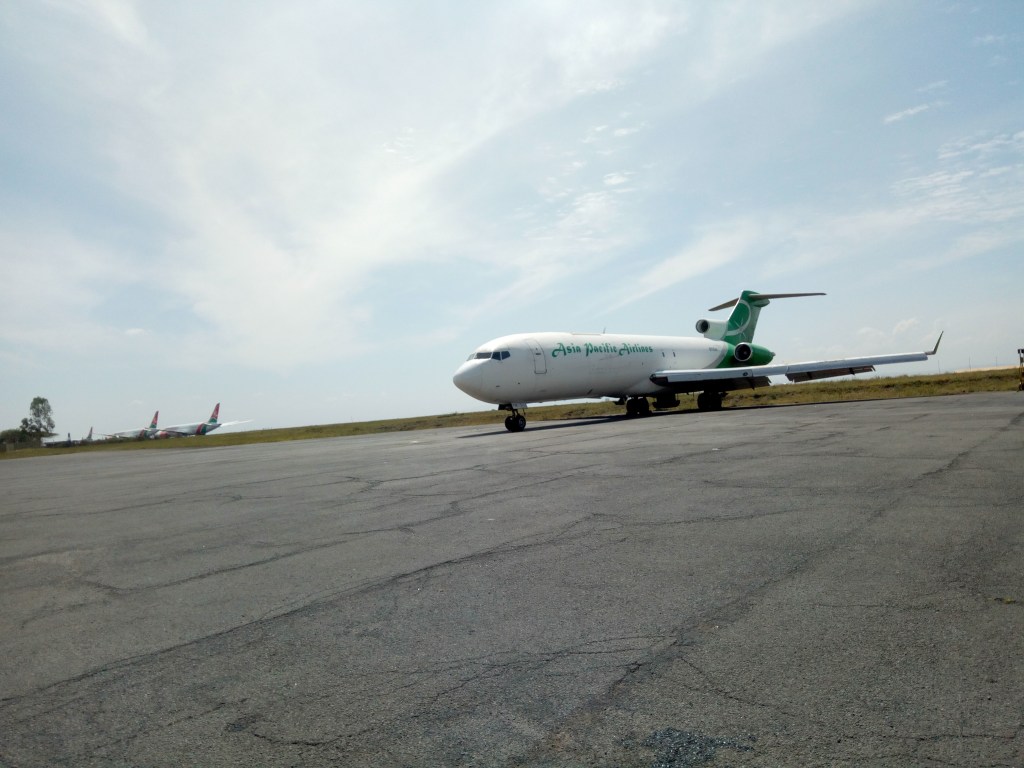
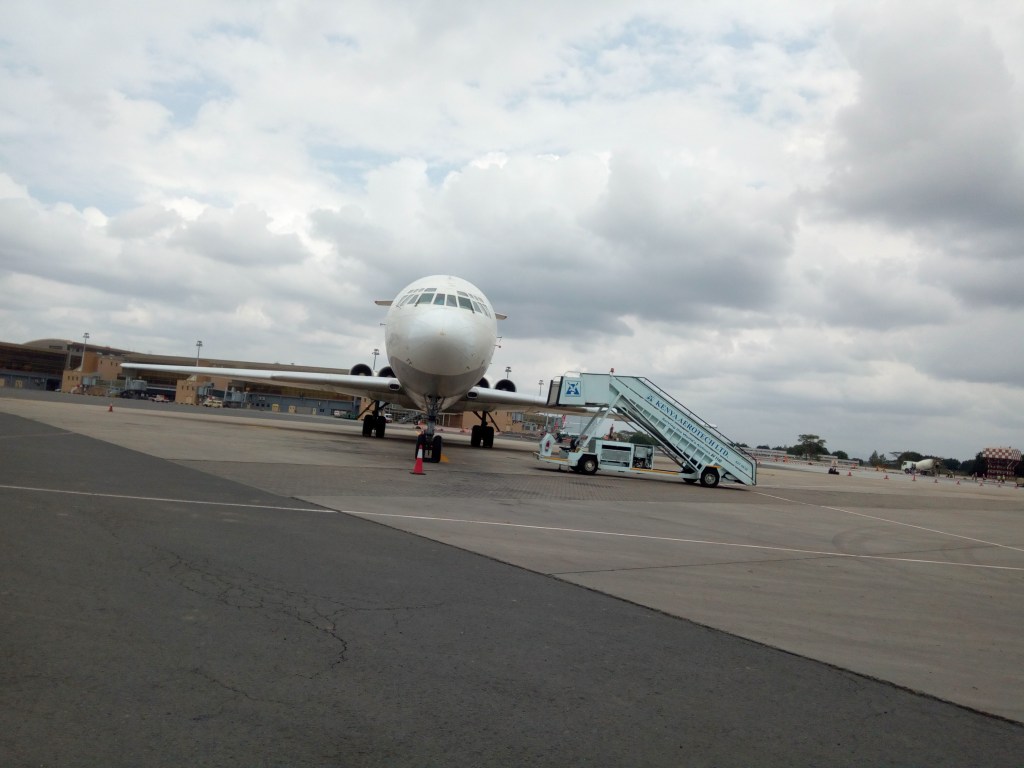
An airplane parked at Jomo Kenyatta International Airport

Advancement in connectivity led to the development of smart technology, which brought about convenience, efficiency and simplicity to processes of accomplishing certain results. This spurred an increase in the production of Internet of Things (IoT) devices, which again mounted pressure for the establishment of a suitable connection that would match network requirements of these devices and also be able to support multiple devices and a large volume of data at super fast speeds.

Up until 2019, the most commonly used connections were; bluetooth, Wi-Fi, 3G and 4G LTE. Each of these have their own limitations in terms of bandwidth, data transfer speeds and latency.

5G New Radio (5G NR) is the latest cellular network that was intended to succeed 4G cellular networks. With the promise of lightning fast download speeds up to 100 times that of 4G, and an extremely low latency, 5G will greatly facilitate the capabilities of IoT devices.

Latency is the delay between the sending of information and the corresponding response. Humans take approximately 180 to 200 milliseconds to respond to visual stimuli. 4G, with good connection has a latency of about 60 to 98 milliseconds. 5G promised a latency of less than 5 milliseconds, almost real time data transfer.

The advent of 5G networks raised several concerns, some of which were valid and called for investigations and subsequent mitigating measures while others have remained controversial hitherto. The valid concerns included claims that its deployment would; cause planes to fall out of the skies, interfere with weather forecasting reducing the accuracy of the collected data and interference with communications between satellites and C-Band stations (5G frequencies in the N78 and N79 ranges). Concerns which have remained to be controversial include: Claims that its high frequency non-ionizing radiation posses a danger to human health, that it was the cause of Covid-19 and also that it weakens the body’s immunity towards the virus.

All valid claims have already been addressed but we cannot discuss them all here. Since this site is dedicated to aviation content, will only talk about concerns to aviation.

Claims that planes would fall from the skies were quite due to possible interference of 5G signals with navigation systems of some planes. More specifically was the interference with the computer used to determine the height of airplanes above the ground. Airplanes are usually equipped with instruments which determine their position and status with relation to the surrounding environment, their flight-path, the ground or terrain and other nearby planes. For altitude information planes usually have altimeters which derive their data from an onboard air data computer. The computer gets air signals through probes that are normally fitted on the exterior surfaces of the plane. From the signal this computer determines the atmospheric pressure at any altitude which the plane would be flying and interpretes this as the plane’s altitude, based on the pressure which the pilot will have set as reference at sea level.

An analog altimeter display gauge used to show the plane’s altitude

However, due to varying atmospheric conditions, an altimeter cannot be relied upon to give precise height of the plane especially when the plane is near the ground and descending towards terrain.A more accurate and independent instrument that can continuously measure the absolute height of the plane above ground is required; and this is where a radio or radar altimeter comes in. The radio altimeter is usually active from the ground up to a height of 2,500 feet, past which its indications disappear and are replaced with an ‘OFF’ flag. The indications would re-appear again when the plane descends below 2,500 feet and remain active all the way to touch down. In fact most airlines have a standard operating procedure that requires one of the pilots to call out ‘Rad Alt Live’ soon as the indications re-appear.

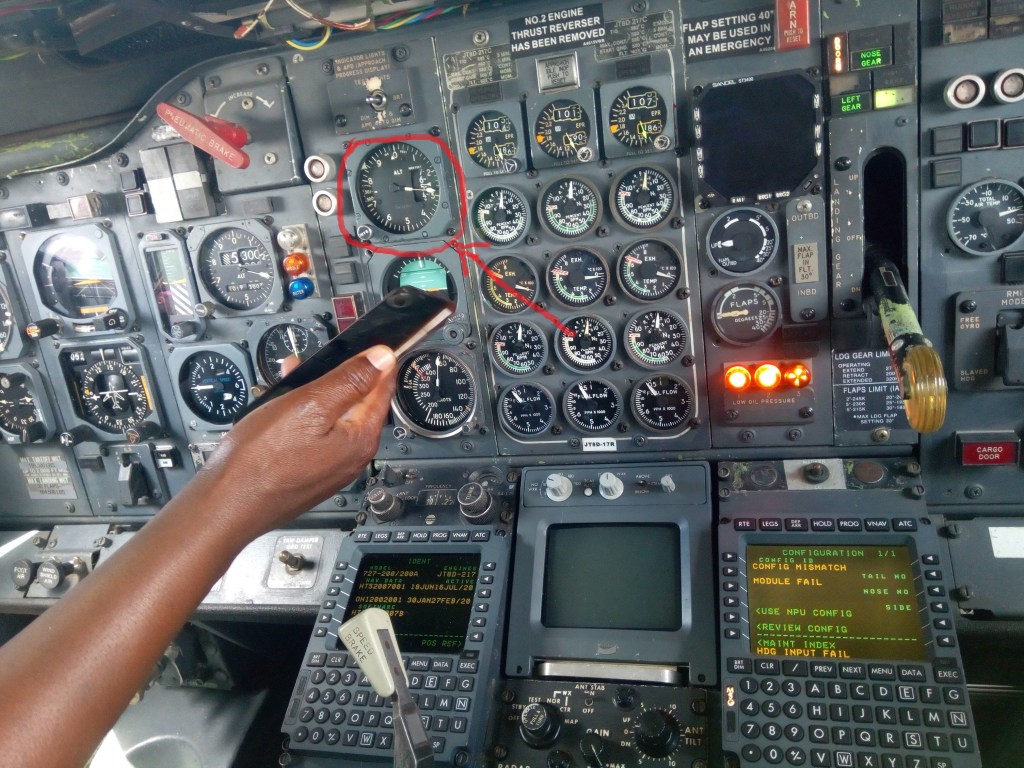
A radio altimeter indicator on a Boenig 727

A Radio Altimeter works by continuously sending radio frequency (RF) pulses towards the ground and receiving the signal which is reflected back to the airplane. It then computes the delay between the two pulses (transmitted and received) and interpretes this as the height of the plane from the ground. Based on this the radio altimeter sends signals to activate some systems such as aural warnings to the flight crew should it detect an unsafe condition. An example of an unsafe condition is if the plane descends too fast towards terrain, or if the plane is approaching the ground and is not configured properly for landing.

To protect communication systems from interference, transceivers usually have inbuilt filter circuits to block signals which are out of the desired frequency range and only let in a specific range of frequencies for processing. However, some filters are designed with features that can be penetrated by a tiny range of neighbouring frequencies. These unwanted frequencies would cause several things including interference with the signal being processed leading to distortion, ‘noise’, or degradation of the signal being processed.

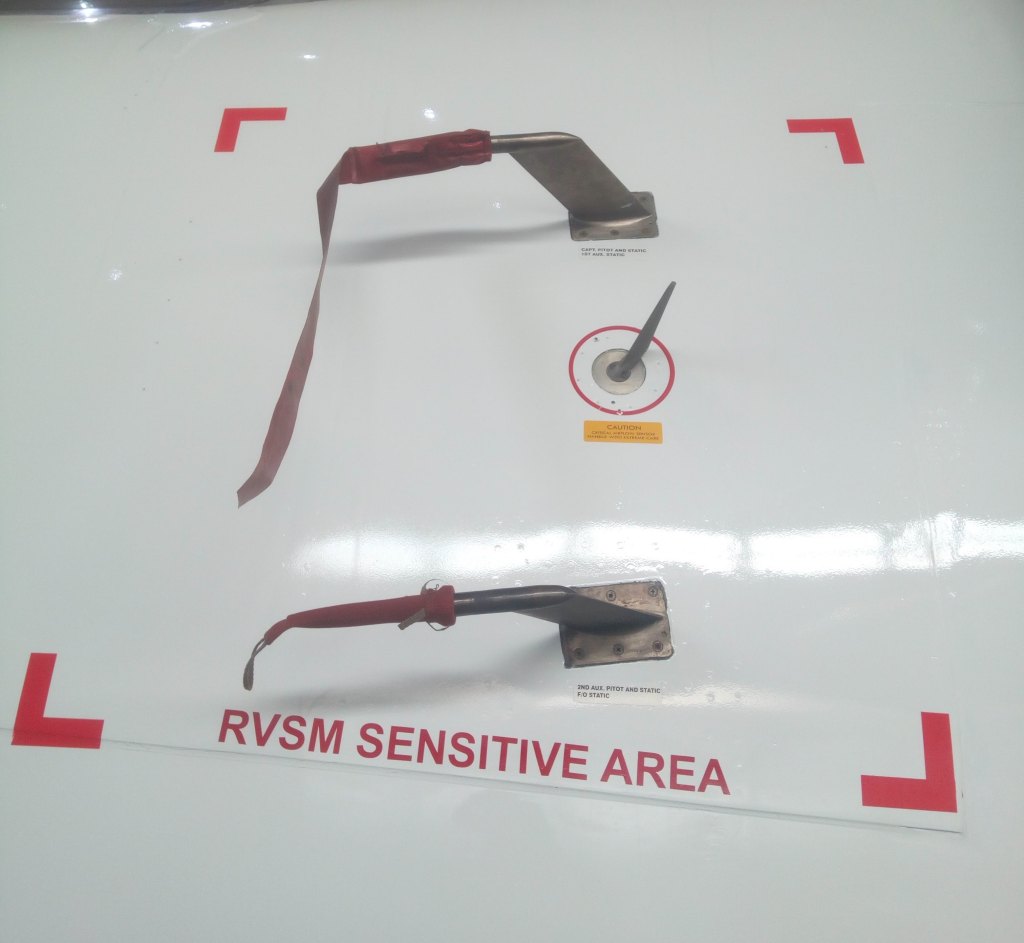
Some of the probes used to collect air data in flight

Radio altimeter RF pulses are usually transmitted at frequencies of 4,200 to 4,300MHz and at a rate of about 7000 pulses per second. Some older airplane models have Radio altimeters with filter circuits that can be penetrated by neighbouring frequencies, such as those in the 5G frequency range of between 3700 t0 3980MHz. This is likely to happen especially when the plane is near a source of these frequencies where the signal is strong, such as near a cell phone tower. This normally would be during a landing or take-off, which is also the phase of flight when the Radio altimeter is required to be fully functional. The result of this could then be that the system might process the false signal and mistake the height of the cell phone tower for the ground elevation, or the signal may cause distortion of the reflected signals being processed leading to erroneous interpretation of the plane’s height.

Height data from Radio Altimeter is usually not only displayed to the flight crew, but is also channeled to other related systems to either activate or deactivate some of their functions. Typically, some of the interconnect systems include: TAWS (Terrain Awareness and Warning System), TCAS (Traffic Collision Avoidance System), Autoland, PWS (Predictive Wind Shear), Crew Alerting System, PFDs (Primary Flight Displays) and others depending on the airplane model. All these systems are critical to the safe operation of the plane and feeding them incorrect data could be detrimental to flight safety.

However, the risk would only be applicable to flights within regions where the 5G frequency band deployed is near the operating range of Radio altimeters such as some regions in the United States. Flights within most parts of Europe, Asia and Africa where lower frequency bands are used would not be affected.

Mitigation to this issue included delayed deployment of 5G in some regions and near busy airports as investigations were conducted; which resulted in the development of modifications into existing vulnerable Radio altimeters, to make them more resistant to interference. Other recommendations included limiting power levels of 5G cell towers near airports and tilting the angle of 5G cell tower antennas near airports and flight paths so as to direct the emmited signal in a horizontal plane rather than upward into the receiver antennae of approaching airplanes. In the early days of 5G deployment some airlines went to the extent of swapping airplanes scheduled to land in the affected regions before resolutions were effected while few cancelled the flights to avoid the risk altogether.

However, application of 5G networks to aviation will bring about several desirable changes some of which include:

Enhanced airplane monitoring: With increasing adoption of modern technology in aviation, high speed data transfer, extremely low latency and reliable connectivity enable real time data transfer between airplane systems and ground stations. This will result in real time monitoring of airplane systems and engines; information which can be used to make critical decisions regarding the safe operation of airplanes.

Improved passenger experience: Fast and reliable connection on board planes and within airport lounges; that can also support passengers devices will make journeys more enjoyable and engaging. High connection speeds and low latency will greatly enhance data streaming services, real time access to online services and even high quality video conferencing. Travelers would be able to book or even make changes to bookings during any phase of the journey and business travellers would continue to be productive in flight via real time online video conferencing.

Improved communication: A high bandwidth , coupled with low latency will enable transmission of large volumes of data at lightning speeds; enabling real time transmission of aeronautical information including traffic, weather and advisory updates to operators. This will help in making timely decisions with regards to flight planning and consequently bring down costs to airlines and inconveniences to passengers that accrue from cases of air turn backs, aborted take-offs and landings or en route diversions.

HIGH SPEED TAPE REPAIR ON AIRPLANES

Something has come up and you suddenly need to catch a flight. You purchase a plane ticket and pick a window seat. After boarding the plane you settle into your sit, ready for the exciting flight. However, once you take a glance around the cabin and then outside the window your excitement turns to disappointment as you are greeted with views of some sort of shiny tape on some parts of the exterior surface of the plane. “Is this safe, will that tape hold the broken parts together for the entire journey?, how old is this plane?, is this the best the airline can do to maintain their planes?, I think they could have done better… do they even care about their reputation?” Out of frustration, you decide to take a photo so you can share the mediocrity on social media or even send a feedback to the airline”.

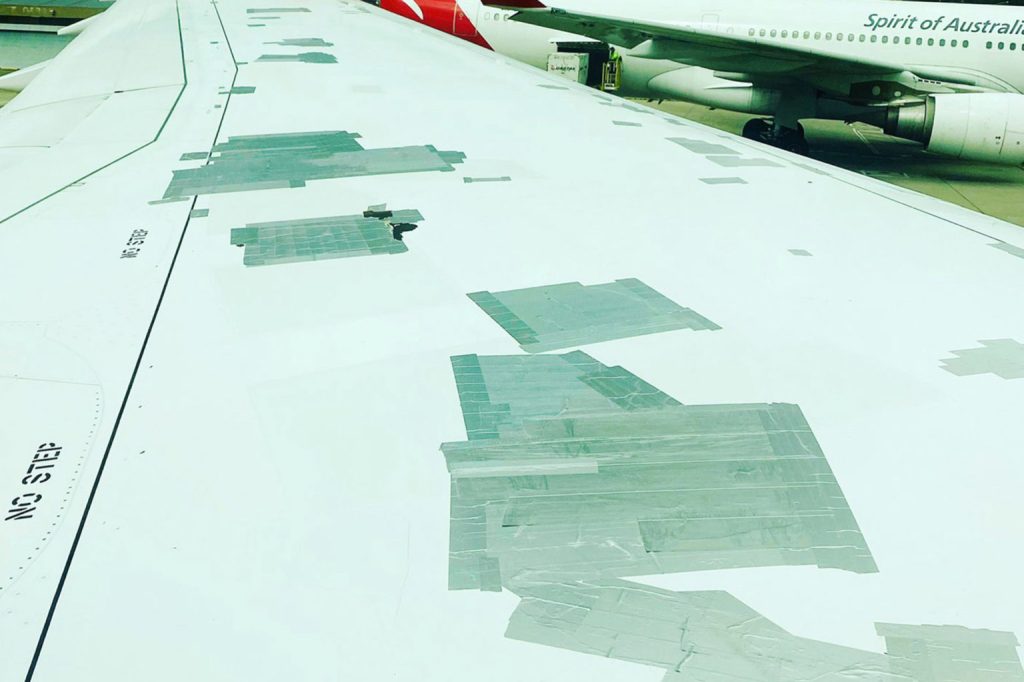
A Boeing 787 wing with patches of speedtape

Flying is still considered prestigious even at the present age. The price of an airline ticket is also still high and therefore aviation passengers usually have high expectations of value for money in terms of comfort and safety. Sights of patches of tape on a plane would trigger concerns about quality of maintenance and whether the plane is safe for flight. However despite several standoffs between passengers and some airlines on social media over this same issue, it is still very common to find the shinny tape on planes.

Not too long ago a photo of an airplane operated by Kenya Airways (KQ) was trending on social media, over what was being described as a patch of ‘sellotape’ repair. The responses which accompanied the post contained hostile comments towards the airline. KQ is not the only airline which has found itself on the receiving end of this kind of accusation. Other prominent airlines as well, including Qantas, Spirit airlines, Easyjet, United airlines, Air New Zealand and many more, have also had similar claims hurled towards them.

So what is this mysterious sellotape?

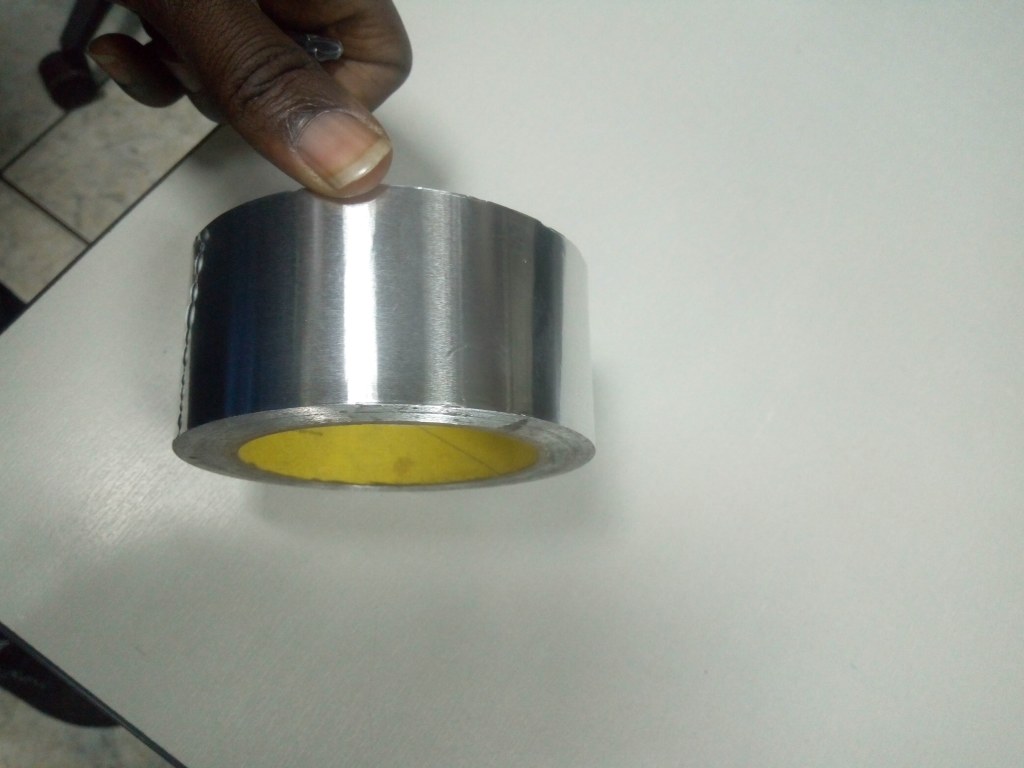
The so called sellotape is known by engineers as speedtape. It is a pressure sensitive tape made of an acrylic adhesive backed with a foil of pure alumunium. The tape is approved for use in quite a number of applications. Among them is to temporarily protect or preserve the structural integrity of aircraft skins, and to accomplish temporary or non-critical repairs on airplanes. Its shinny-metallic appearance makes it easy to be mistaken for the more common duct tape. Once installed, the tape is usually able to remain attached to the exterior surfaces of an airplane at high cruising speeds; and hence the name speedtape.

Speedtape almost halfway used

Speedtape is suitable for use on airplanes because it is, waterproof, resistant to many solvents, flame resistant to a reasonable degree, is able to reflect heat and UV rays and it is capable of expanding and contracting reasonably well with varying temperatures. However, in order to make it understood how this controversial tape protects airplane skins then it is also inevitable to detail what makes up the skins and the damaging elements which they must be protected from.

An unpainted section of an airplane during routine maintenance, showing skin built with carbon fiber

Modern airplane skins are critical structural members. They are usually built using aluminium alloys, composites, or titanium alloy (in areas subjected to high temperatures). These materials are known for their excellent anti-corrosion and high strength to weight ratio properties. However, the use of composites for airplane skins is becoming increasingly popular on newer planes.

Composites are non-metallic materials and so they do not corrode. The most commonly used type of composite for the construction of newer airplane skins is carbon fiber laminate. It is usually made by joining several layers of carbon fiber cloth together using a resin (or what a layman would call glue). The process is normally done under specific temperature and pressure conditions suitable for the resin to cure; and other contaminants, especially moisture to be eliminated. The final product is nearly 1.7 times stronger than aluminium.

A close-up view of a bare carbon fiber material

On the other hand, aluminium alloys usually have a thin layer of a chemically stable oxide which protects the metal beneath from further corrosion or attacks by chemical agents.

UV radiation

UV is a form of electromagnetic radiation which is naturally present in sunlight. It can also be generated by electric arcs, special lights such as black light, tanning lamps and mercury vapor, and a phenomenon called cherenkov radiation. Lightning strikes caused by electric arcs do generate considerable amounts of UV, but the sun is the main natural source of harmful UV radiation.

Despite being highly resistant to corrosion aluminium alloys can corrode, and composites can undergo accelerated deterioration. UV radiation causes the chemical bonds of the cured resin in composites to break, leading to gradual loss of the mechanical properties of the material and consequently compromised structural integrity. Degradation on composites can be indicated by discoloration or yellowing. Besides exposure to UV radiation, degradation of composites can also be caused by exposure to harsh chemicals.

Similarly, when exposed to UV radiation, aluminium undergoes dramatic photocorrosion in the presence of moisture, resulting in visible corrosion pits on the exposed surface.

back to speedtape

A small section of an airplane wing with peeled paint, exposing the composite material underneath

To prevent direct exposure of airplane skin structural materials from damaging environmental elements, including UV, a special kind of paint is usually applied onto their surfaces. The paints do contain elements that are resistant to some harsh chemicals and are also able to block UV radiation.

However, if paint work is done poorly, or the airplane encounters severe environmental conditions or contact between the paint and a harmful chemical occurs; then the paint peels off, leaving the skin underneath bare and vulnerable to the harmful elements. In some other cases selection of top finish paint might have been made poorly such that a type of paint which is less tolerance to UV is used, and hence it just peels off on exposure to sunlight. Airplane skins may also be exposed due to scratches which are usually inflicted during ground operations from contact with servicing vehicles, foreign objects, or while undergoing maintenance.

Aircraft maintenance inspections and any other tasks are normally carried out in accordance with guidance information contained within aircraft maintenance manuals. During routine maintenance inspections, existing defects are usually identified and reference made to the maintenance manuals for related guidance rectification tasks. Some defects are classified according to the effects they would have on the normal operation or safety of airplanes. Small patches of peeled paint in most cases are considered minor defects and corrective actions to be undertaken are usually detailed within the manuals. Other common types of minor defects that are regularly found on airplanes include loose or missing fasteners, loose or broken latches or handles, peeled or cracked sealants and many others. In most cases, loose or missing fasteners and broken latches or handles are normally caused by severe vibrations, lightning strikes or flight into abnormal weather conditions that may impose excessive loads on the airplane structure. Cracked or peeled sealants can be caused by ageing, poor sealant mixing or application techniques or erosion due to impact with high velocity particles in the air.

High velocity airflow in flight would cause a small section of peeled paint to grow bigger exposing more areas to the environment; whereas vibrations would cause loose fasteners to loosen further and even erode the fastener holes. Loose latches or handles would also loosen further and consequently break away from the plane. Rectifying minor defects early enough prevents them from worsening or causing secondary damage to the plane.

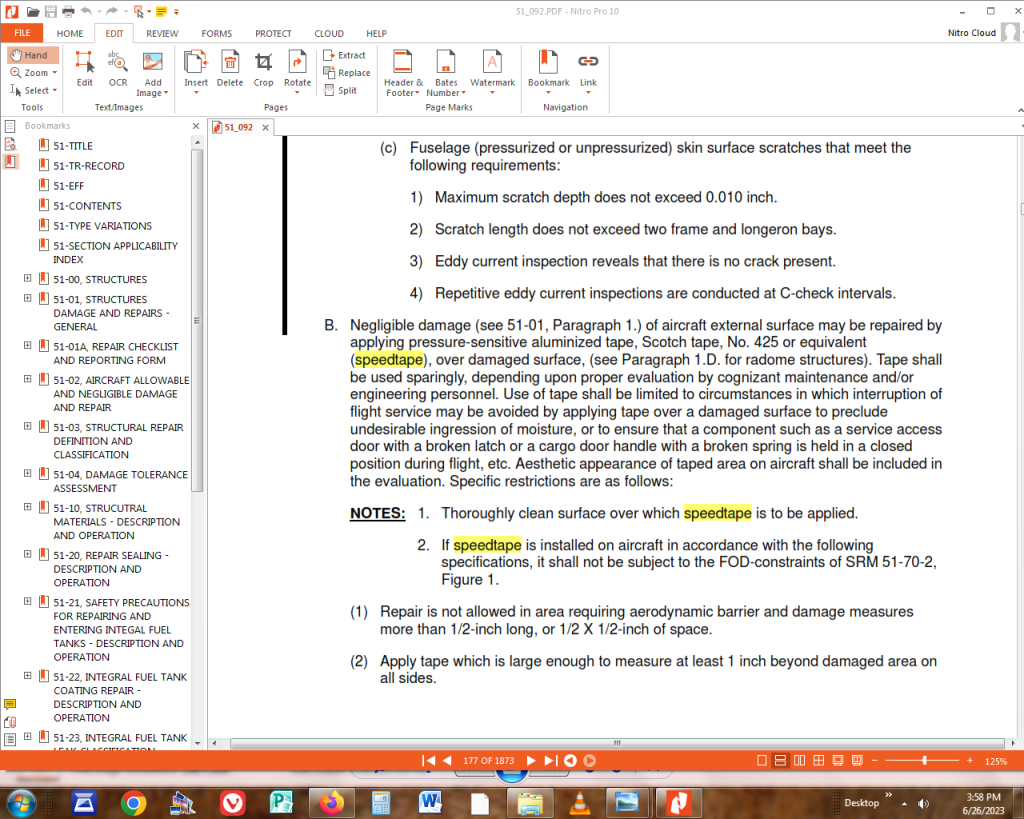
Permanent corrective actions would be to repaint sections with peeled paint, replace missing or loose fasteners, or repair dents and scratches. However, if there is immediate demand for the plane to fly and pulling it out of service would cause passengers to miss a flight or the airline to lose significant revenue; the airplane’s repair manual provides for temporary repairs to be carried out for a specified duration or until there is sufficient ground time for permanent repair to be done. One of these temporary repairs is application of speedtape to cover small patches of peeled paint or covering a fastener hole or peeled sealant to prevent moisture ingress.

An excerpt from an actual aircraft Structural Repair Manual with instructions to apply speed tape to the external surface of an aircraft

It is therefore not a lazy engineer’s decision or shoddy maintenance practices by airlines to patch an airplane with speedtape; but it is a time saving temporary repair which is called for by the plane manufacturers for certain minor defects after careful analysis of the damaged area has been done. Following application of speedtape, the patched area is usually monitored consistently just to ascertain effectivity of the repair.

Peeling of paint has become particularly common on planes built with carbon fiber. This type of composite material would suffer severe damage when exposed to high levels of UV radiation over extended periods. More often the peelings do occur over short intervals that it may not be economically reasonable to pull out the plane from service for repainting to be done. This is why you will most likely find some patches of a shinny tape over the wings of the dreamliner next time you board one. Airbus has had its fair share of paint problems; which went as far as planes being returned for repainting, and cancellation of airplane orders by Qatar Airways. On the contrary, Boeing troubles didn’t reach this far, and neither may they get any worse. In mid November 2022, Boeing applied for certification to alter composition of paint on dreamliners to make it more tolerant to UV. Sights of shinny tape may therefore be a thing of the past on dreamliners in the near future.

Well, the next time you get on a plane and see shinny tape patched on its wing, engine or other parts of its exterior surface don’t let it bother you or ruin your travel mood. Just sit back, relax and enjoy your flight..

PILOTLESS AIRLINERS

‘What was impossible yesterday is an accomplishment of today – while tomorrow heralds the unbelievable’

Percy Fansler

Percy Fansler, the world’s first fare paying passenger on board the world’s first scheduled commercial flight.

Percy’s statement was more like a prediction of the technological evolution that was to be witnessed over the following years in the aviation industry. Just over a decade before this, man could not have made sense of the notion that heavier than air objects could float in air. It was until the year 1903 when the idea was proven possible by the Wright brothers, after their newly invented Flier took off and stayed airborne for few seconds; and thus giving birth to heavier than air flights. Since then, there have been numerous breakthroughs in aviation over the past century which have greatly improved the safety, reliability and efficiency of airplanes. Most notable of these improvements is the reduction of the workload required by pilots to fly planes. Today’s planes are laden with sophisticated technology to an extent that the role of human pilots in the cockpit has been reduced to that of monitoring the airplane and communicating with ground stations.

A Boeing 787 Dreamliner; one of the modern airliners built almost entirely of composites and equipped with most of the leading technologies in aviation today.

Despite this monumental transformation to airplanes, airlines are still grappling with the burden of incurring high operating costs; fuel costs and pilot wages being among the major contributors. But things are about to change. With the current technology and the latest manufacturing trend of developing smart technologies, it is with no doubt that we are just about to see an era of pilotless airliners ferrying passengers and cargo across continents. In fact, the revolution is well underway; and both American and European Aviation authorities are aware of it and are already preparing for it. Airlines are eagerly waiting and ready to embrace it but pilots and their unions loathe it and will make attempts to oppose it. But before we pour it all out, it is only fair that we rewind history a little for the sake of readers with little aviation background just so they can appreciate how far flying has come from.

Perfection takes time, and so did the transformation of planes. In the early days of flying, planes were built mostly of wood; and navigation would be accomplished by reference to landmarks during the day and heavenly bodies at night. Airplanes were mostly used for reconnaissance missions and transportation of cargo and mail.

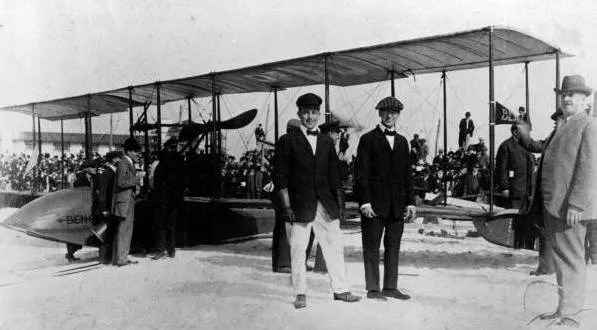
Tony Jannus (left) and Percy E Fansler just before they boarded the first ever scheduled commercial passenger flight

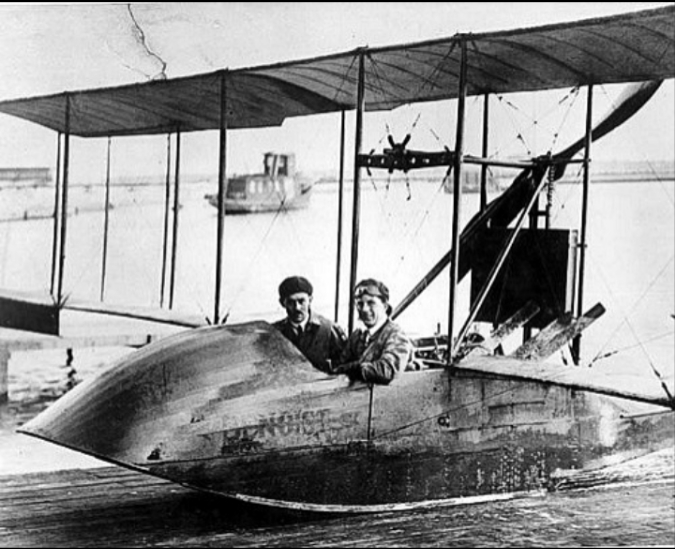
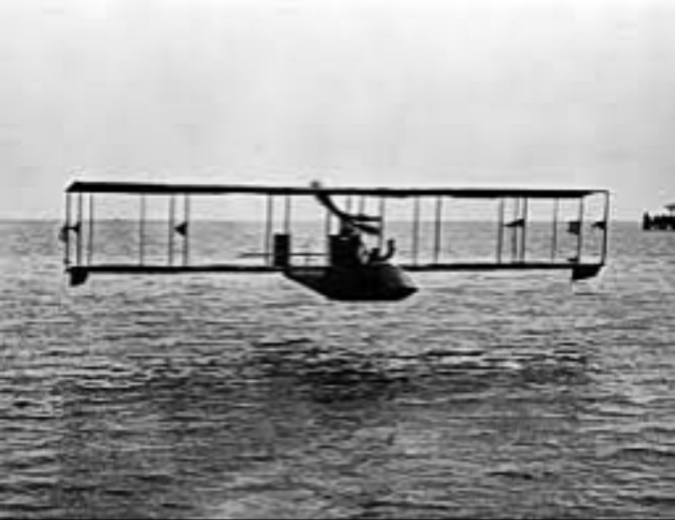
The world’s first passenger on board a heavier than air powered flight was Charles W Furnas; a friend and mechanic who worked for the Wright brothers. Mr. Charles had accompanied the brothers on a test flight of the Wright flier III, which was an improved version of the Wright flier I on 14 May 1908. However, the world’s first ever scheduled commercial flight with a fare paying passenger took place on 1st January 1914, with a single passenger on board an Airboat and witnessed by nearly 3000 people. The passenger’s name was Percy E. Fansler, and the pilots was Tony Jannus. The airline which conducted the flight; and which is also the world’s first scheduled commercial passenger airline was called St. Petersburg – Tampa Airboat line.The Airboats, were later known as seaplanes. These were most suitable at the time as there were no airports.

‘Someday people will be crossing oceans on airliners, like they do on steamships today’

Thomas Wesley Benoist, Jan 1914

This was Tom Benoist’s comment (builder of the airboats), while expressing his appreciation of the newly established airline. Wish he would have lived long enough to witness the Concorde era.

The new means of travel (flying) was faster and efficient. Later on during world wars, flying proved to be a major determinant in winning battles; and in fact, it was due to the wars that major milestones in the evolution of airplanes were achieved. This was as a result of contests by nations to dominate air superiority. After the wars, aviation was to be used for peaceful purposes. Military technology which had greatly advanced, would be borrowed to help develop more efficient, reliable and safe civilian planes. This collaboration has persisted up to date.

A Boeing 737-300 with modified wingtips. Notice two little ‘eyebrow’ windows on top of the main windows. These were initially used for star-based navigation and to offer extra view when negotiating tight turns into airports

The journey to perfect a project that defies laws of nature bears high tolls; and the unfortunate fact is that these costs are usually transferred to the final consumer of the product or its services. This was also the case with airplanes. Designing and building safe and reliable airliners costs an arm and a leg, and so are the costs of acquiring and operating them. To counter these costs and make a profit, airlines had to hike the price of purchasing a flight ticket. People who could afford airline tickets were mostly wealthy individuals, and so air travel was considered prestigious right from inception.

Following world war II, was the birth of International civil aviation. This called for collaboration by participating states to develop safe and reliable air travel; and hence the need for bigger planes, longer routes, high altitude flying, night travel and trans- oceanic cruise.This resulted in the production of bigger planes with more efficient engines, introduction of powered flight controls to replace the old cable and pulley systems, and computers for processing flight and systems data.

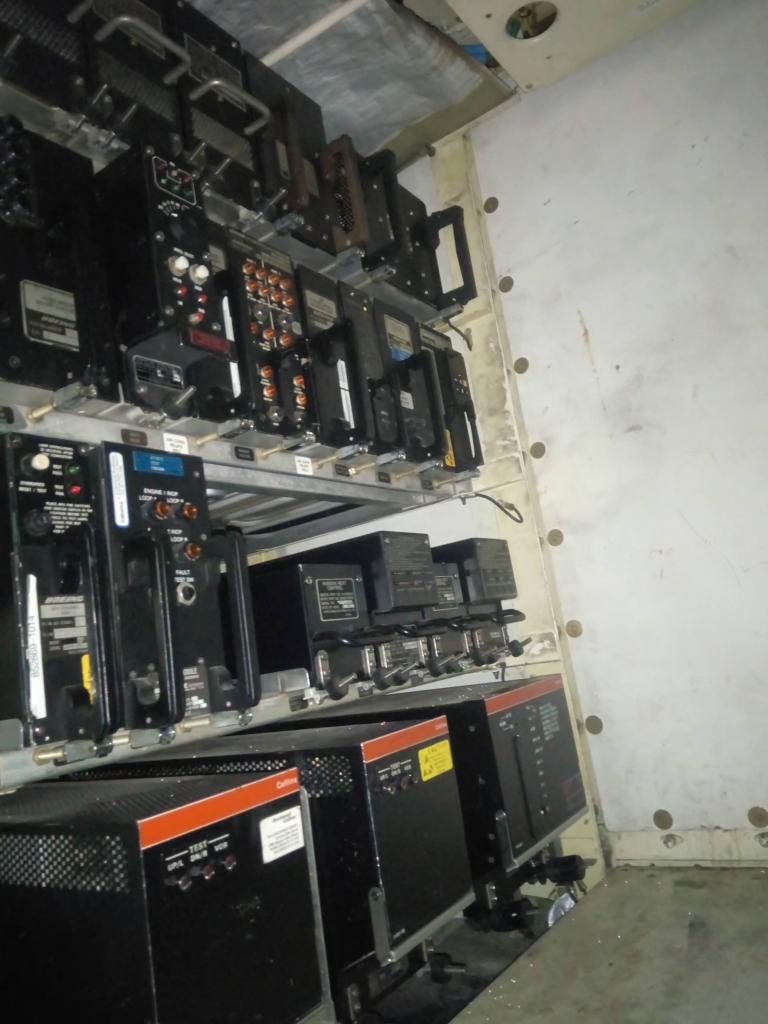
However,in spite of the collaboration, flying older planes was still a demanding task which required high skills and bravery.This was because aviation was still young and the former technology used during this era was still wanting. For example,the former computers which were developed to process flight and systems data, were bulky and had limited capabilities.Some of the data which they presented to the pilots would require additional manual calculations in order to get the correct interpretation. Moreover, each computer could only execute few specified functions, and hence present little data at a time for display to the flight crew. This meant that there was a computer for nearly every system, feeding data to its own display unit inside the cockpit. This resulted in the presence of too many gauges and switches in the cockpit; and for this reason there arose need for an extra crew member in the cockpit to man some of the gauges. It was due to this that a flight engineer was introduced. Their role in the flight deck was to monitor and make any necessary adjustments to instruments displaying data concerning performance and health of the airplane’s critical systems in flight. This would leave pilots to focus on instruments relaying information only related to flying the plane.

Various computers in the avionics equipment bay of a Boeing 737

As flying grew more popular, demand for flights kept growing, increasing the need for more planes and skilled pilots, both of whose availability was scarce. Piloting was a young career and hence there were no established flight training facilities and professional instructors to meet the growing demand. This imbalance between demand and supply of pilots, coupled with the rare skills required to fly planes, and the prestigious nature of aviation due to high profile passengers; resulted in a hike in the wage rates for the few skilled pilots that were available to the extent that piloting ranked among the highest paying jobs of the century. The effect of this to airlines was an increase in their operating costs which consequently translated to a further increase in the price of airline tickets.

A Boeing 747 partially parked in the hangar during maintenance. The first 747 rolled out of assembly factory on September 30, 1968.

Pressure also continued to mount on plane manufacturers to develop more efficient, reliable and safe planes. The result of this was continued research and experiments to upgrade airplane systems. One significant outcome of such endeavors was the development of Fly-by-wire system. Its application on airplanes reduced the amount of manual work required by pilots to operate control surfaces. This was a critical feature especially on larger airliners with large control surfaces and flying at high speeds. Large control surfaces are heavy and high speeds impose high aerodynamic loads on the surfaces, making it difficult to operate them in flight. Conventional manual flight control systems were replaced with an electronic interface. Inputs by pilots to control the plane would be converted to electric signals which would be transmitted by wires to flight surfaces control computers. These would then determine the direction and amount of travel of actuators which would then move the control surfaces proportionate to the desired input by the pilots. Manual control systems would now serve as backup in case of system failure. Concorde, in 1969, was the first fly-by-wire commercial airliner.

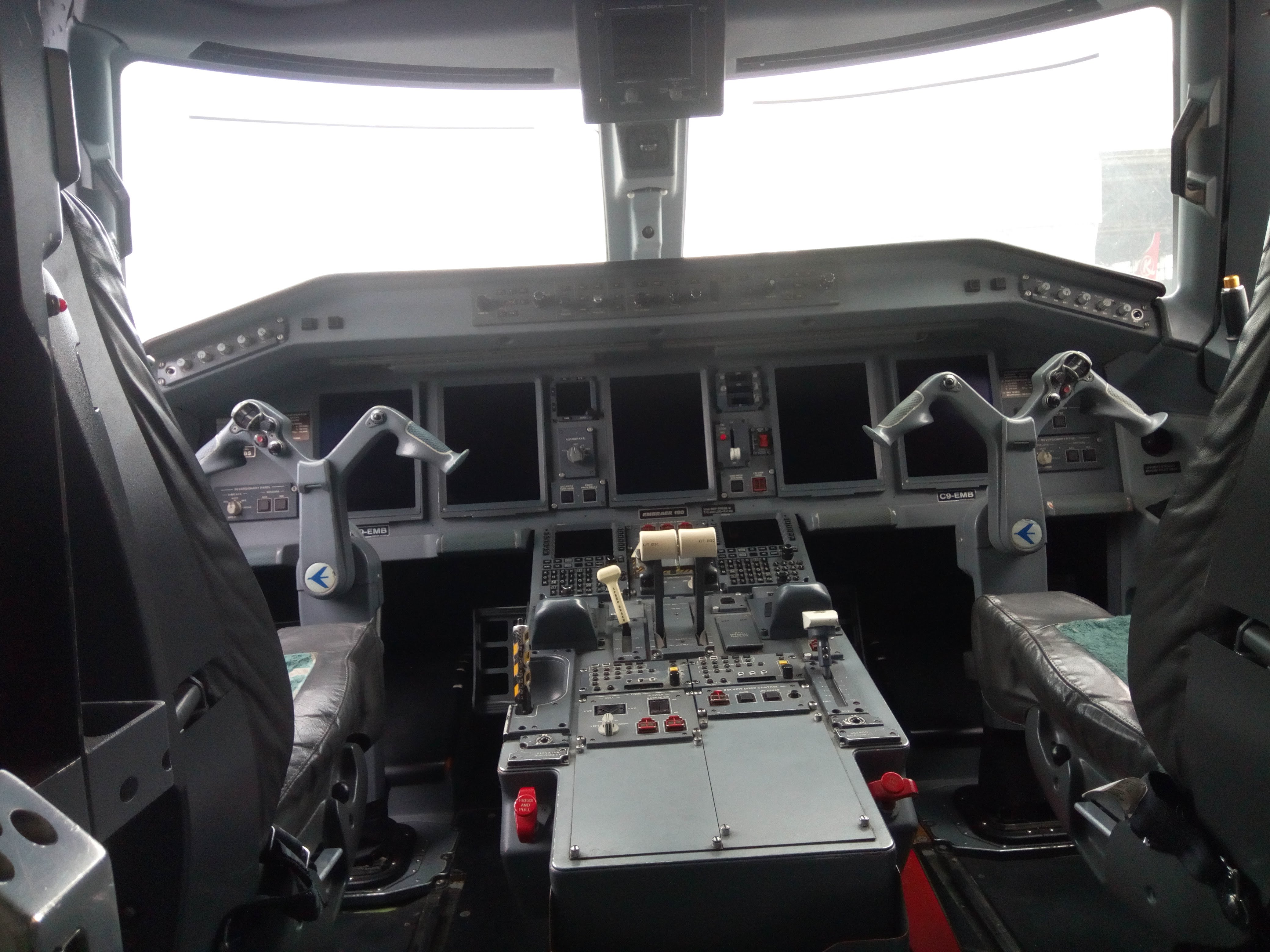
As from the 80s, improvements in computer design and other digital technologies led to the elimination of the flight Engineer’s role. Flight decks were now designed for two crew, and various sensors and computers would now monitor systems for faults and initiate corrective actions. Should faults persist, messages would be displayed on electronic displays, and one of the pilots would read out and execute corrective steps from an onboard Quick Reference Handbook (QRH) while the other would be flying the plane.

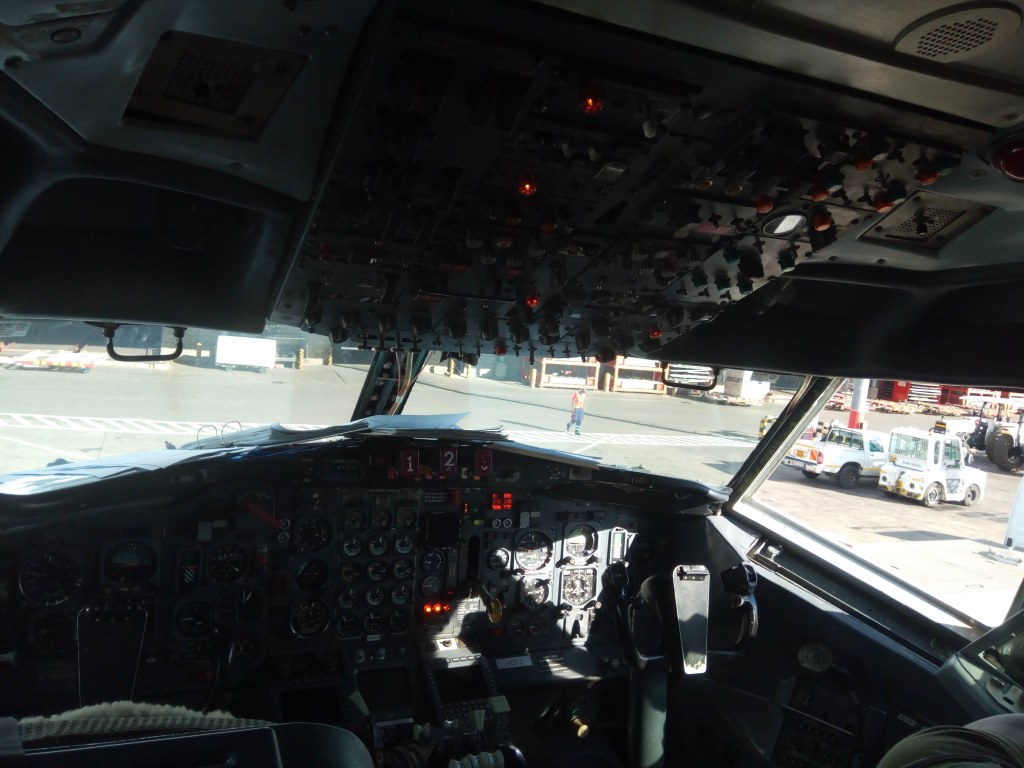
A Boeing 727 cockpit (left) with an observer’s seat behind the captain’s and a flight engineer’s seat and instrument panel behind the first officer’s seat (compare the number of switches and gauges with those in the image on the right). An Embraer ERJ-190 cockpit with two crew seats and modern instrument panels and display units

Major relief to pilots on long flights came with the automation of several flight crew functions. Initial auto functions were autopilot and auto-throttle. The flight crew would input the desired flight data such as altitude, speed and heading through an autopilot panel in the cockpit then switch on autopilot to take over control of the plane and auto-throttle to manage power settings of the engine. The system would then maintain the plane within the selected course. Meanwhile, the crew would sit back and monitor the airplane in case they needed to make any adjustments to the current flight path.

Further upgrades to the autopilot system led to the development of the Flight Management System (FMS). This was able to automate all phases of flight except taxi and take-off. With this system, pilots would only be required to input flight plan data into the system before take-off and the system would fly the plane to the intended destination, sometimes even land own its own.

The role of the pilot in flight nowadays has been significantly reduced to taxiing the aircraft to and from the runway, taking-off, communicating with ground stations, and monitoring the plane in flight. In fact, After take-off, pilots can literally fall asleep and the plane will cruise to the intended destination on its own. Only thing that stops them from doing this is the law, which requires at least one pilot to be actively monitoring the plane and communicating with ground stations.

However, despite tremendous reduction in the workload of pilots, airlines are still grappling with the burden of incurring high costs in terms of pilot wages. This has been made possible by strong pilot unions which will swiftly oppose any attempt to effect a downgrade to their earnings, welfare or even duty times. Nevertheless, the clock is already ticking towards an era of autonomous flights. Human pilots will soon be eliminated from plane cockpits. This will be a huge relief to airlines in terms of reduced pilot wages and eventually lower the price of airline tickets: Flying will be cheaper. In addition to this, it is expected that there will be fewer aviation accidents as a result of human error; and that airlines will achieve maximum utilization of planes, as a result of increased frequency of flights due to elimination of human crew duty times restrictions.

Softwares have been developed which are capable of intergrating with present day airplane systems and enable almost any modern plane to fly without human pilots on board. manufactures are now at advanced stages of developing autonomous planes. Boeing and Airbus, the world’s leading civil and military plane manufacturers; and the American Airforce, have already made immense progress in this race. A more popular autonomous project of the American Airforce is the intergration of AI algorithms into the flight systems of F-16 fighter jets which enabled them to conduct autonomous flights and even execute simulated dogfights without a human pilot on board.

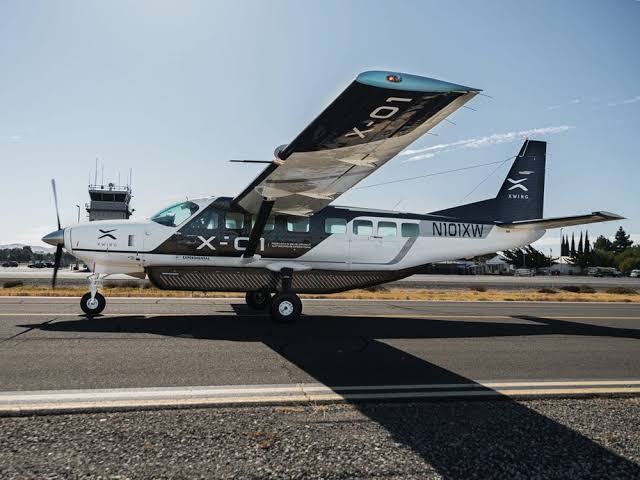
XWING’S autonomous cessna 208B

A nearly similar project with a high rate success was carried out on a commercial plane by an American company called XWING. The company developed softwares and algorithms which they built into the airframe of a very popular civilian aircraft; a Cessna 208 caravan. The plane has already flown multiple autonomous experimental cargo flights and is currently awaiting certification.

In 2020, Airbus managed to conduct an autonomous taxii, take-off, cruise and landing of a commercial airliner using visual recognition technology.

Boeing, on the other hand has already achieved major milestones in this venture. Their quest for autonomity has already culminated in the development of the MQ-25 ‘Stingray’ and the MQ-28 ‘Ghost Bat’. Both these two are military planes, the former being an aerial refueller while the later is a multi combat role stealthy fighter.

In addition to the above, numerous companies have developed air taxis and flying cars, which will soon take over the skies above our cities. In Kenya, the national flag carrier, KQ; which already has an established drone division called Fahari aviation, declared interest in acquiring Air taxis in an attempt to embrace future trend in the aviation industry.

FLYING CARS ARE FINALLY HERE

The year is now 2023. Few decades later, a look back at our current world will depict an ancient world still trapped in an era where you needed to buy an airline ticket and make a trip to the airport in order to board a flight. In that age, an airport will be as far as the nearest car park, landing pad or home garage.

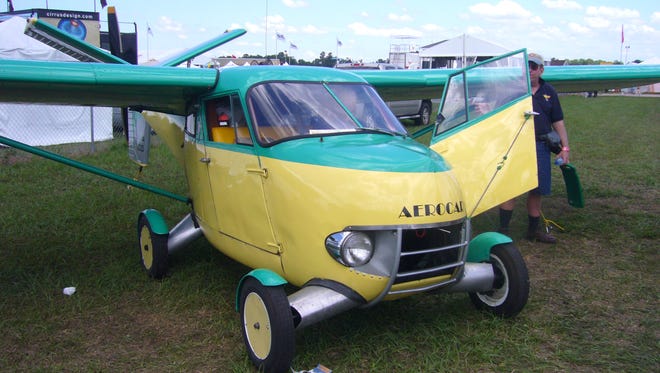
The idea of flying cars originated from man’s desire to possess the freedom of escaping earth’s gravitational influence at will and at one’s own convenience. Since the begining of the 20th century, a personalized vehicle that would enable man to own this freedom has been one of the most coveted possessions; and as a result, attempts have been made towards the realization of this dream. Several concepts have been built, but only one of these had managed to stand out as the most successful since the 1950s. The vehicle was named Aerocar (depicted in the image below). Few of this American car-aircraft hybrid were built and received both roadworthy and airworthy approvals in the same decade.

Today, modern Flying cars have evolved into a variety of concepts. Some of these abide by the traditional idea, others are capable of vertical take off and landing, while another promising concept employs gyroscopic principle of flight. Propulsion methods have also been seen to differ as well as the sources of engine power (fuel or electric).

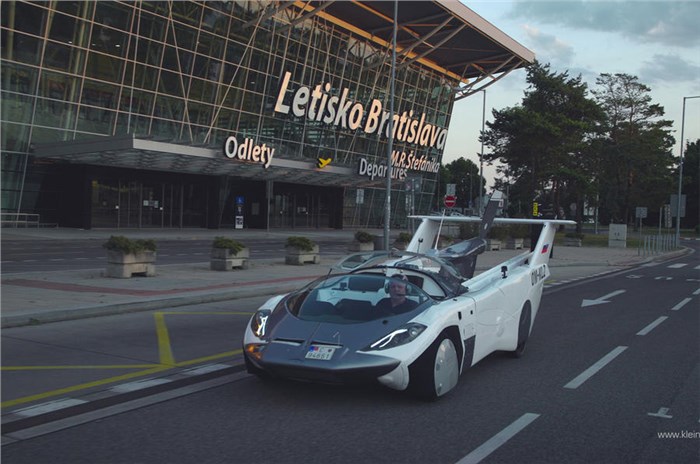
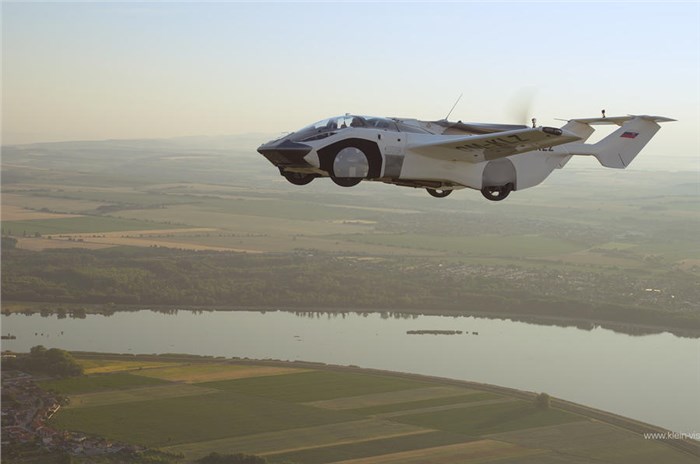
Recently, a Slovakian built flying car was just issued with an Airworthiness certificate. The vehicle, named Klein Vision aircar (Shown in the images below) was approved for flight in January 2022 by its local Transport Authority. The certificate was issued following a series of test flights, which also included 200 take offs and landings. The car-aircraft hybrid uses a set of retractable wings to generate lift, and is powered by a 1.6 Liter BMW engine which runs on regular pump petrol fuel.

The vehicle is capable of flight at altitudes above 8000 feet and speeds of over 100mph (160km/h). Transformation from car to aircraft takes 2 minutes and 15 seconds.

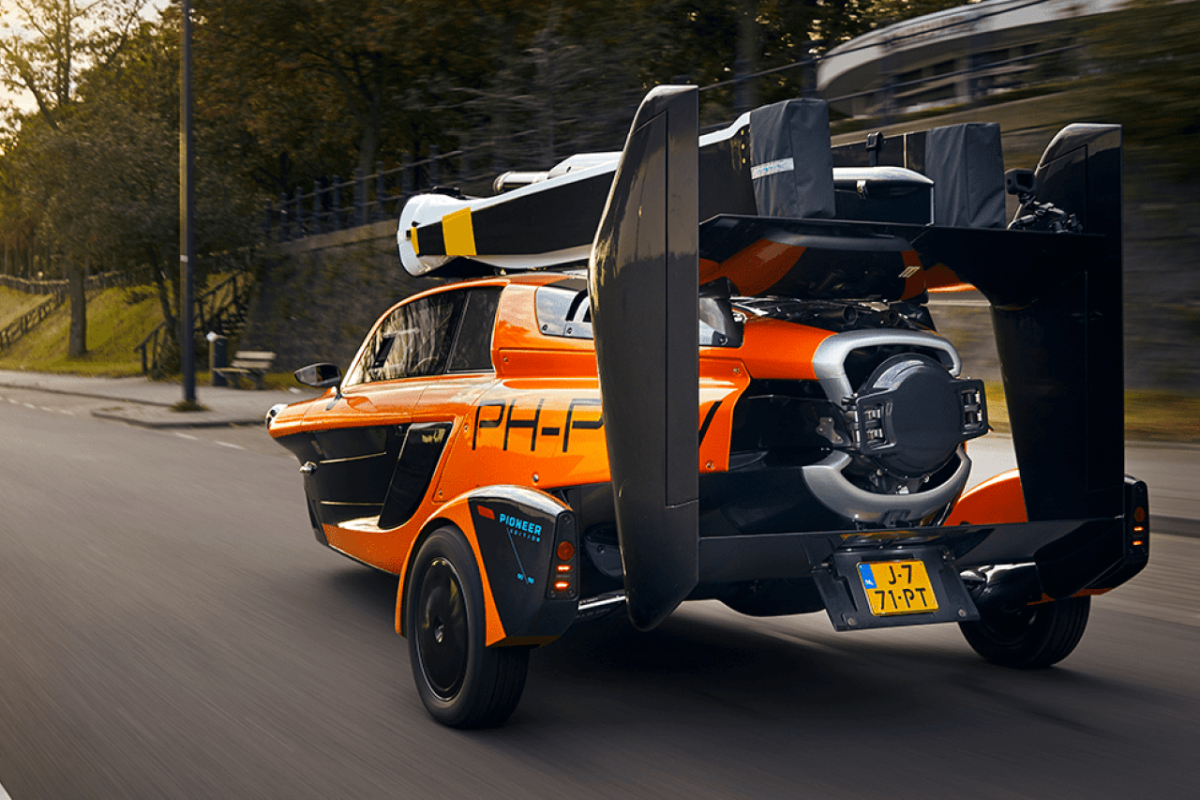
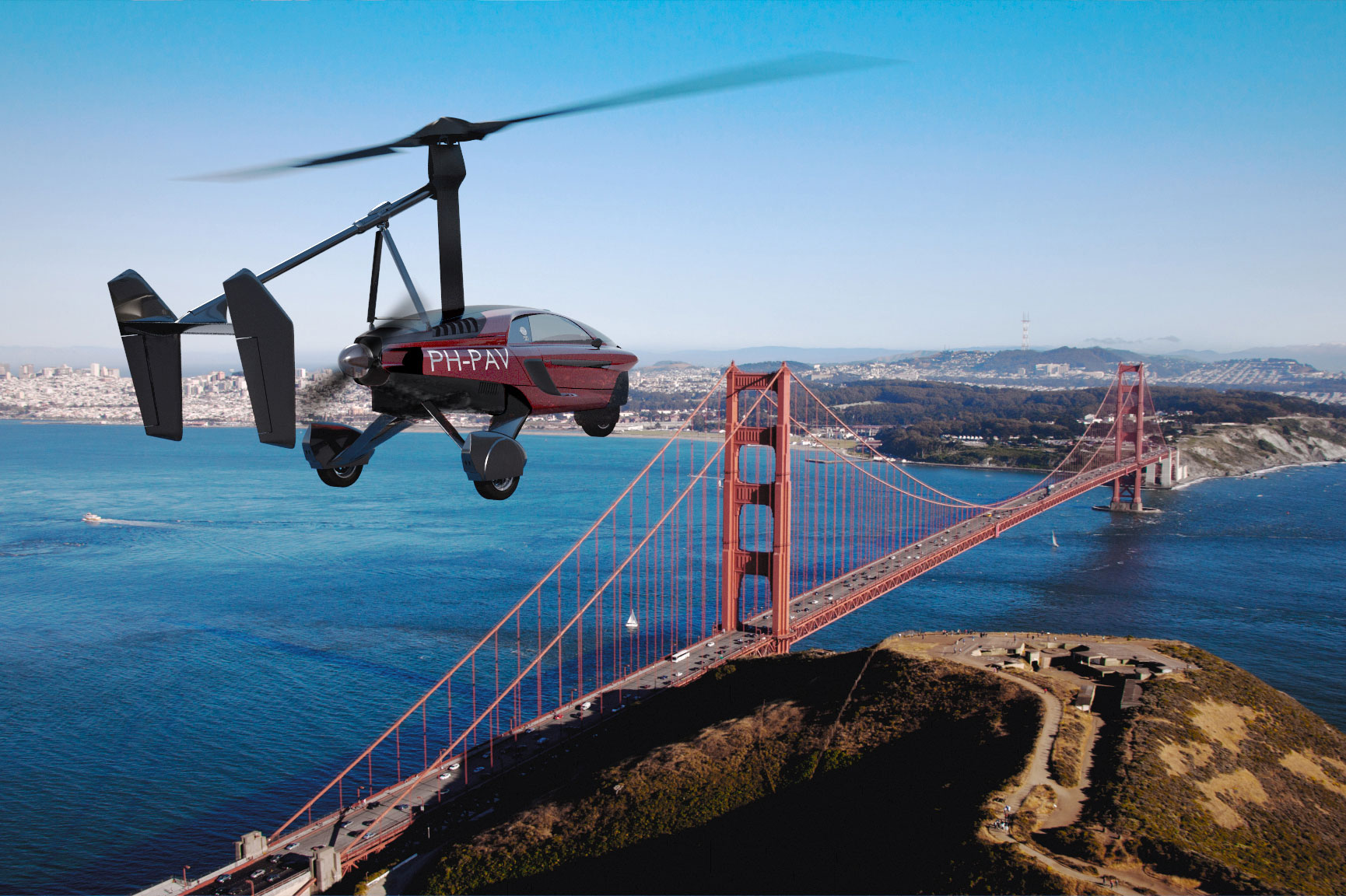
Another flying car, the PAL-V Liberty, which flies on gyroscopic principle is already road legal in the UK. The vehicle has already conducted multiple test flights successfully, and the manufacturer is currently in the process of seeking EASA Certification.

This is only the onset of the future of flying cars, and there are a couple of regulations in place to facilitate the safe and orderly development of this endeavor. Moving forward, more regulations are expected to be established as more prototypes become legalized; however, at present, these vehicles are required to meet both Roadworthiness and Airwothiness requirements; and In addition to these, one is required to have a pilot’s license in order to fly them.

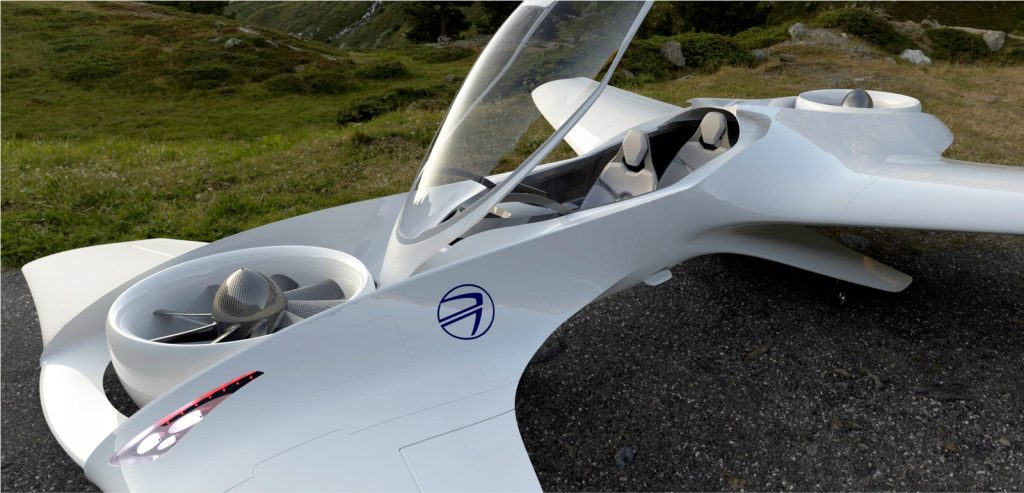
Apart from the few vehicles that we have mentioned above, several other companies are also keen on venturing into this market. Some of the most viable and promising projects which are likely to be unveiled in the near furture include; The UBERAIR VTOL taxi, Terrafugia TF-X, DeLorean DR-7, the Airbus Vahana, Lilium jet, the Aeromobil, Toyota’s Skydive, and the VRCO NeoXCraft.

The DeLorean flying car

THE QUEST FOR SPEED

The onset of civilization spurred man into an insatiable quest for exploration. However, nature always presents some forms of difficulties to man’s undertakings whenever he embarks on such a contest. Nevertheless, in the face of such challenges, science has always provided solutions for man; which have enabled him to make gradual but consistent achievements in most of these confrontations. One such undertaking was the hunt for mobility: The means for safe transportation of people and goods across land and over the seas. This resulted in the invention of machines which made it possible for man to traverse long distances across the face of the earth with great convenience. But as is the nature of man, one achievement only sparks hunger for the next challenge.

Beginning of flights

History has it that the desire to fly is as old as mankind. The desire to take to the skies dates back to as early as 2,000 B.C; when it is recorded that Emperor Shun of China, made an attempt to imitate the winged flight of birds, in his daring escape from the top of a burning tower. There are many other recorded legends and attempts to fly, all based on the imitation of birds in earlier years. The history of flight is long, and so we will just sum it up at that, and jump to the year 1903.

The first ever; manned, heavier than air, powered and controlled aircraft was invented by the Wright brothers; Orvile Wright and Wilber Wright. The aircraft (Wright flyer) rose off its launching track on 17 December 1903 and stayed airborne for 12 seconds, covering a distance of 260 meters. The flyer, however, exhibited major flaws, and therefore following this attempt were a series of innovations from various inventors to address these problems. These would eventually produce improved constructions which turned out to be more practical and better suited for safe flight. This was the inception of modern day flights.

World war

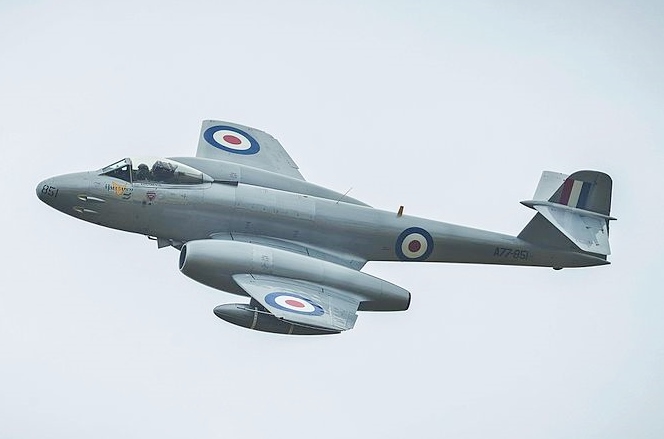
The Gloster Meteor F8 of the Royal Air Force, the first British jet fighter to achieve combat operations in World war II

The occurrence of World war I proved to nations that achieving and maintaining air superiority was essential for victory. This sparked a worldwide race to develop superior airplanes to take on various combat roles in battles. Nevertheless, successful accomplishments of the intended roles would greatly depend on performance characteristics of the planes; and thus, presenting urgent need for further improvements in aircraft designs. The outcome of this turned out to be phenomenal transformation in aircraft designs and overall features.

The older single engine bi-planes, which were mostly constructed of wood and fabric; would now be replaced by all metal monoplane construction, with some designs incorporating twin engine configurations.

Another important development during this time was the development of turbojet engines to replace piston engines. Just one week before the start of World war II, a German aircraft manufacturing company known as Heinkel; which is well noted for its important contributions to high speed flight, made the first ever turbojet engine powered flight. The experimental aircraft which accomplished this was the model Heinkel, He 178. It was a result of the company’s undertakings in its quest for high speed flight. The flight took place on 27 August, 1939. This invention enhanced the performance of airplanes and also increased speeds yet again to new higher levels. This same company, is also known to have developed the He 176, the first aircraft to be powered by liquid-fueled rocket engines.

Just before the start of world war I, the fastest aircraft speed to be recorded was 135mph (217km/h) in 1914. The improvements that came about saw the increase in speeds to over 600mph (966km/h) towards the end of World war II.

Speed of sound

Sound is a pressure wave created by vibrating particles. It can only be propagated through a medium like air, water and other materials; but not in vacuum. It travels slowest in air, faster in liquids and fastest in solids. Speed of sound in air depends on temperature. At a temperature of 00C, sound would travel at 331m/s (1192km/hr or 741mph), whereas at 350C, the speed would be 351m/s (1263Km/hr or 785mph).

Sound from an action taking place a considerable distance away, usually reaches an observer a little later after the action has been perceived. If you have ever witnessed objects colliding at a considerable distance away from you, then you must have noticed that sound from the action lagged behind your actual time of perception by say, a fraction of a second, (depending on the distance between you and the point of collision). You, the observer, would see the action, but then sound from the collision would reach you at about what would seem like a fraction of a second or microseconds later. This tendency of sound lagging before the perceived action is proof of sound travelling slower than light. And thus, sound travels at a definite speed in air, which is actually slower than the speed at which light travels.

The ratio of the speed of an aircraft to the speed of sound is called Mach number. Mach 1, is a speed equal to the local speed of sound, mach 2 is a speed which is twice the speed of sound, and so on. Speeds below the speed of sound are called subsonic and speeds above mach 1 are referred to as supersonic.

An object traveling at mach 2 between two points would take half the time that it would take sound to travel between the same points.

In the above example, if a plane travelling at a speed of mach 2, was just above the colliding objects and flying towards the observer; sound from the action of the collision would be heard by the observer after the airplane has passed him/her, and already covered a total distance equal to twice the distance between the two of them (point of collision and observer).

After World war II

The race to develop faster planes continued after the end of World war II, and reached a point when man needed to build planes which could travel faster than sound. In a war scenario, this would be very significant especially to combat planes and pilots. A bomber aircraft traveling for example at a speed of mach 2; would drop bombs on enemy territory before the enemy could be aware of its approach, and even as it overflew overhead right above them. Sound from the aircraft engines would reach the ground when the bomber aircraft is already at a safe distance past the target area and probably beyond firing range of the enemy. Explosion from dropped bombs would also occur a while later after the aircraft is way out of the targeted area.

However, little was known about supersonic flights and therefore nations embarked on scientific research and experiments to determine how to build supersonic airplanes. The scope of challenges to be addressed contained three phases. First was to understand the aerodynamic characteristics of supersonic airflow, so as to determine the appropriate features to be incorporated in the designs; second, was the problems to be encountered at transition speeds while breaking the sound barrier and the means to address them, and finally how to sustain flights at supersonic speeds. These problems would eventually culminate in major alterations in the design features and structural materials. New engines to power the planes to supersonic speeds would also have to be developed.

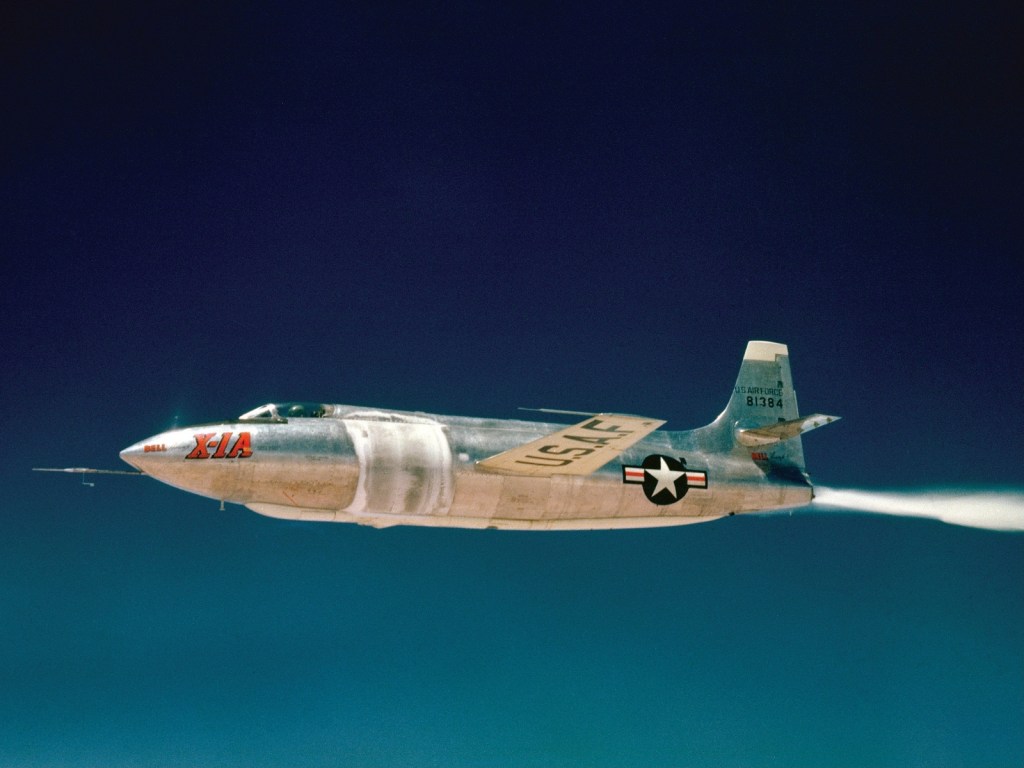
The U.S was the first to successfully achieve the first ever speed of sound flight on October 14, 1947. They managed this using a Bell X-1 rocket powered and straight wing experimental aircraft, which was drop launched from the bomb belly of a Boeing B-29. Several claims of having broken the speed of sound during the war (World war II) would subsequently occur but these would not be recognized.
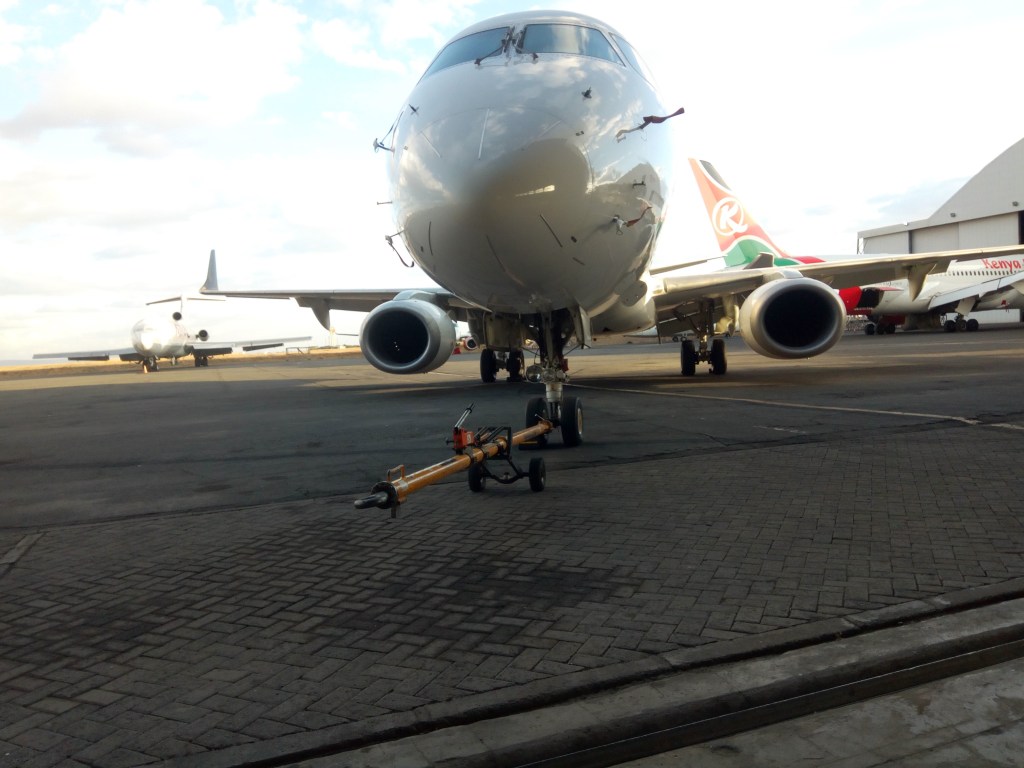
The story of breaking the sound barrier would not to be publicized by the American air force, at least not yet. Nevertheless, someone leaked it to a reporter from Aviation week magazine, whose media house published it and released it on December 20. Los Angeles Times also featured the story as headline news in their December 22 issue. This surprised many aviation experts who had initially believed that a swept back wing design was necessary to overcome the sound barrier. Following this, the Air force threatened legal action for the leak, but seemed to lose interest and this never occurred. The following year, on June 10, 1948, the Air force secretary made an official announcement that the speed barrier had been broken repeatedly by two experimental planes; and hence a world wide race to develop supersonic military fighters was now well underway.
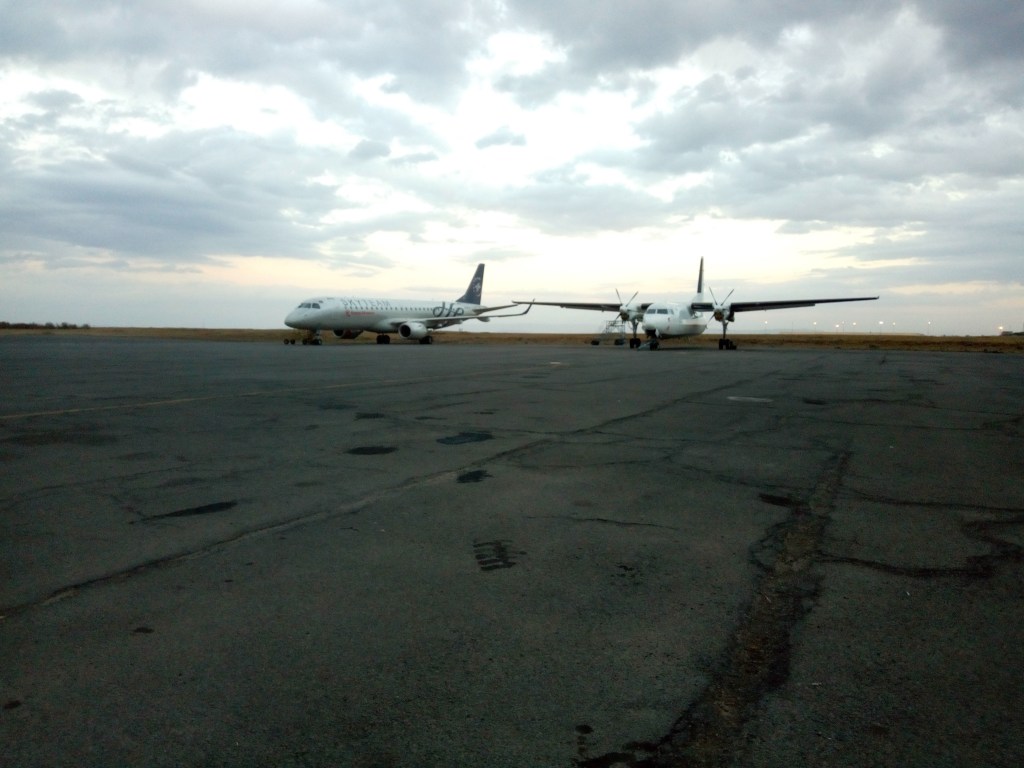
British and France had a long history of rivalry, and were also in the race to develop their own individual supersonic airplanes. However, in 1962, the two countries signed a deal to develop a joint supersonic airliner, as a way to end their long lived rivalry. This was the first time the idea of supersonic travel was ever considered in civil aviation; and the deal would lead to the birth of Concorde.

THE HUSTLE OF PURSUING A CAREER AS AN AIRCRAFT MAINTENANCE ENGINEER (PART 2)

This part of the story intends to highlight candidly the experiences and challenges which people have encountered in the course of pursuing this career.

Just like many paths lead to the river so are the paths which have led people onto this field of practice.To a considerable number, inception of the idea resulted from an ambition to be part of an industry which is popularly associated with unlimited travel privileges around the world and a well paying job. In such cases, the first option which comes to mind most often is piloting. But this is an expensive course for many average families and therefore taking the next option becomes inevitable; thus, the struggle begins.

Aviation is a highly regulated industry with exceptionally high safety standards. These impose a demand for high skills, a sense of good judgement, integrity, and high levels of alertness to those working in the industry. A simple mistake here could translate to very costly consequences or loss of lives. For this reason, activities in aviation are normally carried out in accordance with established procedures; documented in various aviation publications to eliminate probable errors.

Aircraft maintenance is one of the most sensitive roles in aviation. It comprises of a series of functions carried out by teams of professionals from several engineering departments. Each of these departments contributes a vital function to the effective maintenance of the aircraft in order to achieve established airworthiness requirements; necessary to ensure continued safe operation of aeroplanes.

We already highlighted the various categories of aircraft maintenance engineers in an earlier post. Check it out here, in case you missed it. https://wp.me/pa73NS-p. A degree is required for Planning and Development engineers and Senior management positions within the engineering department; while for the rest, a college diploma usually suffices. Generally, the former group deals with aircraft maintenance engineering data, publications and records while the later carry out the hands-on/physical work on aircraft and their components.

School

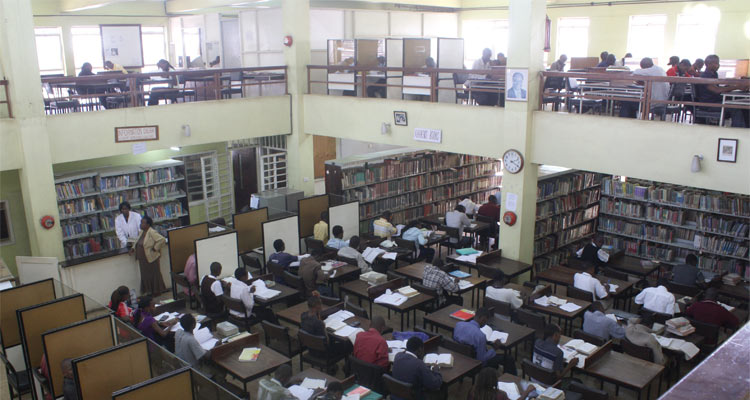
The purpose of this is to equip students with basic engineering knowledge. It’s not an easy stage, but it is manageable. An unfortunate fact, however, is that not everyone makes it out having passed all the subjects. Part of the course requires students to be attached to engineering departments of aviation companies in order to gain some practical knowledge before completion of theoretical studies. Some institutions do help students to get these.

We can’t end this conversation about school without mentioning Engineering Mathematics. This is also part of the syllabus, and usually one of the most challenging subject to some students. After school, however, some maintenance personnel protest to having done it, based on how rare it is to practically apply most of the concepts in the field.
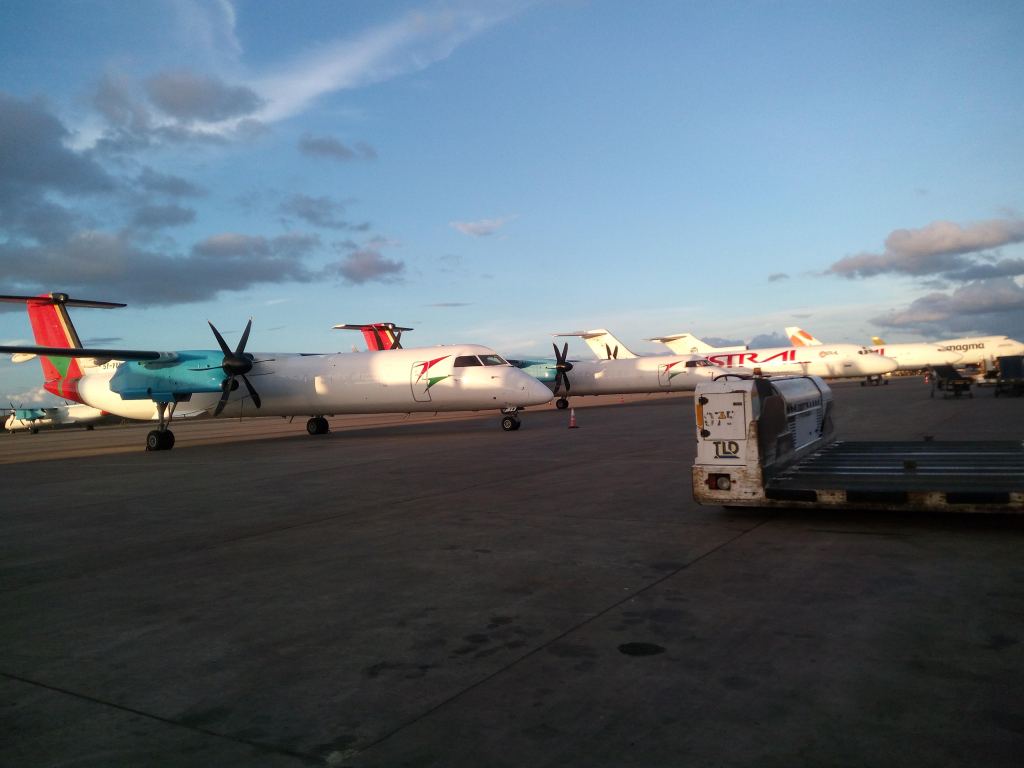
Post school

This is where paths divert for the few individuals who make it out of school successfully. At this stage, each one has to find a way to be absorbed into the industry on their own. An ideal pathway normally would be starting as an intern, apprentice or graduate trainee (for university graduates) for few months in order to gain more knowledge and skills about the trade. Fresh graduates cannot be entrusted to perform maintenance duties independently, but can only be guided to perform limited tasks gradually under strict supervision of experienced and appropriately rated engineers. A while later after experience and competency of an individual can be proved then they can be considered ready for employment as maintenance staff.
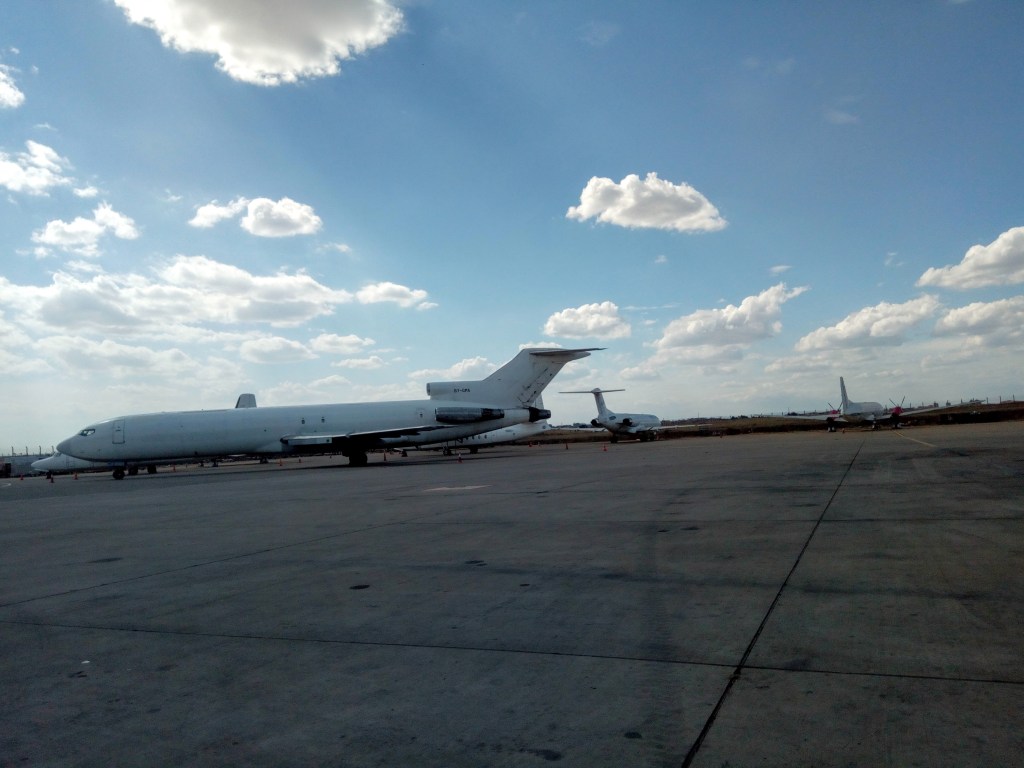
Realistically, however, civil aviation in Kenya has been somewhat stagnant over the past decade, making it seem like a wild gamble to pursue the available few vacancies. Therefore, things don’t usually turn out as expected for every graduate, and instead the the following trend has been occurring for several years now:

Some graduates seek internships for a long time to no avail. Quitting becomes unavoidable after several fruitless years and they end up pursuing other alternatives.

Others manage to get one off internship or temporary contracts for few months, after which doors just shut for good.

Luck falls on few, who get internship and after some months their bosses see the need to retain them, or a different company recruits maintenance technicians and absorbs them.

Another few manage to be recruited as apprentices or graduate trainees (university graduates), then proceed to be absorbed in the workforce. Such initiatives however, can only be managed by well established companies and usually only open to local citizens. At present, Kenya Airways and Jambo jet are the only local airlines which recruit through these two programs for their engineering departments. The programs are designed to take the candidates through further theoretical and practical (On job training) for a period not less than 24 months before they can be deployed in the field for their specific roles.

The military also claims a fair share of aeronautical engineering graduates. In fact, a quick survey we did before publishing the first part of this story, revealed that from 2013 to date, civil aviation and the military have shared the number of all employed aeronautical engineering graduates almost equally.

Foreign airlines, especially ones from the middle east have also contributed largely to the creation of vacancies locally. The companies poach experienced and talented workers from local companies, leaving behind slots for young aspirants to fill.

Lastly, some people attend different courses and somehow end up in the field of aircraft maintenance. We can not afford the space to highlight examples here, but most companies have got at least few. Some of these have managed to grow in the field through hard work to management ranks.

Post employment

Whether it is happy ever after or a mere glow at the end of the tunnel, depends on the management culture of the employer.

Some companies have excellent human resource practices, while others consider employees like expendable tools to help the company make profits at the least expense. Nobody would wish to be associated with the later, but sometimes we just don’t have the power to dictate our own fate.

Good human resource management: Appreciates contributions of employees to the company, understands employee needs and meets them from a humane perspective, compensates staff fairly, encourages growth by providing trainings and promotions, have good communication structures which enable employees to access information easily and timely and above all, has integrity. A couple of airlines have got managements which practice this culture. Here, things are done according to recommended standards and employee needs are closely observed and met. Staff are furnished with an enabling environment and career growth is highly encouraged. Being part of such organizations is highly desirable, but unfortunately these can only accommodate limited numbers of staff, depending on their individual scopes of operations.

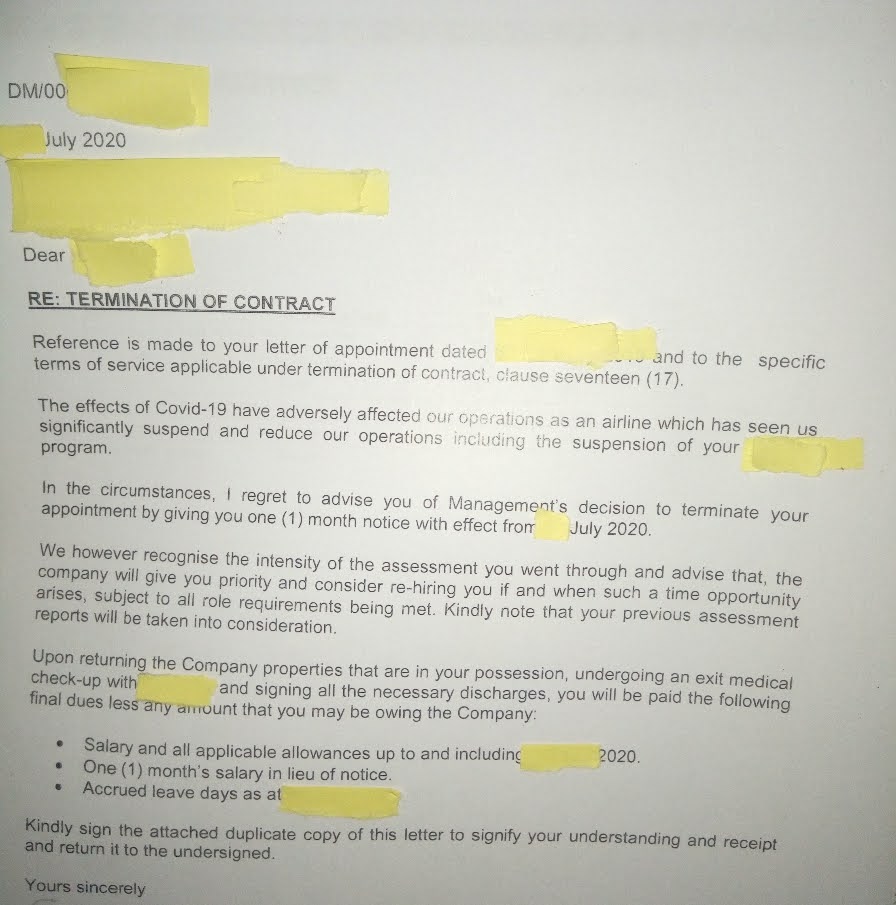
Contrary to the above, in Kenya, there has not been established a standard wage rate for aviation workers. For this reason, and in addition to the high rate of unemployment, some private airlines keen on maximizing profits, have been taking advantage of this loophole for years. Such companies hardly employ enough staff for the available amount of work. The employed few are severely overworked and underpaid. To cater for the deficit, these companies usually hire interns or contracted manpower during periods of high demand for labor. Besides these, the little wages owed to workers sometimes are disbursed inconsistently, forcing the employees to survive on a hand to mouth kind of lifestyle. Interns are never paid any stipend, but are required to work like regular employees at their own cost despite the fact that the company would be making huge revenues in terms of profits. Moreover, the low number of engineering staff would not allow them the luxury of working in shifts; and therefore working overtime through unsocial hours, weekends and holidays is a normal routine and also never compensated for in any form. Working in such companies takes a great amount of energy and time from employees, causing them constant fatigue and rendering most of them social and economic failures.

Aviation is like a plague. Once you start practicing it there is only hunger to perfect your skills. Quitting is usually the last option in mind. People who endure the above working conditions usually have hope for a better future, which eventually comes for some. Few of the rest manage to adapt in their own different ways and hold on to the only job they have and others end up following better options elsewhere.

Duty times is also an issue worth noting. working long hours consistently affects performance and the general health of workers over time. Humans are social beings and need rests after consecutive periods of work. Working in the field of aircraft maintenance subjects individuals to physical and mental stress as well as exposure to noisy environments and sometimes harsh weather conditions. Exposure to these elements over extended periods greatly reduces the ability to make reasonable judgements and to perform tasks effectively. Authorities require employees to relieve staff off active duty should they exceed the recommended duty times, as a safety measure both to aviation and the health of the workers. Some companies adhere to this requirement while others turn a blind eye to it quite often.

The above problem of employees working long hours arises due to lack of enough staff for the available workload or just poor human resource planning. In aviation, pressure to have people constantly working arises from the fact that airplanes need to be constantly flying and always maintained in an airworthy condition. Aviation does not sleep or rest, and neither does it break for holidays. Planes on ground invoke costs or losses to the owner or operator. This is not desirable, and consequently translates to demand for maintenance staff to attend to the airplanes throughout their operational lives. Engineers spend more time working on planes than the times they spend on their social lives. There is usually no guaranteed weekend , holiday or festive seasons to maintenance staff. Moreover, working long hours is common whenever airplanes are in for maintenance or when a malfunction develops at times when the aircraft is scheduled to fly.

Lastly, another challenge worth mentioning is that of working in companies which are owned and run by sole individuals or families. Running an airline is expensive, and sometimes management could be too inclined to make do with limited resources to the point of compromising on staff needs. In such companies, a rift is usually created between top management and regular staff, with junior management acting as the bridge. This cuts off direct communication between top management and regular staff. Opinions and concerns of regular employees don’t usually matter. This type of structure gives management a dictatorship type of authority to effect decisions at will and without compromise, hence causing uncertainty in the tenures of all employees. Sometimes survival here for managers means employing sabotage tactics or constantly engaging in cold battles to prove efficiency to the bosses. Unjustified termination from work is a looming reality here for regular employees and job security is determined by demand or allegiances to influential managers.

Career advancement

The next step after settling into employment is to advance one’s career. The way to do this is to learn critical skills of trade and obtaining certifications, licenses or ratings. Possession of these increases the worth of an individual to the company as it means bearing more critical responsibilities. This in turn effects an increase in the individual’s pay. Getting these, however, is usually not a simple task, and neither is the opportunity to attempt a licensing exam or attend any trainings guaranteed.

To attempt a basic license exams, the authority requires submissions containing signed proof of working experience and employment in an operational airline. These are to be accompanied by a fee, after which the authority reviews the submitted apllication in order to determine whether to invite the applicant to book an exam or not.

Type trainings of specific aircraft models are much more expensive, ranging between hundreds of thousands to several millions. Most times these are usually sponsored by companies when need arises. Individuals can also cater for their own costs if capable. For the former option, there is usually some company politics involved in the nomination of attendees for several reasons including; training costs, company interests and regulatory requirements.

Travel

As an employee of an airline, traveling on planes could be a near daily routine or occasional. The former applies when one is scheduled to accompany flights regularly as an accompanying engineer; and usually has some pros and cons.

The pros are more popular and they include; financial benefits in terms of allowances, getting to visit numerous destinations, meeting and interacting with people from different cultures and the chance to see the world from a bird’s eye view.

The cons can be attributed to fatigue, inconveniences, unprecedented malfunctions, risks and sometimes disruptions to family ties.

Flight crews movements to and from the airports happen at any time of the day, depending on flight schedules. Flight delays also due to technical reasons also occur quite regularly. This makes it difficult for flight crews to have consistent schedules for personal or social reasons.

Planes can, and do develop malfunctions or snags while in any phase of flight. This is one of the most unwelcome occurrences to engineers when accompanying flights, as it is them who bear the responsibility to fix the plane when it lands so it can fly back home safely. Accompanying engineers also do liase with the flight crew in determining the next course of action whenever planes develop problems in flight.

In addition to the above, flying is risky. we all know of at least one or two plane accidents. Incidents also occur with the potential to inflict serious injury to aviators. Another risk lies in the routes or destinations where planes fly to. Cargo airlines are fond of transporting different types of freight to or from destinations which would be considered quite risky.

Retirement

Engineering is like a chronic illness to its practitioners. Age is considered experience. There exists some truth to this. It is common for engineers to retire from one company and few weeks later they are working in another. I do not advocate for this, for the sake of young people who also need an opportunity to develop their careers, but it is a reality. People in their 70s are still working actively in the field. Years of perfecting a single craft coupled with limited time to exploit other fields confines one to that particular trade only.

THE HUSTLE OF PURSUING A CAREER AS AN AIRCRAFT MAINTENANCE ENGINEER IN KENYA (PART 1)

The hustle of pursuing an employment based career is real. It is widespread across most career fields and all over the world. An unwelcome fable to the young and ambitious, and a tormenting reality to thousands of unemployed graduates.

The aim of this story is not to discourage anyone from pursuing a career of their dreams, as most of the challenges likely to be encountered in pursuit of any employment based career are almost similar. Aviation is a topic of interest to many, and therefore the intent is only to share general experiences of some of those already working in the field to anyone interested in the subject. However, before we can get to the topic, this first part of the story will try to share some general views with regards to the current situation of the labor market in the country.

Experiences and opinions differ and there will always be two sides to every story. Everyone who is either in employment or business trod a different path to reach where they are now. To some, the path might have been long, others short, some saw an opportunity in a different field and just took detours from whatever they were pursuing, others took shortcuts and some had people to drag them up the trail. Each one of these individuals has a unique experience which could turn out to be a whole different story to someone else who might choose to follow a similar route to anyone of them. Therefore readers should not use the views implied in this article alone as the basis for making any life changing choices. It is always prudent to seek a variety of professional advice before making any such decisions.

Life is an event in which every outcome is governed by laws of probability. The choices we make usually have several possible outcomes, whose probabilities are directly affected by time and the ever changing environment. The effects of these two can be so pronounced some times that the probabilities can be increased to almost infinity or reduced to near randomness or chaos. Probability can be a boring subject so let us just have an obvious example of the latter: Back in the 1990s or even early 2000s, choosing to pursue a degree or diploma would almost automatically guarantee a senior position in many organizations and even the government. Today, many unforeseen outcomes riddle the end of that path. Circumstances have forced degree and diploma holders to become touts, construction workers, hairdressers, commercial sex workers, taxi drivers, cyber criminals, etc. The list is inexhaustible.

So, what went wrong?

The beginning of the past two decades, saw the world population increase significantly and technology advance to a great extent. These two had a significant impact on lifestyles and settlement patterns in developing countries. Urban populations increased due to improved facilities, and the need to embrace modern lifestyles. This caused a shift in the country’s work force to urban centers, depriving rural areas of a fair share of productive youth. The consequence of this was an increase in the demand for basic commodities in towns and consequently a sharp rise in the cost of living. Numerous vacancies which were initially readily available quickly got filled up and the populations kept on rising.

A crisis was now looming and to become any more suitable for employment, it became inevitable to acquire professional skills. The race for the youth to join tertiary institutions began, presenting a business opportunity to tertiary institutions. Many were brought up in every town to accommodate the increasing demand, and the result was a near exponential increase in the annual number of college and university graduates. These numbers greatly surpassed the rate at which more vacancies could be created and so the problem began.

Sometime later, Kenya experienced several periods of political instability accompanied by ethnic clashes. This aggravated the situation further, as it caused the closure of some companies and businesses, and caused yet another wave of migration of non locals from rural towns to the capital and other major towns.

At present, the situation is even more chaotic courtesy of Covid-19 which caught the world off guard and wreaked panic across the entire globe. Aviation was among the industries which were greatly affected by the pandemic. Job layoffs were effected across the world as a cost cutting measure, causing the number of the unemployed to swell even more.

Sample of a contract termination letter issued by a local airline to some of its newer staff as a result of the effects of covid-19 to its operations

The future is however promising, as airlines seem to have crawled back to near normal operations with some of them even expanding their fleet and operations.

Despite all the above, the cycle continues every year; with thousands joining tertiary institutions, thousands graduating, few getting employed and majority tarmacking everyday searching for jobs.

To avoid getting trapped in this vicious cycle, more young people should consider undertaking courses which equip them with entrepreneurial skills rather than pursuing employment based courses. The world at present needs more investors than it does need employees.

However, should it be necessary to take on an employment based career, then it should be supplemented with some business skills. These will come in handy somewhere along the way. Unless one wishes to be an employee for their entire working life.

After this, extensive and factual research should be conducted into future industry projections before embarking on the desired course of study. Advise alone, pursuit of dreams, or passion for a career are no longer reliable determinants. Those years are long gone. An attempt should be made to analyze the career itself and how much it demands of an individual, and future industry projections in terms of growth and labour demand.

Networking with groups of people in the career field of interest is also important. Their experiences can shed some light into what exactly one would be getting into and what they would be settling for, should they choose to pursue the same course.

Equally significant, planning for the journey and the means to get there can save one from an unprecedented hustle. It is also wise to ensure that the career path to pursue has alternatives up ahead, just in case things fail to work out as planned.

Finally, schools are businesses and will always be in need of more customers (students). Ample research needs to be done on these too before enrolling in anyone of them. Many naive youngsters have been lured into joining institutions with enticing stories of few successful alumni currently doing well in the job market. Nonchalant to them being that the successful few could be two or three in a hundred whom the institutions never talk about. Moreover, individual success stories of the lucky few remains only known to them. Many have fallen for such narratives and ended up regretting later on. Greed, competition for business and cost saving have caused some of the institutions to compromise on the quality of education they offer, rendering their graduates incompetent or unemployable.

With the above in mind, we hope all young readers intending to join tertiary institutions will make the right choices; and we wish the best of luck to graduates out there who are still searching for jobs.

For everyone who lost their job due to Covid-19, we hope a second chance will come up soon enough.

THE ICONIC BOEING 727 AND SOME OF ITS UNUSUAL FEATURES

727s proved to be very efficient airplanes for short to medium range flights across the world. Their design culminated from a compromise among requirements of United Airlines, American Airlines and Eastern Airlines. They all required an aircraft for operations on smaller airports with shorter runways and fewer passengers, but their engine requirements differed. American airlines wanted a twin engine for fuel efficiency as they were already operating 707s powered by four engines, United airlines wanted four engines for its high altitude hub operations in Denver and Eastern airlines wanted a third engine for over water operations. Boeing would eventually come up with a Trijet, T-tail, narrow body and clean wings (no engines mounted on wings) design.

The first 727-100 entered service with Eastern Airlines on February 1, 1964. Once in service these classic beauties proved to be so dependable that they became workhorses for many commercial airlines both in passenger and cargo operations. Their popularity further extended to the private business and VIP charter business where they also thrived and even managed to serve as private jets to some of the richest people in the world including the billionaire former US president Donald Trump.

With a total of 1832 produced, very few are currently in active service around the world today, most of them operating as freighters. As of may 2013 there were only thirteen 727s in operation around the world. Twelve of these were the stretched 727-200s while only one was a 727-100. The last Boeing 727 scheduled passenger flight took place on 13 January 2019 by Iran Aseman airline between Zahedan and Tehran.

As of August 2021, there are only five 727s operating from Nairobi’s Jomo Kenyatta International Airport, owned by two local airlines. Four of the five are serving as freighters and one is a VIP charter.

The most unusual features of the 727s include:

1. An S-Duct (serpentine inlet) air intake duct for #2 engine

This was the most iconic feature of the Boeing 727s. It was not however exclusive to them, as they shared this air intake design with some other aircrafts.

the S-duct design on 727s was developed for the center mounted engines to help lower the engines for easier access during maintenance. To appreciate this idea, check out the position of the center engine on MD-11s and DC-10s

2. AUXILIARY POWER UNIT (APU) MOUNTED IN THE WHEEL WELL

Position of the mid engine and the rear airstair eliminated the possibility of intalling the APU in the aft section of the aircraft. The result of this was to mount it in a hole through the keel beam web separating the left and right wheel wells.

To offer fire protection, the APU was enclosed in a stainless steel metal casing. This location however, imposed some operational limitations as the APU could not run with the main landing gears retracted.

3.Nose wheel brake

Not a common feature in aircraft design but 727s had them. The idea arose from the requirement to operate on short runways, resulting in the need to effectively reduce landing runs.

The brakes were so effective when used they reduced braking distance by up to 150 meters. They were however optional, and therefore operators had the liberty to deactivate them based on their operational requirements.

4. Cooper vane

Dan Cooper, was an Alias used by an unidentified man to purchase a plane ticket and board a plane which he later hijacked on November 24, 1971. The plane was a passenger 727 operated by North West Orient airlines on a flight between Portland and Seattle. The flight made a stop at Seattle Tacoma airport to collect a ransom worth $200, 000 (now valued at $1.29 million) and four parachutes. While airborne again over southwest Washington, Cooper opened the aft entry door in the rear pressure bulkhead then he opened the aft airstair and leaped off the plane. His fate remained unknown and his case turned out to be the only unsolved air piracy in the history of commercial aviation. However, while covering this report a miscommunication arose among media houses which changed the name to D. B. Cooper.

The story of D. B. Cooper led to the development of a small vane intended to lock the aft airstair in flight and make it impossible to be opened in flight. The vane is normally spring loaded in a position to allow the airstair to open while on ground, but once in flight, aerodynamic force created by air ramming against it turns it against the spring tension so that it is now positioned in the way of the ramp.

5. Noise

Development of jet engines revolutionized aviation a great deal by meeting the demand for power and speed. The price to pay for these, however, was noise. Power and noise had a direct proportion relationship. The higher the power output the louder the engine. Later on, the demand for fuel efficient and environmental friendly engines arose and by-pass engines were developed. Boeing 727s were built in the era of low by-pass engines and were fitted with three JT8D-17 low by-pass engines manufactured by Pratt and Whitney. With most of the air going through the combustion chamber, low by-pass engines were loud and 727s were ranked among the noisiest commercial jetliners.

The U.S Noise control act of 1972 act categorized 727s as stage 2 aircrafts and called for the development of quieter stage 3 engines. This was later achieved by increasing the engine by-pass ratio, a feature which proved to be very effective for its intended purpose. For 727s, Boeing determined that the noise could be reduced by replacing the two side mounted engines with JT8D-200 engines. These had a higher by-pass ratio and hence were quieter and more fuel efficient than their predecessors the JT8D-1 to 17. However, the structural modifications required to install the proposed engines were somewhat prohibitive, and for this reason, hush kits were later developed to be fitted to the engines to help reduce the noise.

Re-engining

In the late 80s, Valsan Partners limited introduced two programs to upgrade 727-200 models. First was a partial re-engining program which replaced the side mounted engines with the much larger and quieter JT8D-217C/219 and fitted the center engine with a hush kit. The second upgrade was a pair of aftermarket winglets which were later marketed by Quiet wing corp. These also reduced noise at lower speeds and improved fuel efficiency. The 727s incorporating the valsan re-engining modification were renamed Super 727s.

Rolls Royce too developed re-engining programs both for 727-100 and 200 but only managed complete re-engining of 727-100s. The three JT8D engines on the -100s were replaced with the more powerful and quieter Rolls Royce Tay 651 engines. All the re-engined 727-100s were operating for United Parcel Service (UPS) and were named Quiet Freighter (727-100QF). With the new engines fitted, the operator managed to record a reduction in fuel cost of 18%. After this, Rolls Royce realized potential market for re-engining, and once again they embarked on a second program to re-engine 727-200s with larger and also quieter Tay 670, but before they could get a launch customer, the program stopped due to political considerations within the european community.

AIRCRAFT MAINTENANCE ENGINEER CAREER – DESCRIPTION

Ever developed curiosity for any reason about the work that aircraft maintenance engineers do? Well, this article intends to explain this subject so read along.

An embraer 190 undergoing maintenance at Kenya Airways hangar at night

The term Aircraft maintenance engineer or aeronautical engineer, is oftenly used casually to refer to an individual working in the aircraft maintenance department of an airline. I used the term ‘casually’ because not all individuals who participate in the aircraft maintenance duties bear the title of an Engineer. An aircraft engineer is a person who is licensed by an aviation authority to perform specified maintenance tasks on the aircraft and some of the on board systems within the scope of their certification, and consequently issue a certificate to release the aircraft or aircraft system back to service after completion of the tasks. A certificate of release to service (CRS) is an important document because it serves as signed proof by the person responsible that any maintenance tasks carried out on the aircraft was executed with reference to the appropriate procedures and in accordance with the current aviation regulations. An individual who is not yet licensed can be referred to as an aircraft technician. Technicians can only perform maintenance tasks but cannot issue a (CRS) pertaining to the work done; however, they can undergo training on a particular aircraft or aircraft system and be granted an approval or an authorisation to sign off limited tasks on that specific aircraft or system.

It is difficult for a single individual to fully understand all aircraft systems, and therefore aircraft engineers do specialize in the maintenance of specific aircraft parts, systems or components.

In general, careers in technical fields require those working in the fields to specialize in specific areas in order to relieve the workload per individual so they can perform their designated duties effectively. Specializing also promotes vast understanding of the specific areas and hence further studies can be conducted thus resulting in further improvements or upgrades to the systems.

The various areas of specialization in aircraft maintenance can be classified into; those which involve direct contact with the aircraft, those which involve working on aircraft components or systems only while the third involves working in an engineering office without any or with minimal contact with either the aircraft or its components.

How to become an AME

To attain the title of a Licensed Aircraft Maintenance Engineer, first you need to attend an engineering course in an approved institution. After graduating you then find an internship to help you gain practical experience based on which you can then secure a position as an aircraft technician. From here you then have to compile worksheets as proof of experience over a given period of time then apply for licensing exams at the aviation authorities which you must pass in order to change your title to an aircraft engineer.

What it means

Bearing the title ‘Licensed Aircraft Maintenance Engineer’ means that you take responsibility of any maintenance action undertaken within the scope of your license category. You risk serving a jail term, loosing your license, loosing your job, paying a hefty fine or all the above should you commit any violation against aviation maintenance procedures.

Categories of aircraft engineers

The different categories of aircraft engineers are:

Airframe and Powerplant (Engines) engineers

Avionics engineers

Development engineers

Planning engineers

Aircraft structures engineers

Besides these, there is another category of engineering personel who work in components workshops to maintain various aircraft components as well as performing specialized maintenance tasks. These too undergo years of training and specialization in order to perform their duties effectively. Their roles are equally critical to the safe operation of an aircraft.

What exactly do they do?

A page from an actual aircraft manual giving the procedure on how to perform the istallation of a control yoke disconnect device on a typical modern aircraft

Just like the Bible is a manual of life to Christians or the Quran to Muslims, so are Aircraft Maintenance Manuals (AMM) to aircraft engineers. There are several of these, each one of them serving a specific maintenance function, but for sake of simplicity, we will just use the term ‘AMM’. A team of planning engineers generate maintenance schedules from the maintenance planning document. The aircraft is then brought in for maintenance. There are a number of tasks to be performed per each scheduled check and each task is presented to the engineers on its own work card which would also contain specific AMM reference/s. The AMM references guide the engineers to specific locations in the AMM containing procedures on how to accomplishing individual tasks on the aircraft. At the end of each task the work card is signed by an authorized/approved certifying engineer to certify that the work has been done in accordance with the required procedure. A final document called the CRS (Certificate of release to service) is then signed by a senior engineer after all the cards have been completed and signed. The aircraft can now be returned to service and the signed cards accompanied with one copy of the CRS are taken to records department. Another copy of the CRS is carried on board the aircraft as proof that the aircraft is serviceable.

An aircraft undergoing heavy base maintenance

Should a fault be found on the aircraft before the aircraft is due for scheduled maintenance, then a non routine work card is raised, the defect rectified in accordance with the appropriate manual and a CRS issued soon as the aircraft is ready and safe to fly again.

Well, atleast now you are quite informed.