‘What was impossible yesterday is an accomplishment of today – while tomorrow heralds the unbelievable’
Percy Fansler
Percy Fansler, the world’s first fare paying passenger on board the world’s first scheduled commercial flight.
Percy’s statement was more like a prediction of the technological evolution that was to be witnessed over the following years in the aviation industry. Just over a decade before this, man could not have made sense of the notion that heavier than air objects could float in air. It was until the year 1903 when the idea was proven possible by the Wright brothers, after their newly invented Flier took off and stayed airborne for few seconds; and thus giving birth to heavier than air flights. Since then, there have been numerous breakthroughs in aviation over the past century which have greatly improved the safety, reliability and efficiency of airplanes. Most notable of these improvements is the reduction of the workload required by pilots to fly planes. Today’s planes are laden with sophisticated technology to an extent that the role of human pilots in the cockpit has been reduced to that of monitoring the airplane and communicating with ground stations.
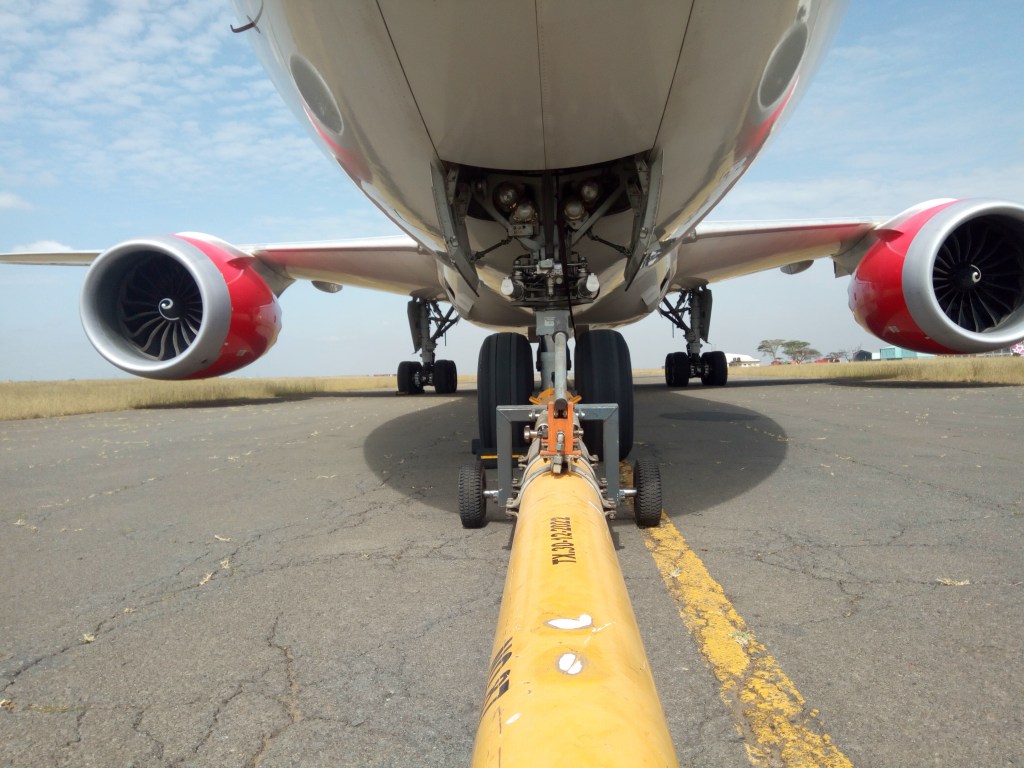
Despite this monumental transformation to airplanes, airlines are still grappling with the burden of incurring high operating costs; fuel costs and pilot wages being among the major contributors. But things are about to change. With the current technology and the latest manufacturing trend of developing smart technologies, it is with no doubt that we are just about to see an era of pilotless airliners ferrying passengers and cargo across continents. In fact, the revolution is well underway; and both American and European Aviation authorities are aware of it and are already preparing for it. Airlines are eagerly waiting and ready to embrace it but pilots and their unions loathe it and will make attempts to oppose it. But before we pour it all out, it is only fair that we rewind history a little for the sake of readers with little aviation background just so they can appreciate how far flying has come from.
Perfection takes time, and so did the transformation of planes. In the early days of flying, planes were built mostly of wood; and navigation would be accomplished by reference to landmarks during the day and heavenly bodies at night. Airplanes were mostly used for reconnaissance missions and transportation of cargo and mail.
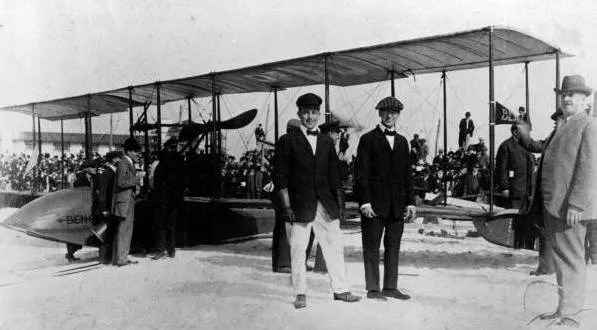
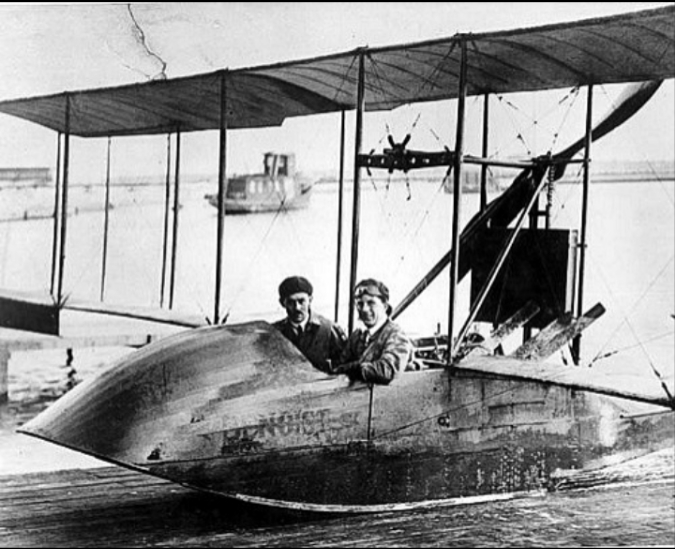
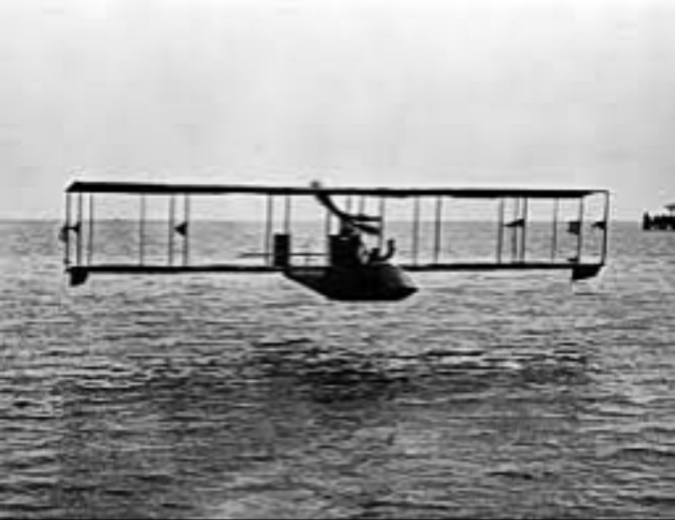
The world’s first passenger on board a heavier than air powered flight was Charles W Furnas; a friend and mechanic who worked for the Wright brothers. Mr. Charles had accompanied the brothers on a test flight of the Wright flier III, which was an improved version of the Wright flier I on 14 May 1908. However, the world’s first ever scheduled commercial flight with a fare paying passenger took place on 1st January 1914, with a single passenger on board an Airboat and witnessed by nearly 3000 people. The passenger’s name was Percy E. Fansler, and the pilot‘s was Tony Jannus. The airline which conducted the flight; and which is also the world’s first scheduled commercial passenger airline was called St. Petersburg – Tampa Airboat line.The Airboats, were later known as seaplanes. These were most suitable at the time as there were no airports.
‘Someday people will be crossing oceans on airliners, like they do on steamships today’
Thomas Wesley Benoist, Jan 1914
This was Tom Benoist’s comment (builder of the airboats), while expressing his appreciation of the newly established airline. Wish he would have lived long enough to witness the Concorde era.
The new means of travel (flying) was faster and efficient. Later on during world wars, flying proved to be a major determinant in winning battles; and in fact, it was due to the wars that major milestones in the evolution of airplanes were achieved. This was as a result of contests by nations to dominate air superiority. After the wars, aviation was to be used for peaceful purposes. Military technology which had greatly advanced, would be borrowed to help develop more efficient, reliable and safe civilian planes. This collaboration has persisted up to date.
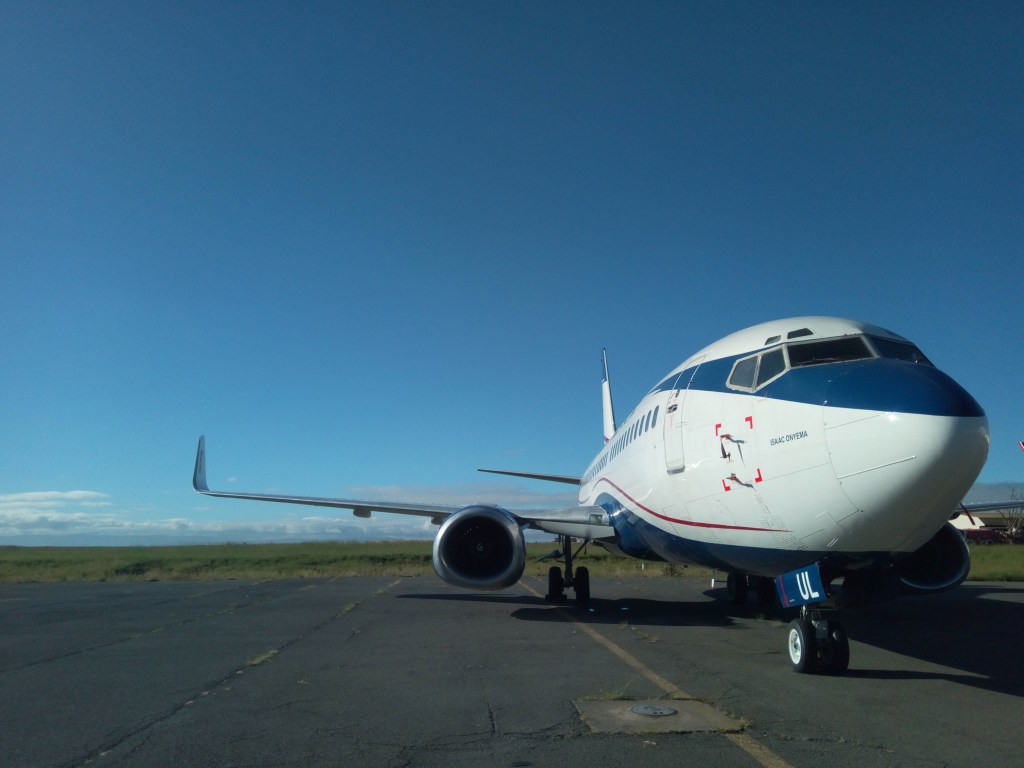
A Boeing 737-300 with modified wingtips. Notice two little ‘eyebrow’ windows on top of the main windows. These were initially used for star-based navigation and to offer extra view when negotiating tight turns into airports
The journey to perfect a project that defies laws of nature bears high tolls; and the unfortunate fact is that these costs are usually transferred to the final consumer of the product or its services. This was also the case with airplanes. Designing and building safe and reliable airliners costs an arm and a leg, and so are the costs of acquiring and operating them. To counter these costs and make a profit, airlines had to hike the price of purchasing a flight ticket. People who could afford airline tickets were mostly wealthy individuals, and so air travel was considered prestigious right from inception.
Following world war II, was the birth of International civil aviation. This called for collaboration by participating states to develop safe and reliable air travel; and hence the need for bigger planes, longer routes, high altitude flying, night travel and trans- oceanic cruise.This resulted in the production of bigger planes with more efficient engines, introduction of powered flight controls to replace the old cable and pulley systems, and computers for processing flight and systems data.
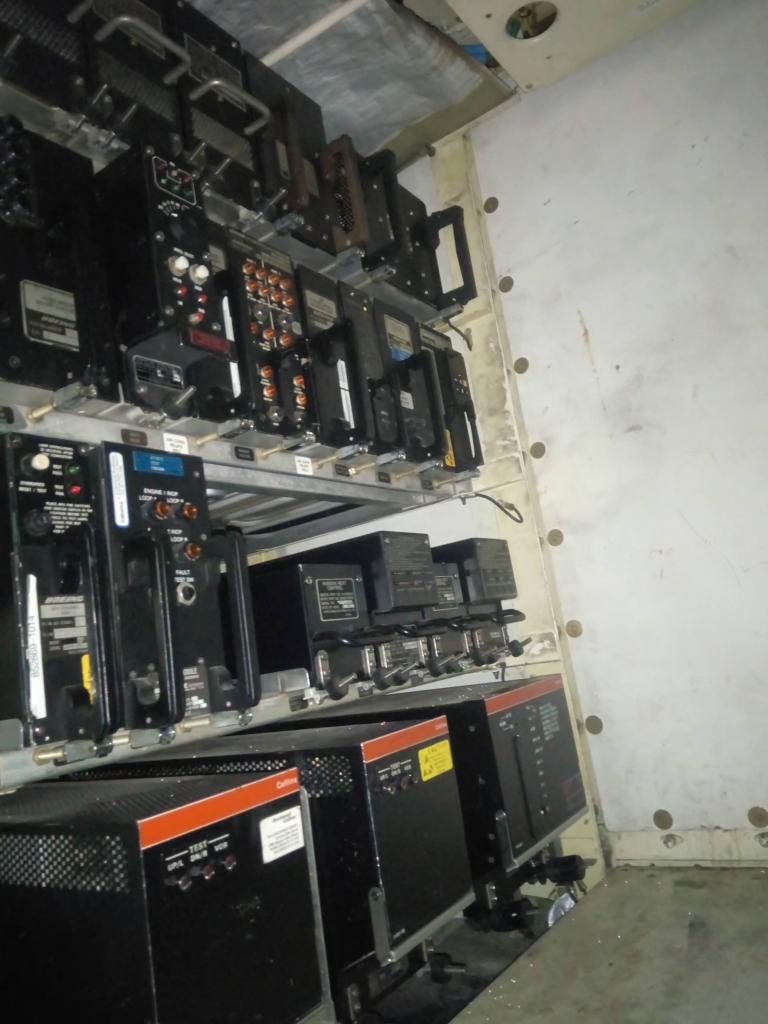
However,in spite of the collaboration, flying older planes was still a demanding task which required high skills and bravery.This was because aviation was still young and the former technology used during this era was still wanting. For example,the former computers which were developed to process flight and systems data, were bulky and had limited capabilities.Some of the data which they presented to the pilots would require additional manual calculations in order to get the correct interpretation. Moreover, each computer could only execute few specified functions, and hence present little data at a time for display to the flight crew. This meant that there was a computer for nearly every system, feeding data to its own display unit inside the cockpit. This resulted in the presence of too many gauges and switches in the cockpit; and for this reason there arose need for an extra crew member in the cockpit to man some of the gauges. It was due to this that a flight engineer was introduced. Their role in the flight deck was to monitor and make any necessary adjustments to instruments displaying data concerning performance and health of the airplane’s critical systems in flight. This would leave pilots to focus on instruments relaying information only related to flying the plane.
As flying grew more popular, demand for flights kept growing, increasing the need for more planes and skilled pilots, both of whose availability was scarce. Piloting was a young career and hence there were no established flight training facilities and professional instructors to meet the growing demand. This imbalance between demand and supply of pilots, coupled with the rare skills required to fly planes, and the prestigious nature of aviation due to high profile passengers; resulted in a hike in the wage rates for the few skilled pilots that were available to the extent that piloting ranked among the highest paying jobs of the century. The effect of this to airlines was an increase in their operating costs which consequently translated to a further increase in the price of airline tickets.

Pressure also continued to mount on plane manufacturers to develop more efficient, reliable and safe planes. The result of this was continued research and experiments to upgrade airplane systems. One significant outcome of such endeavors was the development of Fly-by-wire system. Its application on airplanes reduced the amount of manual work required by pilots to operate control surfaces. This was a critical feature especially on larger airliners with large control surfaces and flying at high speeds. Large control surfaces are heavy and high speeds impose high aerodynamic loads on the surfaces, making it difficult to operate them in flight. Conventional manual flight control systems were replaced with an electronic interface. Inputs by pilots to control the plane would be converted to electric signals which would be transmitted by wires to flight surfaces control computers. These would then determine the direction and amount of travel of actuators which would then move the control surfaces proportionate to the desired input by the pilots. Manual control systems would now serve as backup in case of system failure. Concorde, in 1969, was the first fly-by-wire commercial airliner.
As from the 80s, improvements in computer design and other digital technologies led to the elimination of the flight Engineer’s role. Flight decks were now designed for two crew, and various sensors and computers would now monitor systems for faults and initiate corrective actions. Should faults persist, messages would be displayed on electronic displays, and one of the pilots would read out and execute corrective steps from an onboard Quick Reference Handbook (QRH) while the other would be flying the plane.

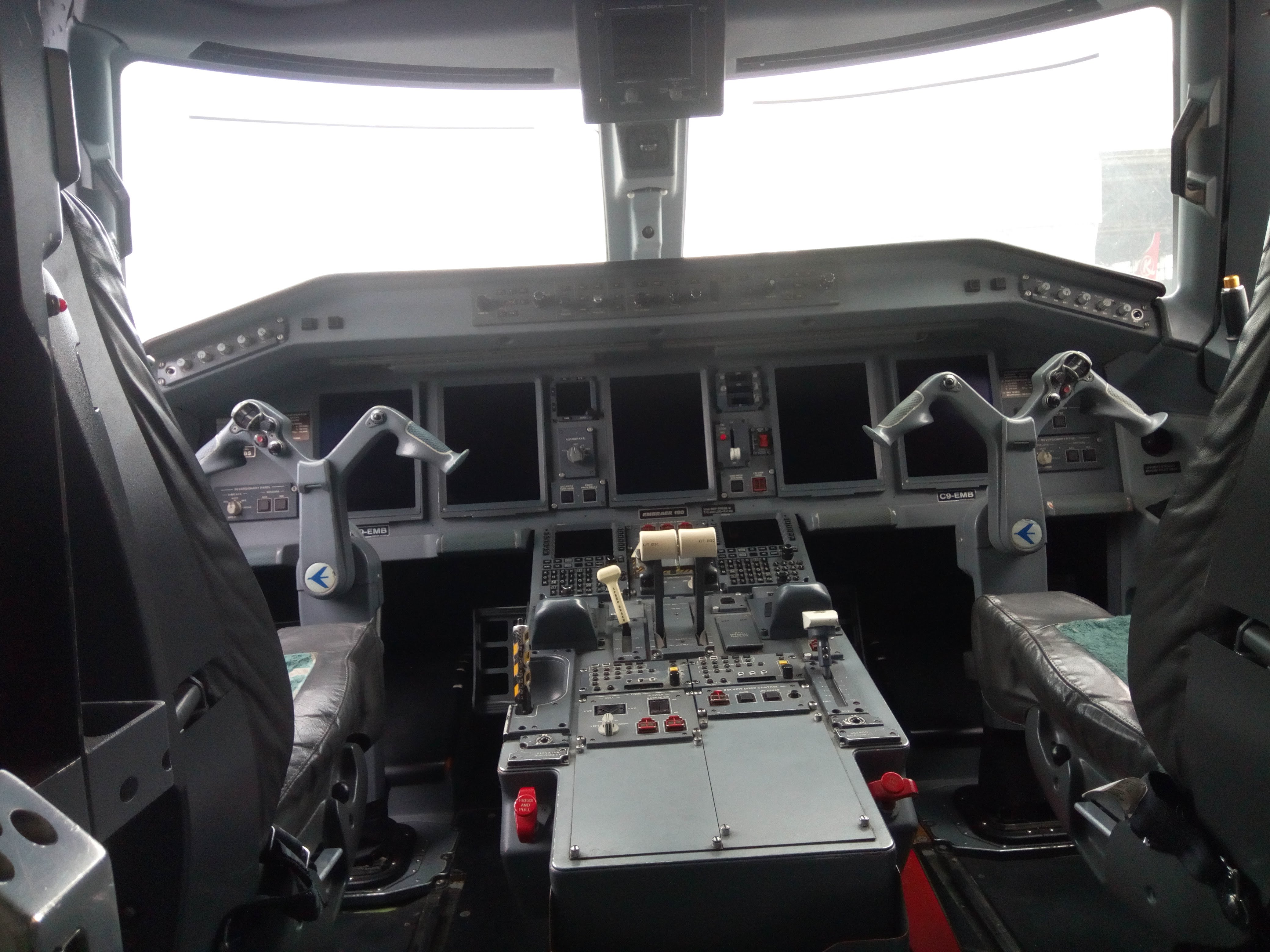
A Boeing 727 cockpit (left) with an observer’s seat behind the captain’s and a flight engineer’s seat and instrument panel behind the first officer’s seat (compare the number of switches and gauges with those in the image on the right). An Embraer ERJ-190 cockpit with two crew seats and modern instrument panels and display units
Major relief to pilots on long flights came with the automation of several flight crew functions. Initial auto functions were autopilot and auto-throttle. The flight crew would input the desired flight data such as altitude, speed and heading through an autopilot panel in the cockpit then switch on autopilot to take over control of the plane and auto-throttle to manage power settings of the engine. The system would then maintain the plane within the selected course. Meanwhile, the crew would sit back and monitor the airplane in case they needed to make any adjustments to the current flight path.
Further upgrades to the autopilot system led to the development of the Flight Management System (FMS). This was able to automate all phases of flight except taxi and take-off. With this system, pilots would only be required to input flight plan data into the system before take-off and the system would fly the plane to the intended destination, sometimes even land own its own.
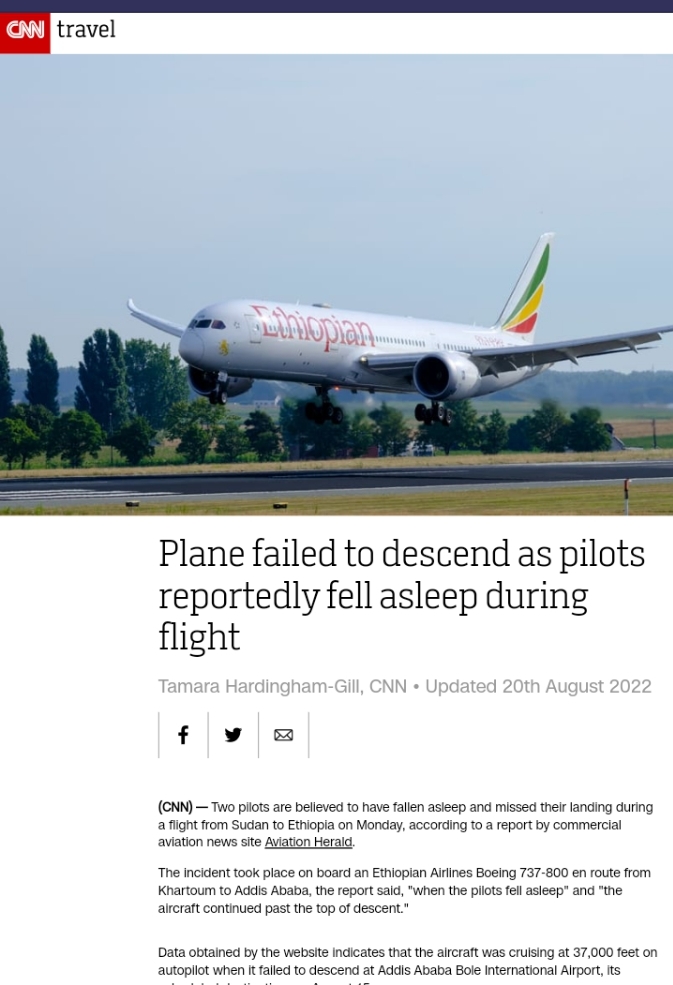
The role of the pilot in flight nowadays has been significantly reduced to taxiing the aircraft to and from the runway, taking-off, communicating with ground stations, and monitoring the plane in flight. In fact, After take-off, pilots can literally fall asleep and the plane will cruise to the intended destination on its own. Only thing that stops them from doing this is the law, which requires at least one pilot to be actively monitoring the plane and communicating with ground stations.
However, despite tremendous reduction in the workload of pilots, airlines are still grappling with the burden of incurring high costs in terms of pilot wages. This has been made possible by strong pilot unions which will swiftly oppose any attempt to effect a downgrade to their earnings, welfare or even duty times. Nevertheless, the clock is already ticking towards an era of autonomous flights. Human pilots will soon be eliminated from plane cockpits. This will be a huge relief to airlines in terms of reduced pilot wages and eventually lower the price of airline tickets: Flying will be cheaper. In addition to this, it is expected that there will be fewer aviation accidents as a result of human error; and that airlines will achieve maximum utilization of planes, as a result of increased frequency of flights due to elimination of human crew duty times restrictions.
Softwares have been developed which are capable of intergrating with present day airplane systems and enable almost any modern plane to fly without human pilots on board. manufactures are now at advanced stages of developing autonomous planes. Boeing and Airbus, the world’s leading civil and military plane manufacturers; and the American Airforce, have already made immense progress in this race. A more popular autonomous project of the American Airforce is the intergration of AI algorithms into the flight systems of F-16 fighter jets which enabled them to conduct autonomous flights and even execute simulated dogfights without a human pilot on board.
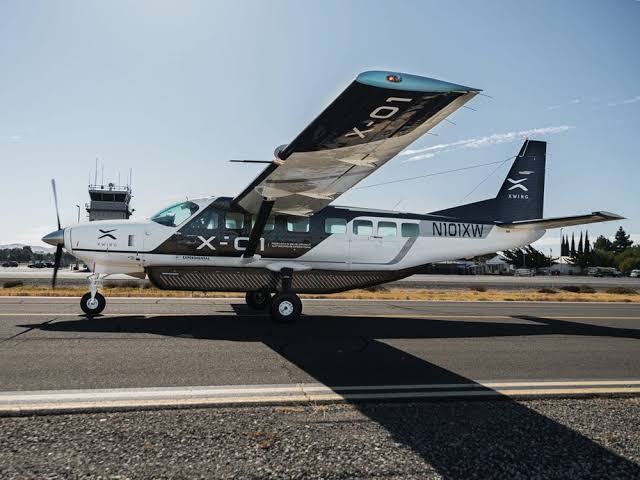
A nearly similar project with a high rate success was carried out on a commercial plane by an American company called XWING. The company developed softwares and algorithms which they built into the airframe of a very popular civilian aircraft; a Cessna 208 caravan. The plane has already flown multiple autonomous experimental cargo flights and is currently awaiting certification.
In 2020, Airbus managed to conduct an autonomous taxii, take-off, cruise and landing of a commercial airliner using visual recognition technology.

Boeing, on the other hand has already achieved major milestones in this venture. Their quest for autonomity has already culminated in the development of the MQ-25 ‘Stingray’ and the MQ-28 ‘Ghost Bat’. Both these two are military planes, the former being an aerial refueller while the later is a multi combat role stealthy fighter.
In addition to the above, numerous companies have developed air taxis and flying cars, which will soon take over the skies above our cities. In Kenya, the national flag carrier, KQ; which already has an established drone division called Fahari aviation, declared interest in acquiring Air taxis in an attempt to embrace future trend in the aviation industry.

 Aviation Talk