The onset of civilization spurred man into an insatiable quest for exploration. However, nature always presents some forms of difficulties to man’s undertakings whenever he embarks on such a contest. Nevertheless, in the face of such challenges, science has always provided solutions for man; which have enabled him to make gradual but consistent achievements in most of these confrontations. One such undertaking was the hunt for mobility: The means for safe transportation of people and goods across land and over the seas. This resulted in the invention of machines which made it possible for man to traverse long distances across the face of the earth with great convenience. But as is the nature of man, one achievement only sparks hunger for the next challenge.
Beginning of flights
History has it that the desire to fly is as old as mankind. The desire to take to the skies dates back to as early as 2,000 B.C; when it is recorded that Emperor Shun of China, made an attempt to imitate the winged flight of birds, in his daring escape from the top of a burning tower. There are many other recorded legends and attempts to fly, all based on the imitation of birds in earlier years. The history of flight is long, and so we will just sum it up at that, and jump to the year 1903.
The first ever; manned, heavier than air, powered and controlled aircraft was invented by the Wright brothers; Orvile Wright and Wilber Wright. The aircraft (Wright flyer) rose off its launching track on 17 December 1903 and stayed airborne for 12 seconds, covering a distance of 260 meters. The flyer, however, exhibited major flaws, and therefore following this attempt were a series of innovations from various inventors to address these problems. These would eventually produce improved constructions which turned out to be more practical and better suited for safe flight. This was the inception of modern day flights.
World war
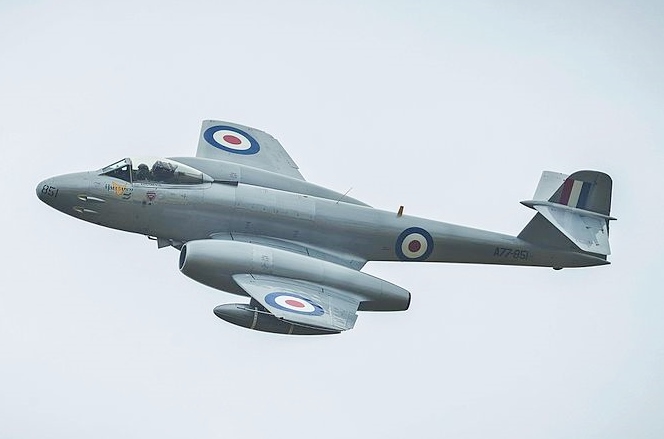
The occurrence of World war I proved to nations that achieving and maintaining air superiority was essential for victory. This sparked a worldwide race to develop superior airplanes to take on various combat roles in battles. Nevertheless, successful accomplishments of the intended roles would greatly depend on performance characteristics of the planes; and thus, presenting urgent need for further improvements in aircraft designs. The outcome of this turned out to be phenomenal transformation in aircraft designs and overall features.
The older single engine bi-planes, which were mostly constructed of wood and fabric; would now be replaced by all metal monoplane construction, with some designs incorporating twin engine configurations.
Another important development during this time was the development of turbojet engines to replace piston engines. Just one week before the start of World war II, a German aircraft manufacturing company known as Heinkel; which is well noted for its important contributions to high speed flight, made the first ever turbojet engine powered flight. The experimental aircraft which accomplished this was the model Heinkel, He 178. It was a result of the company’s undertakings in its quest for high speed flight. The flight took place on 27 August, 1939. This invention enhanced the performance of airplanes and also increased speeds yet again to new higher levels. This same company, is also known to have developed the He 176, the first aircraft to be powered by liquid-fueled rocket engines.
Just before the start of world war I, the fastest aircraft speed to be recorded was 135mph (217km/h) in 1914. The improvements that came about saw the increase in speeds to over 600mph (966km/h) towards the end of World war II.
Speed of sound
Sound is a pressure wave created by vibrating particles. It can only be propagated through a medium like air, water and other materials; but not in vacuum. It travels slowest in air, faster in liquids and fastest in solids. Speed of sound in air depends on temperature. At a temperature of 00C, sound would travel at 331m/s (1192km/hr or 741mph), whereas at 350C, the speed would be 351m/s (1263Km/hr or 785mph).
Sound from an action taking place a considerable distance away, usually reaches an observer a little later after the action has been perceived. If you have ever witnessed objects colliding at a considerable distance away from you, then you must have noticed that sound from the action lagged behind your actual time of perception by say, a fraction of a second, (depending on the distance between you and the point of collision). You, the observer, would see the action, but then sound from the collision would reach you at about what would seem like a fraction of a second or microseconds later. This tendency of sound lagging before the perceived action is proof of sound travelling slower than light. And thus, sound travels at a definite speed in air, which is actually slower than the speed at which light travels.
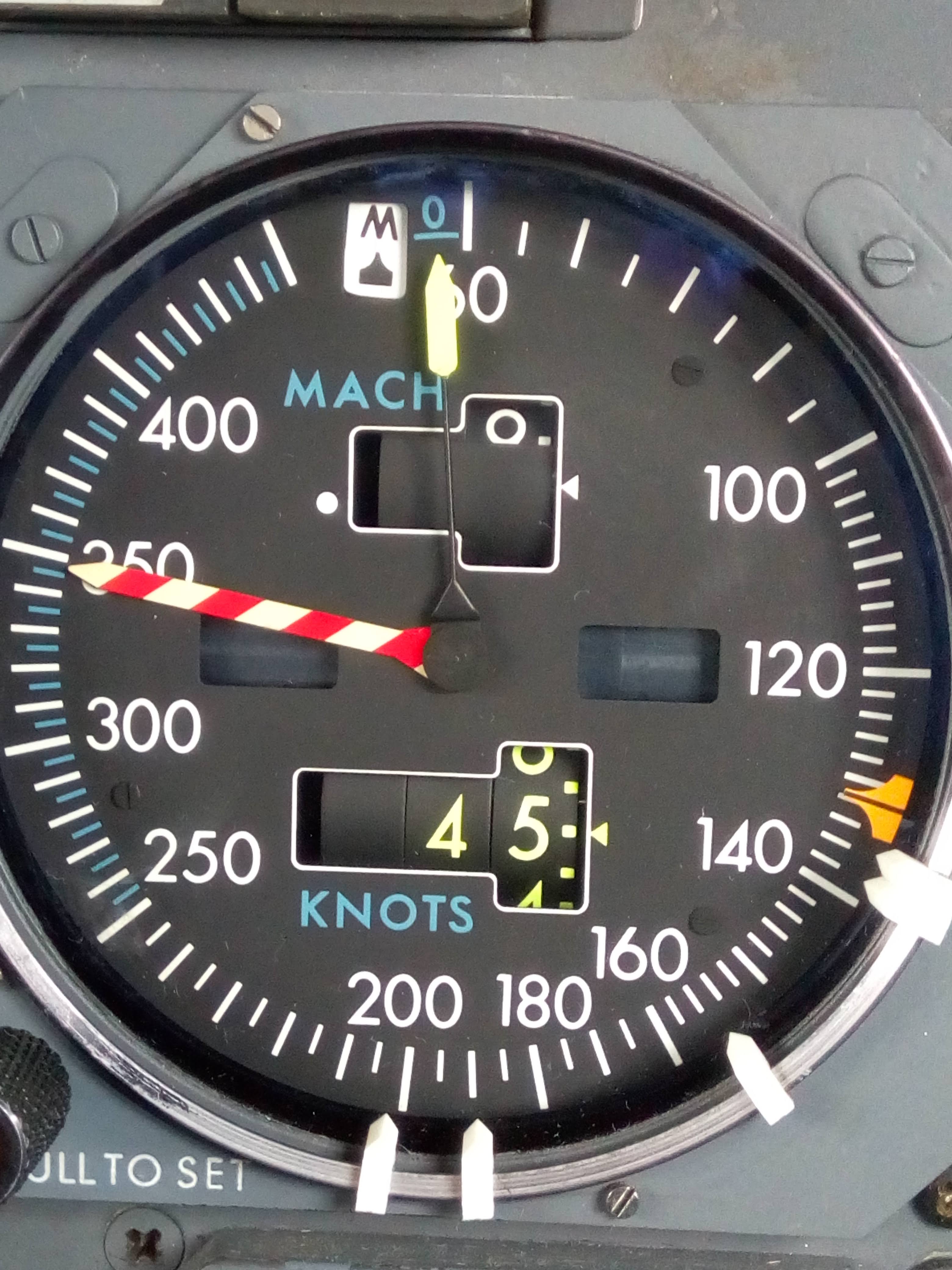
The ratio of the speed of an aircraft to the speed of sound is called Mach number. Mach 1, is a speed equal to the local speed of sound, mach 2 is a speed which is twice the speed of sound, and so on. Speeds below the speed of sound are called subsonic and speeds above mach 1 are referred to as supersonic.
An object traveling at mach 2 between two points would take half the time that it would take sound to travel between the same points.
In the above example, if a plane travelling at a speed of mach 2, was just above the colliding objects and flying towards the observer; sound from the action of the collision would be heard by the observer after the airplane has passed him/her, and already covered a total distance equal to twice the distance between the two of them (point of collision and observer).
After World war II
The race to develop faster planes continued after the end of World war II, and reached a point when man needed to build planes which could travel faster than sound. In a war scenario, this would be very significant especially to combat planes and pilots. A bomber aircraft traveling for example at a speed of mach 2; would drop bombs on enemy territory before the enemy could be aware of its approach, and even as it overflew overhead right above them. Sound from the aircraft engines would reach the ground when the bomber aircraft is already at a safe distance past the target area and probably beyond firing range of the enemy. Explosion from dropped bombs would also occur a while later after the aircraft is way out of the targeted area.
However, little was known about supersonic flights and therefore nations embarked on scientific research and experiments to determine how to build supersonic airplanes. The scope of challenges to be addressed contained three phases. First was to understand the aerodynamic characteristics of supersonic airflow, so as to determine the appropriate features to be incorporated in the designs; second, was the problems to be encountered at transition speeds while breaking the sound barrier and the means to address them, and finally how to sustain flights at supersonic speeds. These problems would eventually culminate in major alterations in the design features and structural materials. New engines to power the planes to supersonic speeds would also have to be developed.

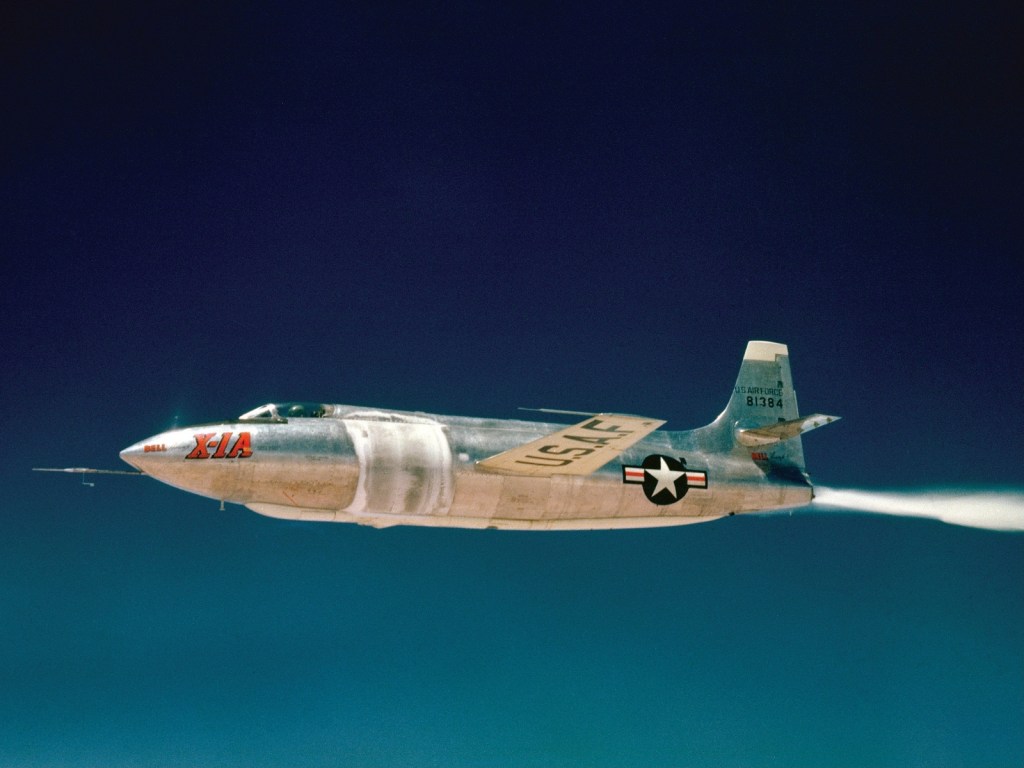
The U.S was the first to successfully achieve the first ever speed of sound flight on October 14, 1947. They managed this using a Bell X-1 rocket powered and straight wing experimental aircraft, which was drop launched from the bomb belly of a Boeing B-29. Several claims of having broken the speed of sound during the war (World war II) would subsequently occur but these would not be recognized.
The story of breaking the sound barrier would not to be publicized by the American air force, at least not yet. Nevertheless, someone leaked it to a reporter from Aviation week magazine, whose media house published it and released it on December 20. Los Angeles Times also featured the story as headline news in their December 22 issue. This surprised many aviation experts who had initially believed that a swept back wing design was necessary to overcome the sound barrier. Following this, the Air force threatened legal action for the leak, but seemed to lose interest and this never occurred. The following year, on June 10, 1948, the Air force secretary made an official announcement that the speed barrier had been broken repeatedly by two experimental planes; and hence a world wide race to develop supersonic military fighters was now well underway.
British and France had a long history of rivalry, and were also in the race to develop their own individual supersonic airplanes. However, in 1962, the two countries signed a deal to develop a joint supersonic airliner, as a way to end their long lived rivalry. This was the first time the idea of supersonic travel was ever considered in civil aviation; and the deal would lead to the birth of Concorde.

 Aviation Talk